
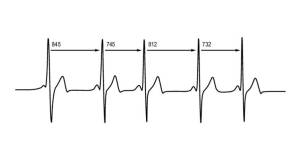
In today’s post I want to provide some research to support my bold claims about the effectiveness of HRV. The following research studies have been summarized to make more reader friendly as to not bore anyone who isn’t too interested in research methods, statistical analyses and so on. I have listed the citations for each study at the end for anyone interested in reading the research themselves. Additionally I have each one as a .pdf so just request a copy and I can send it.

HRV Reflecting Recovery status:
Chen et al (2011) found that HRV drops significantly within 24 hours of recovery from a high intensity strength workout in elite male competitive weightlifters and returns to baseline by 72 hours. Weightlifting performance was recovered exceeding baseline and reaching maximum at 72 hours thus showing a significant correlation between HRV and recovery.
Iellamo et al (2004) studied male rowers from the Italian national team during preparation for the world championships. The researchers found that from 50% to 100% of training load, there was a significant decrease in HRV and increase in sympathetic tone. As training reduced to 50% during the World Championships, HRV returned to base line and a return of autonomic indices to previous levels was seen. They concluded that monitoring of HRV can provide useful information to assess the dynamics of training through a simple non-invasive approach.
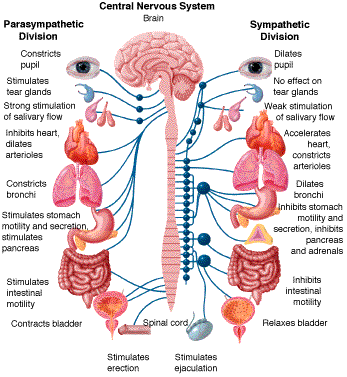
Pichot et al (2002) set out to test HRV as a practical and reliable marker of fatigue during training. 6 untrained subjects showed improved HRV during intense training. During overload training an increase in sympathetic activity was seen with a corresponding decrease in HRV. During a recovery week there was a sudden and significant rebound of parasympathetic activity and increase in HRV.
Research demonstrating better adaptation to training when HRV scores are high:
Hedelin et al (2001) found that endurance athletes who improved Vo2 max consistently showed higher HRV scores compared to athletes who showed deterioration in aerobic performance; of which showed lower HRV scores.
Kiviniemi and colleagues (2007) split 26 fit males into an HRV guided training group, a pre-planned training group and a control group. The HRV group was given intense training if HRV was the same as baseline or higher while moderate training or complete rest was given with significant drops in HRV. The pre-planned training group followed a pre-planned program typical of most endurance athletes. The results showed that HRV guided training produced a significantly greater increase in maximum velocity running compared to the pre-planned training group.
Kiviniemi et al (2010) conducted a very similar study to their 2007 work but in this case HRV groups were split in to a female group and a male group. The methodology was the same as the 2007 study where HRV groups performed training based on HRV scores while the pre-planned training group had pre programmed training. The results showed that men in the HRV group had greater maximum velocity than the pre planned group consistent with 2007 results. The HRV female group saw no significant increase in maximum velocity over the pre planned group. What’s interesting is that the HRV female group was able to improve their fitness to the same levels of the pre planned group with a lower weekly training load (fewer high intensity training days).
HRV predicting performance:
Cipryan et al (2007) showed that male hockey players have higher rated performances from their coach when HRV is high and that any drops in HRV correspond with a lower rating of performance. Of the sample players, the one with consistently low HRV was rated the lowest in performance. This demonstrates a strong correlation between HRV score and performance.
Devils Advocate
I should mention some research that shows HRV’s inconclusive ability to monitor training in attempt to be impartial. Bosquet et al (2008) performed a literature review to determine if HRV is effective at monitoring over-reaching. They determined that HRV should be used along with other known indicators and symptoms of overtraining to be meaningful. Additionally, Nigam (2010) concluded that HRV is more accurate than heart rate but not enough research exists to use either as a sole indicator of overtraining.
Edit: For more research on HRV see this post.
My Thoughts
It’s pretty evident that HRV can reflect recovery status. This has been demonstrated in both aerobic and strength athletes several times. This quality alone makes HRV worth monitoring if you are serious about your training. I’d like to see more research showing correlations with HRV and performance. Does having high HRV mean we can perform better on that day? Does low HRV doom us to substandard performance? The study on Hockey players is the only paper I found that would suggest this. I personally am not convinced. More research needs to be conducted on strength athletes in particular as this it is greatly lacking.
Grabbing the bull by the horns

Rather than complain that not enough research exists I thought I’d take matters into my own hands. I have proposed a research study to a researcher here at my university with the support of Bobby (the head strength coach) and Dr. Brian (Director of Athletic Performance) to compare HRV guided training vs. pre-planned training in collegiate football players this offseason. We will test 1 rep maxes in the big lifts before and after and see which group made the greatest improvements. This is basically copying Kiviniemi’s design except we are measuring strength performance in football players as opposed to running velocity in endurance athletes.
I’m happy to say that the department of athletic performance are all on board to conduct this research though there is still much to be done in acquiring valid instruments, getting approval from the IRB and so forth. Fingers are crossed that we can get it done. This is not part of my graduate program as I’m completing a course work based Master’s rather than a thesis based one. This research will be entirely out of personal interest on behalf of myself and the participating staff at the school.

In my next post I will display nearly 7 months worth of data from my own personal HRV scores. It will be much more interesting than this post I promise.
Thanks.
References
Bosquet, L., Merkari, S., Arvisais, D., Aubert, A.E. (2008) Is heart rate a convenient tool to monitor over-reaching? A systematic review of the literature. British Journal of Sports Medicine, 42(9): 709-714.
Chen, J., Yeh, D., Lee, J., Chen, C., Huang, C., Lee, S., Chen, C., Kuo, T., Kao, C., & Kuo, C. (2011) Parasympathetic nervous activity mirrors recovery status in weightlifting performance after training. Journal of Strength and Conditioning Research, 25(6): 1546-1552
Cipryan, L., Stejskal, P., Bartakova, O., Botek, M., Cipryanova, H., Jakubec, A., Petr, M., & Řehova, I. (2007) Autonomic nervous system observation through the use of spectral analysis of heart rate variability in ice hockey players. Acta Universitatis Palackianae Olomucensis. Gymnica, 37(4): 17-21.
Hedelin, R., Bjerle, P., & Henriksson-Larsen, K. (2001) Heart Rate Variability in athletes: relationship with central and peripheral performance. Medicine & Science in Sports & Exercise, 33(8), 1394-1398.
Iellamo, F., Pigozzi, F., Spataro, A., Lucini, D., & Pagani, M. (2004) T-wave and heart rate variability changes to assess training in world class athletes. Medicine & Science in Sports and Exercise, 36(8): 1342-1346.
Kiviniemi, A.M., Hautala, A., Kinnumen, H., & Tulppo, M. (2007) Endurance training guided by daily heart rate variability measurements. European Journal of Applied Physiology, 101: 743-751.
Kiviniemi, A.M., Hautala A.J., Kinnunen, H., Nissila, J., Virtanen, P., Karjalainen, J., & Tulppo, M.P. (2010) Daily exercise prescription on the basis of HR variability among men and women. Medicine & Science in Sport & Exercise, 42(7): 1355-1363.
Nigam, A.K. (2010) Resting heart rate and overtraining in athletes. International Referred Research Journal, 2(21): 38-40.
Pichot, V., Busso, T., Roche, F., Gartet, M., Costes, F., Duverney, D., Lacour, J., & Barthelemy, J. (2002) Autonomic adaptations to intensive overload training periods: a laboratory study. Medicine & Science in Sports & Exercise, 34(10), 1660-1666.
 HRVtraining