Deadlift 02/03/12

This morning’s HR: 61.6 HRV: 82.4

If you’ve read any of  my previous posts you’ll know that this is an excellent score for me.

If not you may want to check out my explanations of what HRV is and why I monitor it. It’s pretty interesting stuff so check it out if you have a minute.

HRV Explained: Part 1 Part 2 Part 3 and Part 4

Today was Deadlift day. The plan was to work up to a bunch of singles with a weight that didn’t provoke any pain in my back. I pulled conventional for the first time in a while. I had been experimenting with sumo deadlifts for the past 3 months or so to see how it felt on my back. They were ok, but don’t feel natural to me. I definitely prefer conventional and it felt good to do them again.

The workout went like this:

Warm Up: Extensive soft tissue work on back and hips with lacrosse ball and foam roller followed by; Skipping, Dynamic Stretches, Light Reverse Hypers.

Deadlift: 135 3×5, 225 2×5, 315 4×1, 365 2×1, 405 5×1, 425 2×1                                        – – My back felt decent and the weight felt light. Unfortunately this is a far cry from my best of 600 but if I stay smart with my numbers I’ll be there again in a few months. I should also mention that I stretched my hip flexors and calves between each set. This really helped me start with and maintain a good neutral spine for all of my lifts. I will definitely continue to do this in future workouts and I recommend that anyone do them who may have a difficult time with this. I filmed my lifts to keep an eye on my back. Nothing special. Call me out if you see something wrong with my form. The lifts are out of order on the video.

Good Mornings: 135 1×6, 185 3×6                                                                                                    GHR Sit-ups: 3×10                                                                                                                              *Superset                                                                                                                                                          Kept it light on the GM’s. I went real slow on the eccentric and explosive on the concentric.

Single Arm DB Rows – 100’s 3×10                                                                                                   GHR: 3×7 (feet at highest setting)                                                                                                  *Superset

I ended it there because the golf team showed up early for their workout and I had to get ready for it. I made it through the whole workout without tweaking my back so I’m happy.

Bench 02/01/2012

This mornings HR: 72.4 HRV:77.0

Body weight: 223

My HR was unusually high today. The only thing out of the ordinary that happened yesterday was that I broke my bed frame before going to sleep and had to lay my mattress on the floor. Clearly not that big of a deal. My HRV was 78 yesterday morning which was high considering I had a heavy squat workout the night before.

Anyway.. tonight’s bench work out looked like this:

Since HRV was still at baseline I went a head with my original plan.. sort of.

Warm Up: Skipping, Sled Pushes, Dynamic Stretches, Mobility Work and some Med Ball Throws

Bench Press: 135×5 185×3 205×3 250×3 275×3 295×3 315×3 335×1 365×1 385xmiss

The plan all month was for me to do 375. I guess I got greedy because I had a spotter for once and was probably trying to show off for the camera. Regardless, I failed to lock it out and I’ll be pissed for the rest of the month.

Military Press (Standing) – 135 for 3×8                                                                                          Chest Supported DB Rows – 80’s for 5×10                                                                            *Superset

Pull Ups – 10, 9, 9                                                                                                                                 Neutral Grip DB Press – 70’s 3×8 (I squeeze the DB’s together the whole time and pause for 2 seconds at the bottom)

DB Curls – 50’s for 3×8                                                                                                                         Band Triceps Press Downs – 3×20

That’s it. Need to strengthen my triceps.

Squat: 01/30/2012 – First Entry

A brief training/injury history will make my training log a little easier to follow. After 4 years of football at WLU, I decided to compete in powerlifting. I loved training and no longer had football obligations so I figured I might as well train for something. Over the past 2 years I’ve dealt with 2 back injuries. One was in 2010 (strained multifidus) and the other was this past fall of 2011 (another muscle strain). Since my most recent set back, I’ve only recently have been able to start lifting with some decent poundage again. I am still not 100% comfortable with Deadlifting heavy so those workouts will remain moderate in weight until I feel strong enough to increase the weight.

Due to such a busy schedule here at Cal U with my studies and grad assistant responsebilities I have reduced my training from 4 days/week to now 3 days/week. Monday I train the Squat, Wednesday is Bench Press and Friday is Deadlift. I will be using my HRV scores to help determine how much load and intensity I use from day to day (see my blog post for more info on HRV https://hrvtraining.wordpress.com/2012/01/25/my-observations-with-hrv-and-how-i-will-now-use-hrv-to-guide-my-training/).

The main purpose of logging my training is to see how HRV guided training effects my strength. There is presently no research that measures this.

Last night’s Squat Workout

Morning HR: 67.6 HRV: 77.3

HR was a bit higher than normal but HRV was within my baseline so I proceeded with the workout as planned. This week I’m working up to a heavy single. Did only 1 set at the top weight since my HRV was at the lowest end of baseline.

Warm-up:

Foam Roll Everything on Rumble Roller followed by: Light Skipping, Empty Sled Pushes, Dynamic Stretching and Mobility Work

Rumble Roller


Squat: 135×5, 225×5, 315×5, 365×3, 405×3, 455×1, 480×1, 505×1

(WARNING: Awful music with swearing in background)

Front Squat: 135×6, 185×6, 205 for 2×6
*I hate front squatting and I suck at it. The weight feels light but I have trouble maintaining the rack position due to poor mobility. I really feel these will help my back squat plus I have to be able to coach this lift so there’s plenty of reasons for me to do them.

Deep Step Ups: 3×8/leg
Anti-Rotation Band Holds: 3×15 second holds
*Superset

Glute-Ham Raise: 3×5 (feet placed at highest setting)
Ab Wheel: 3×8
*Superset

That’s it. First time doing GHR’s with my feet that high. What a difference. The Squats all felt good. Definitely had more in me on the last set but didn’t want to stress my low back out too much. I haven’t touched anything over 500 since last spring. Leaving some in the tank for future progress.


My observations with HRV and how I will now use HRV to guide my training

I’ve been monitoring my HRV for almost 7 months. Throughout this time I did not use HRV to guide my training but rather have just observed how my HRV scores responded to my regular routine. My regular routine consisted of training upper body and lower body twice/week. Monday was Squat, Tuesday was Bench, Thursday was Deadlift, Friday was Incline or Overhead press. I’d follow each main lift up with assistance work.  Today I’ll disclose what I’ve learned from my observations and how I will start to use HRV to vary my training.

Observations:

I’ve noticed that conditioning sessions (intervals on steps) affect my HRV the next morning much more than heavy strength work outs. This is obviously because I had been performing no conditioning work within the last year. However, after performing the conditioning sessions consistently over several weeks (one time per week) I noticed an overall improvement in HRV and I no longer experience massive drops the morning after the conditioning session. This is a prime example of HRV reflecting adaptation to what initially was an immense stress on my body. To give you an example, the morning after my first stair interval workout my morning heart rate after waking was 84 bpm and my HRV was 66. My typical morning heart rate is around 60 bpm (give or take) with HRV averaging almost an 80. If I miss a few weeks of conditioning, the next time I do them again my HRV plummets (I have deconditioned) .

We run 67 steps that look very similar to those above for between 30-50 rounds depending on the day.

I’ve recently began performing 20 minute light aerobic recovery work on off days to see what would happen. I found that when I do these consistently my HRV scores show smaller fluctuation from day to day. No surprise here.

I rarely get sick, but when I do, I see a significant drop in HRV. This winter there was a morning where I woke up (from a terrible night’s sleep) with a head cold, stuffed nose, etc. My morning heart rate was 92 bpm and my HRV was 56. This was my worst ever result. Needless to say I did not train that day. In the past I would often debate in my head if I should train anyway. Actually seeing how much it affects my adaptability to training was very eye opening.

I have not experienced any significant changes in HRV from minor muscular injuries. However, I do notice a decline in HRV after a few days if the injury causes me to stop training. Furthermore, I’ve noticed that HRV stays higher on average when I am consistently exercising over time and am more active throughout the days. When I’m at Cal in the weight room every day moving around and training athletes, my HRV is tpyically higher compared to when I go home for a month over Christmas and sit around too much. Within a few days of inactivity I’ll typically see HRV decline somewhat.

I’ve noticed lower HRV scores during times of travel and sleeping at places other than my own bed. I drove 4 hours from Pittsburgh to my folks place in Cincinnati and slept there for 2 weeks. The first two mornings my HRV was noticeably lower than normal. I found this to be surprising as I didn’t feel that the travel was too stressful, nor did I think that sleeping in a different bed was too stressful. This happens pretty much every time I travel.

I have not experienced a correlation with higher strength levels on days where HRV is above baseline. I’m going to elaborate on this more in a different post as I have a lot of thoughts on HRV and performance prediction as well as more research to share regarding this.

How I plan on using HRV to manipulate my training loads:

– I will change from lifting on Mon-Tues-Thurs-Fri , to adjusting to an every other day format. This is because my HRV scores on Tuesday and Friday are always lower due to Monday and Thursday training sessions. Having a day off between workouts allows for an increase in HRV on all training days which hypothetically allows for better adaptation. We’ll see how it affects my training.

– On days where HRV scores are above 80, I will perform a higher volume of work over 90% of my 1 rep max. The idea here is that since I’m more adaptable to training, I will place a greater stress on my body. For example I’ll perform 3 sets of 3 above 90% whereas I typically would do only 1 work set over 90%.

– If HRV is around baseline (77-80) I will perform a lower volume of work over 90% such as 2 sets of 2.

– Finally, if HRV is below baseline I will avoid working over 80%. I typically deload after every 3 week cycle but will no longer be doing so. I will simply reduce volume and intensity on days where HRV is low. I will deload only if and when I feel I need it based on HRV scores, performance markers (strength) and how my joints feel.

For now, this is the plan. The reps and percentages are not set in stone. The main idea is that I’ll be training with high intensity and volume on high HRV days; high intensity and moderate volume on baseline HRV days; deload on low HRV days. If I set any personal records in the gym on Bench, Squat or Deadlift I’ll know the plan is working. I haven’t hit a PR since Canadian Nationals in 2010. This is partially due to injuries and partially due to dropping 20 lbs of body weight. I’ll stop now with the excuses.

In my next post I’ll give an update on the research we’ll be doing here in the weight room with HRV and football players. I’ll also elaborate on my thoughts on HRV and its ability to predict performance.

Thanks for reading.

HRV Explained Part 3: How to measure HRV

*Update: For a much more thorough and updated description of how to measure HRV please see this post.

If you’ve been following my discussions you’re probably curious about how one goes about monitoring their HRV. Today I’ll inform you of how I monitor mine as well as a few other options available. I strongly suggest reading Part 1 and 2 of my HRV discussion before reading this if you haven’t already.

If you have $30,000+ lying around then you can buy yourself an Omegawave. This device is used by organizations within the NFL, NCAA, Olympics, Pro Soccer leagues in Europe, etc.

Here is a demonstration of NFL players having their HRV measured on the Omegawave prior to training camp.

Assuming that dropping 30 g’s is unreasonable for you there are some other options.

I personally use an app called the iThlete that is compatible with both ios and android. The iThlete requires a heart rate strap and a small ECG receiver that you plug into the headphone jack.

To measure HRV you simply plug the ECG receiver in, strap on the heart rate monitor and press the start button on the app. You should measure HRV in the morning after you wake up. This will give you the most accurate score since you’ve yet to encounter any stressful events for the day. The app will measure your heart rate for about a minute and provide you with your heart rate score in beats per minute (bpm) and HRV. It provides the HRV score through a calculation based on the time interval between each beat. You do not see the raw data but are just given a score. The higher the score for HRV, the more recovered and rested you are (parasympathetic dominant). Here is a screen shot from my score this morning.

HRV and Heart Rate score this morning

*To give you an idea of my HRV scores anything between 77-80 would be good. Anything above would be exceptional recovery and anything under would indicate insufficient recovery. This morning my resting heart rate was 63bpm and my HRV was 81. This is a great score for me.

Now here is where the app gets really cool. If you select the chart button at the bottom of the screen you see a chart of your HRV trends over time. You can see a chart displaying all HRV scores ever measured, all HRV within the last 3 months, 1 month or week. Here is a picture of mine.

HRV Chart

Upward deflections represent higher scores (increase in parasympathetic activity) and the downward deflections represent lower scores (decrease in parasympathetic activity). Green lines tell you that intense training will be well tolerated, amber lines caution you not to go overboard with your training and red lines tell you to take a recovery day.

The massive red downward deflections you see on the chart all occurred the day after I performed intense conditioning sessions. These were so stressful to my body because I’ve been training for powerlifting for the past few years and have done little conditioning. My body was not adapted to that type of training and clearly reflects this in my HRV scores. The most recent drops in HRV (shown in late December) actually show my adaptive reserves plummet while getting sick with a head cold. The first day I started to feel the cold coming on my heart rate was 78bpm and my HRV dropped to 68! The next day (the worst day of my cold) my morning heart rate was 92 and my HRV was 56! Needless to say I did not train on those days.

The last image I’ll show you from the app is the graph you can view.

This displays all of your HRV scores ever taken. You can scroll down for more scores. Additionally you can e-mail your data to your coach or anyone who may be overseeing your training allowing them to make any necessary adjustments in your training.

Another app exists called the Bioforce HRV App. Bioforce is compatible with ios and Android. This was designed by former NFL strength coach and current MMA strength coach Joel Jamieson. This app functions similar to the iThlete as it is manufactured by the same developer. BioForce differs from ithlete mainly in measurement duration (2.5 minutes vs 55 seconds), preferred position (supine vs. seated or standing).

I’ll also mention that Polar has heart rate monitor watches that can also provide HRV scores. The RS800 watch from polar is a valid instrument for collecting RR intervals and has been used quite a bit in research. However, be prepared to manually export your data from the watch to software that can analyze the data. This is not the most convenient option but will provide very accurate data.

If you’re interested in buying an HRV device I suggest you do your research on each one and find which best suits your needs.

In my next post I will discuss what I’ve learned from monitoring my own HRV for the past 7 months or so. I’ll include details on how I’ve altered my training structure because of it and give examples of how I manipulate my training day to day based on my HRV score. Additionally I’ll discuss non-training related events that have sapped my HRV scores that really taught me about how my body responds to things such as travelling, poor sleep, etc. I’ll include anecdotes about when my HRV scores were exceptionally high and what I think may have influenced them.

Thanks for reading.

HRV Explained Part 2: The Research

In today’s post I want to provide some research to support my bold claims about the effectiveness of HRV. The following research studies have been summarized to make more reader friendly as to not bore anyone who isn’t too interested in research methods, statistical analyses and so on. I have listed the citations for each study at the end for anyone interested in reading the research themselves. Additionally I have each one as a .pdf so just request a copy and I can send it.

HRV Reflecting Recovery status:

Chen et al (2011) found that HRV drops significantly within 24 hours of recovery from a high intensity strength workout in elite male competitive weightlifters and returns to baseline by 72 hours. Weightlifting performance was recovered exceeding baseline and reaching maximum at 72 hours thus showing a significant correlation between HRV and recovery.

Iellamo et al (2004) studied male rowers from the Italian national team during preparation for the world championships. The researchers found that from 50% to 100% of training load, there was a significant decrease in HRV and increase in sympathetic tone. As training reduced to 50% during the World Championships, HRV returned to base line and a return of autonomic indices to previous levels was seen. They concluded that monitoring of HRV can provide useful information to assess the dynamics of training through a simple non-invasive approach.

Pichot et al (2002) set out to test HRV as a practical and reliable marker of fatigue during training. 6 untrained subjects showed improved HRV during intense training. During overload training an increase in sympathetic activity was seen with a corresponding decrease in HRV. During a recovery week there was a sudden and significant rebound of parasympathetic activity and increase in HRV.

Research demonstrating better adaptation to training when HRV scores are high:

Hedelin et al (2001) found that endurance athletes who improved Vo2 max consistently showed higher HRV scores compared to athletes who showed deterioration in aerobic performance; of which showed lower HRV scores.

Kiviniemi and colleagues (2007) split 26 fit males into an HRV guided training group, a pre-planned training group and a control group. The HRV group was given intense training if HRV was the same as baseline or higher while moderate training or complete rest was given with significant drops in HRV. The pre-planned training group followed a pre-planned program typical of most endurance athletes. The results showed that HRV guided training produced a significantly greater increase in maximum velocity running compared to the pre-planned training group.

Kiviniemi et al (2010) conducted a very similar study to their 2007 work but in this case HRV groups were split in to a female group and a male group. The methodology was the same as the 2007 study where HRV groups performed training based on HRV scores while the pre-planned training group had pre programmed training. The results showed that men in the HRV group had greater maximum velocity than the pre planned group consistent with 2007 results. The HRV female group saw no significant increase in maximum velocity over the pre planned group. What’s interesting is that the HRV female group was able to improve their fitness to the same levels of the pre planned group with a lower weekly training load (fewer high intensity training days).

HRV predicting performance:

Cipryan et al (2007) showed that male hockey players have higher rated performances from their coach when HRV is high and that any drops in HRV correspond with a lower rating of performance. Of the sample players, the one with consistently low HRV was rated the lowest in performance. This demonstrates a strong correlation between HRV score and performance.

Devils Advocate

I should mention some research that shows HRV’s inconclusive ability to monitor training in attempt to be impartial. Bosquet et al (2008) performed a literature review to determine if HRV is effective at monitoring over-reaching. They determined that HRV should be used along with other known indicators and symptoms of overtraining to be meaningful. Additionally, Nigam (2010) concluded that HRV is more accurate than heart rate but not enough research exists to use either as a sole indicator of overtraining.

Edit: For more research on HRV see this post.

My Thoughts

It’s pretty evident that HRV can reflect recovery status. This has been demonstrated in both aerobic and strength athletes several times. This quality alone makes HRV worth monitoring if you are serious about your training. I’d like to see more research showing correlations with HRV and performance. Does having high HRV mean we can perform better on that day? Does low HRV doom us to substandard performance? The study on Hockey players is the only paper I found that would suggest this. I personally am not convinced. More research needs to be conducted on strength athletes in particular as this it is greatly lacking.

Grabbing the bull by the horns

Rather than complain that not enough research exists I thought I’d take matters into my own hands. I have proposed a research study to a researcher here at my university with the support of Bobby (the head strength coach) and Dr. Brian (Director of Athletic Performance) to compare HRV guided training vs. pre-planned training in collegiate football players this offseason. We will test 1 rep maxes in the big lifts before and after and see which group made the greatest improvements. This is basically copying Kiviniemi’s design except we are measuring strength performance in football players as opposed to running velocity in endurance athletes.

I’m happy to say that the department of athletic performance are all on board to conduct this research though there is still much to be done in acquiring valid instruments, getting approval from the IRB and so forth. Fingers are crossed that we can get it done. This is not part of my graduate program as I’m completing a course work based Master’s rather than a thesis based one. This research will be entirely out of personal interest on behalf of myself and the participating staff at the school.

Weight Room

In my next post I will display nearly 7 months worth of data from my own personal HRV scores. It will be much more interesting than this post I promise.

Thanks.

References

Bosquet, L., Merkari, S., Arvisais, D., Aubert, A.E. (2008) Is heart rate a convenient tool to monitor over-reaching? A systematic review of the literature. British Journal of Sports Medicine, 42(9): 709-714.

Chen, J., Yeh, D.,  Lee, J., Chen, C.,  Huang, C.,  Lee, S., Chen, C.,  Kuo, T., Kao, C., & Kuo, C. (2011) Parasympathetic nervous activity mirrors recovery status in weightlifting performance after training. Journal of Strength and Conditioning Research, 25(6):  1546-1552

Cipryan, L., Stejskal, P., Bartakova, O., Botek, M., Cipryanova, H., Jakubec, A., Petr, M., & Řehova, I. (2007)  Autonomic nervous system observation through the use of spectral analysis of heart rate variability in ice hockey players.  Acta Universitatis Palackianae Olomucensis. Gymnica, 37(4): 17-21.

Hedelin, R., Bjerle, P., & Henriksson-Larsen, K. (2001) Heart Rate Variability in athletes: relationship with central and peripheral performance. Medicine & Science in Sports & Exercise, 33(8), 1394-1398.

Iellamo, F., Pigozzi, F., Spataro, A., Lucini, D., & Pagani, M. (2004) T-wave and heart rate variability changes to assess training in world class athletes. Medicine & Science in Sports and Exercise, 36(8): 1342-1346.

Kiviniemi, A.M., Hautala, A., Kinnumen, H., & Tulppo, M. (2007) Endurance training guided by daily heart rate variability measurements. European Journal of Applied Physiology, 101: 743-751.

Kiviniemi, A.M., Hautala A.J., Kinnunen, H., Nissila, J., Virtanen, P., Karjalainen, J., & Tulppo, M.P. (2010) Daily exercise prescription on the basis of HR variability among men and women. Medicine & Science in Sport & Exercise, 42(7): 1355-1363.

Nigam, A.K. (2010) Resting heart rate and overtraining in athletes. International Referred Research Journal, 2(21): 38-40.

Pichot, V., Busso, T., Roche, F., Gartet, M., Costes, F., Duverney, D., Lacour, J., & Barthelemy, J. (2002) Autonomic adaptations to intensive overload training periods: a laboratory study. Medicine & Science in Sports & Exercise, 34(10), 1660-1666.

Heart Rate Variability Explained: Part 1

Edit 03/25/2014: For a more in depth discussion on HRV click here

To open my discussion on HRV and its potential usefulness in athletes I would like to first highlight some of HRV’s most promising attributes.

  1. HRV can help determine if and when one is overtraining
  2. HRV can inform you when you are more adaptive to training and when you are less adaptive (telling you when to train hard and when to back off)
  3. HRV can potentially predict if you will perform better or worse on a given day (I’m not sold on this yet)
  4. HRV pretty accurately reflects recovery status

If you take your sport/training seriously, this information is extremely valuable. Throughout the next few posts I will do my best to fully explain what HRV is, how it works and from there we will discuss how to put it to use practically. I would also like to mention that HRV can be effective in both strength and endurance athletes. In fact, the majority of the research that exists on HRV has been performed on endurance athletes. So if you are a runner, cyclist, rower or all of the above, this blog may still offer useful information.

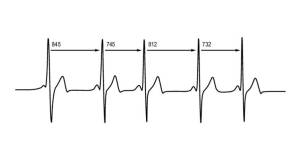
By now you might be wondering what the heck is HRV exactly? HRV is the measurement of time between each heartbeat. If you thought that the heart beats on a fixed rhythm you are incorrect. The time interval between each heart beat is highly variable. Specifically, we’re talking about the measurement of time between each R-R interval from an electrocardiogram (ECG) measurement. The variability in your heart rate provides critical information about the function of your autonomic nervous system (ANS). Typically HRV is measured on an ECG in a clinical setting. Fortunately, other more affordable and accessible devices exist that will measure your HRV (I will provide more info on these later).

What is the ANS and why is it important?

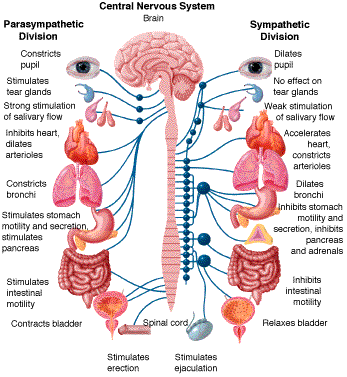
Here’s where the discussion turns a little more technical but bear with me. The ANS contributes to the body’s homeostasis by exciting or inhibiting cardiac muscle, smooth muscle and glands in response to subconsciously perceived visceral sensations (Tortora & Derrickson 2006). The ANS is comprised of two branches; the sympathetic nervous system (SNS) and the parasympathetic nervous system (PSNS). The easiest way to distinguish the differences between these two branches is to associate “fight or flight” responses with the SNS and “rest and digest” responses with the PSNS.

Sympathetic activity increases heart rate, force of contraction and blood pressure; increases blood flow to your muscles while decreasing blood flow to your gastrointestinal organs and releases sugar into the blood to provide energy to the working muscles. Adrenaline and glucocorticoid hormones are released to enhance these actions. In essence, the SNS responds to stress by providing the body with the resources and ability to move quickly to safety or to fight in response to danger. Think about anytime you’ve felt an adrenaline rush before a big sporting event or when someone scared you. That is your SNS being activated.

In contrasts, the PSNS does the complete opposite. In the absence of stress the body will reduce your heart rate and blood pressure; increase digestive processes and focus on the build up and repair of tissues (such as muscle) and storage of sugar (glycogen). In essence it recovers the body from any damage done during the stress response of the SNS.

Our SNS is activated when we train or compete. This is a good thing as it will enhance our ability to perform. However, intense training is extremely stressful on the body and requires sufficient recovery. It is important to understand that the acute response to a heavy strength training workout is actually weakened and damaged muscle tissue and a fatigued central nervous system. This is why we need to allow for sufficient recovery time to let the parasympathetic nervous system mobilize adaptive reserves and repair our muscle tissue and thus bring us to an increased level of strength.  An imbalance between sympathetic and parasympathetic activity can lead to reductions in performance and in severe cases, overtraining.

Enter HRV. HRV provides a non-invasive look at the function of our autonomic nervous system. If our body is still stressed from training it will be reflected in our HRV. Alternatively, if we are sufficiently recovered from training it will also be reflected in our HRV. Training intensely when HRV scores are poor would be counterproductive. When HRV scores are high, intense training will be well tolerated because adaptive reserves are high.

Keep in mind that it is not just training stress that the body must recover from. Any form of stress, be it mental or physical will use up adaptive reserves and elicit a stress response. Money problems, fighting with your significant other, moving to another city and so forth can all be extremely stressful on the body. HRV will be effected by any stressor making it all the more valuable to monitor. In future posts I will discuss how different non-training related events have significantly affected my HRV scores.

I will wrap this post up here as this can be a lot to swallow for anyone without a background in human physiology. In my next post I will discuss some research that supports the claims I made earlier about HRV.

Reference

Tortora, G. & Derrickson, B. (2006) Principles of Anatomy and Physiology 11th Edition. Biological Sciences Textbooks Inc.

Welcome to hrvtraining

My name is Andrew Flatt and I hold a Master’s Degree in Exercise Science and am a CSCS with the NSCA. I currently reside in Montgomery, AL where I am completing several research projects pertaining to HRV and exercise at Auburn University at Montgomery. I recently worked as an assistant strength and conditioning coach at Cal U in PA. I was the strength and conditioning coach at a private high school in Ontario for 3 years prior to pursing a Master’s degree. I have an extensive athletic background including hockey, rugby and collegiate football. I now compete in raw powerlifting and was the 2010 Canadian National Champion (amateur). I am interested in all aspects of strength and conditioning however my research interest pertains to Heart Rate Variability and its application to monitoring the training of athletes.

With this blog I intend to;

  • share anecdotes, research and anything else I can regarding heart rate variability (HRV) as I feel it is a technology that will soon be used by the majority of trainers, strength coaches and individuals to better monitor and manipulate their  training loads.
  • discuss any other aspect of strength and conditioning that happens to be on my mind.
  • make an effort to provide training updates with  HRV scores and relevant information to allow interested readers to see how HRV is effected on a day to day basis in a strength athlete from training and other daily stressors
  •  include book and product reviews as I like to read and buy stuff related to strength and conditioning.
  • share video’s and resources that I feel readers of this blog will find useful

Thanks.

@andrew_flatt

hrvtraining@gmail.com