HRV Measurement Position Article

Recently an article of mine regarding standing vs. supine HRV measurement was posted here. The article includes;

  • A brief discussion of autonomic control of heart rate during supine rest and in response to orthostasis (standing)
  • A summary of some research pertaining to standing HRV measurements
  • A presentation of data I collected over a 2 week period where I measure and analyze both my standing and supine HRV scores in response to training load.

Check it out here.

Psychological Considerations With HRV Monitoring

When I first started recording HRV measurements in August of 2011 I didn’t really know what to expect. I had no strategy for how I was going to interpret the data or put it to use practically. Other than reading Q&A posts from Landon Evans on elitefts, I didn’t know too much about HRV. All I knew was that it sounded interesting, logical and it was something cool to buy. I didn’t even own a compatible device to operate the app on so I bought an iPod touch.

Up until that point I was training religiously. Three weeks on followed by a one week deload. I didn’t miss workouts. I would try to hit my planned numbers at all costs. This method of training worked very well. I got big and strong training like this. Upon purchasing my ithlete device I kept my training structure the same and simply recorded HRV every morning. I decided to analyze the data later and see what I learned. Was I stronger when HRV was high? Was I weaker when HRV was low? What was HRV when I got hurt or sick? Etc. I ended up with 6 months of data of pre-planned training. I discussed my observations in this article.

Basically, I learned that with some simple modifications to my daily training plan, I might be able to see some benefits. I’d say the biggest benefit has been being able to back off the training when my body needs it rather than trying to assume. Pre-planned training failed to account for real life incidences that effect training. HRV monitoring also allowed me to better adjust training in response to illness, allowing me to maintain strength better upon return.

A common topic that arises when discussing the applications of HRV among colleagues is the potential psychological effects. What are they? How does this effect performance?

Here are some example scenarios with some brief thoughts;

  • HRV score is low and therefore you expect to feel weaker

–          In my experience I’m definitely weaker when HRV is well below baseline. But this is often because a well below baseline score happens; after an intense workout day; when I’m ill; when I perform a very different workout than I’m used to. I’ve found that moderately below baseline scores don’t typically affect my strength.  This may be different for you or your athletes. The simple solution would be to keep yourself or athlete blind from the HRV score for an observation period and see what you learn. However, the idea that HRV score can impact how you will perceive training is very real.

  • HRV score is high and therefore you expect to feel stronger

–          I can’t say that I’m stronger than normal when HRV is above baseline. But I’m certainly not weaker. This again should be tested during an observation period where the trainee is uninformed of HRV score. I must admit that upon seeing a good HRV score I immediately get excited. As if I have permission to train hard. Obviously my perceptions are influenced by my HRV score (based on my previous observations). We probably don’t want this happening with athletes. A good test for me might be to do another observation period. With what I know now about HRV I’m no longer impartial. Perhaps in the future I will test HRV blind for a month or two and see what happens.

  • HRV score doesn’t appear to make sense – something’s wrong with me, or the device

–          Something may be wrong with you or the device. Or, something may be wrong or inconsistent with your measuring procedure (position, you didn’t go to the bathroom first, disturbed measurement, etc). Additionally, you must consider all of the other factors that affect HRV. I wrote a post on many of these factors here. In short, you must factor in daily nutrition, training load, familiarity of training session, travel, caffeine intake, mental stress, etc. It isn’t just training load that can impact your HRV score.

–          Trouble shooting ideas: Check your pulse (on wrist) while recording the measurement to make sure the animated heart is in fact in synch with yours. Make sure the valid pulse indicator is green during the measurement. Make sure that you follow the breathing prompts consistently every measurement (This must be the same every time). Take several measurements in a row. If you do this keep in mind that successive measurements will change slightly (a few bpm and a few points on HRV) but they should be in the same ball park. Be careful when interpreting successive measurements. I find that I get a bit impatient/anxious when recording several in a row which will obviously effect HR.

–          If you measure standing (my preferred position) give yourself a minute to stabilize and let your heart rate adjust. Typically upon standing HR will jump up real high to account for the change in blood distribution requirements followed by a marked drop and then an evening out where it comes back up a bit. It may look something like this;

Lying down HR = 51

Standing HR (immediately after standing) = peaks at 102

Standing HR (after several seconds) =drops to 54

Standing HR (once stabilized) = 60

*These figures were made up based on what I recall from performing these tests

  • HRV score is low and therefore I might get hurt/perform terribly

–          One must keep in mind that come game day, athletes are typically experiencing some form of anxiety. This can be good or bad. Either way it can have a pretty big impact on HRV score that morning which will likely provide a skewed result. Therefore, game day measurements should probably be interpreted with caution. I’d prefer to keep the score from the individual so that it doesn’t mess with their head. Rate performance over time and see how it matches up with HRV. Studies have been done that have looked at this that I’ve discussed in several other posts. See what you find and how it compares. If you do please let me know what you find!

  • HRV score is low and therefore I’m overreaching, overtraining, etc

–          Again, all other factors must be considered when a score is analyzed. Probably the easiest measurement you can do to determine if one is in fact overreaching is to have them perform some performance tests like a vertical jump or grip strength. Additionally, assess their workout cards to see if their numbers are declining. If they are in fact over doing it performance will decrease with HRV.

Closing thoughts:

For the individual trainee: My best advice that I can give individuals who have an HRV device is to put yourself through an observation period. Try and measure your HRV blind and proceed with your normal pre-planned training routine (or whatever you typically do without the guidance of HRV). Try and document important events that may have effects scores in the “comments section” and keep a training log. It’s hard to analyze data based purely on memory. Having background knowledge of HRV before you use is it can be a blessing and a curse. You’ll likely have expectations or may already be impartial.

For monitoring athletes:  In team sport athletes, the less they know about HRV the better (in my opinion). If they can simply take their measurements and forward you the data that is all they need to know and do. If you can somehow manage to have them measure without seeing HRV score then that would probably be best. This will remove the psychological effects that can potentially occur.

In smaller teams and individual sports, this comes down to a judgement call based on your relationship with the athlete and their personalities. By the athlete knowing what their HRV means, how their lifestyle affects it and so forth, you may be able to get more “buy-in” to your program, guidelines, etc. Individual athletes are typically different than team sport athletes. An individual sport athlete typically takes more initiative, holds themselves more accountable, etc. They may respond to it by taking better care of their nutrition, sleep, reducing overall stress, performing active recovery and restoration modalities etc. The alternative would be to keep them vaguely informed and approach them the same way as the team sport athlete.

What’s your take on the psychological issues associated with HRV? What observations have you made? I’d like to hear about them. Let me know in the comments below or via e-mail andrew_flatt@hotmail.com

All about the ithlete HRV device

Today I’d like to provide some more information on the ithlete device. I will be linking back to previous posts to spare myself from re-writing things I’ve already covered. The FAQ section on the ithlete website provides very thorough responses to common questions so I recommend reading through that as well. I encourage anyone with further questions to contact me directly.

What is ithlete?

The ithlete HRV system is a handheld heart rate variability measurement device that operates on most smart phones and tablets. This is significant because prior to the development of devices such as ithlete, acquiring HRV measurements was cost prohibitive due to the expensive equipment and software required to perform the measurement and analyze the data. Many of these devices also required a trained technician. The ithlete allows individuals to easily perform HRV measurements at home for a fraction of the original price.

What equipment is required to use ithlete?

You will need;

– a heart rate strap

– the ithlete ECG receiver

– compatible smart phone/tablet/iPod

– the ithlete HRV app available in the iTunes store and Google Play store for Android.

Link for App in iTunes

Link for App in Google Play Android Store
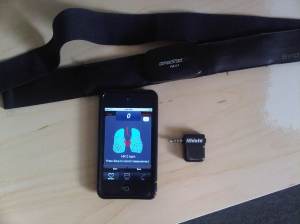
The heart rate strap and ithlete ECG receiver can be purchased together or separately.

A brand new version of the ithlete receiver has just been released that is compatible with nearly all versions of iPhone, iPod Touch and iPad. It also operates on nearly all Android phones and tablets.

What is heart rate variability (HRV)?

I provide an explanation of HRV in this article.

Essentially, we are getting a non-invasive look at the function of our autonomic nervous system. An HRV score will tell you when your body is better able to handle greater stress (higher training loads) and when it can’t. This is ideal for appropriately applying hard training on the right days and reducing training when needed. This will allow for better adaptation and reduce our risk of overtraining.

How does the app work and what functions does it have?

An HRV measurement with ithlete consists of the following steps (screen shots below);

1. Put on heart rate monitor strap with conduction pads moistened and plug ithlete reciever into device.

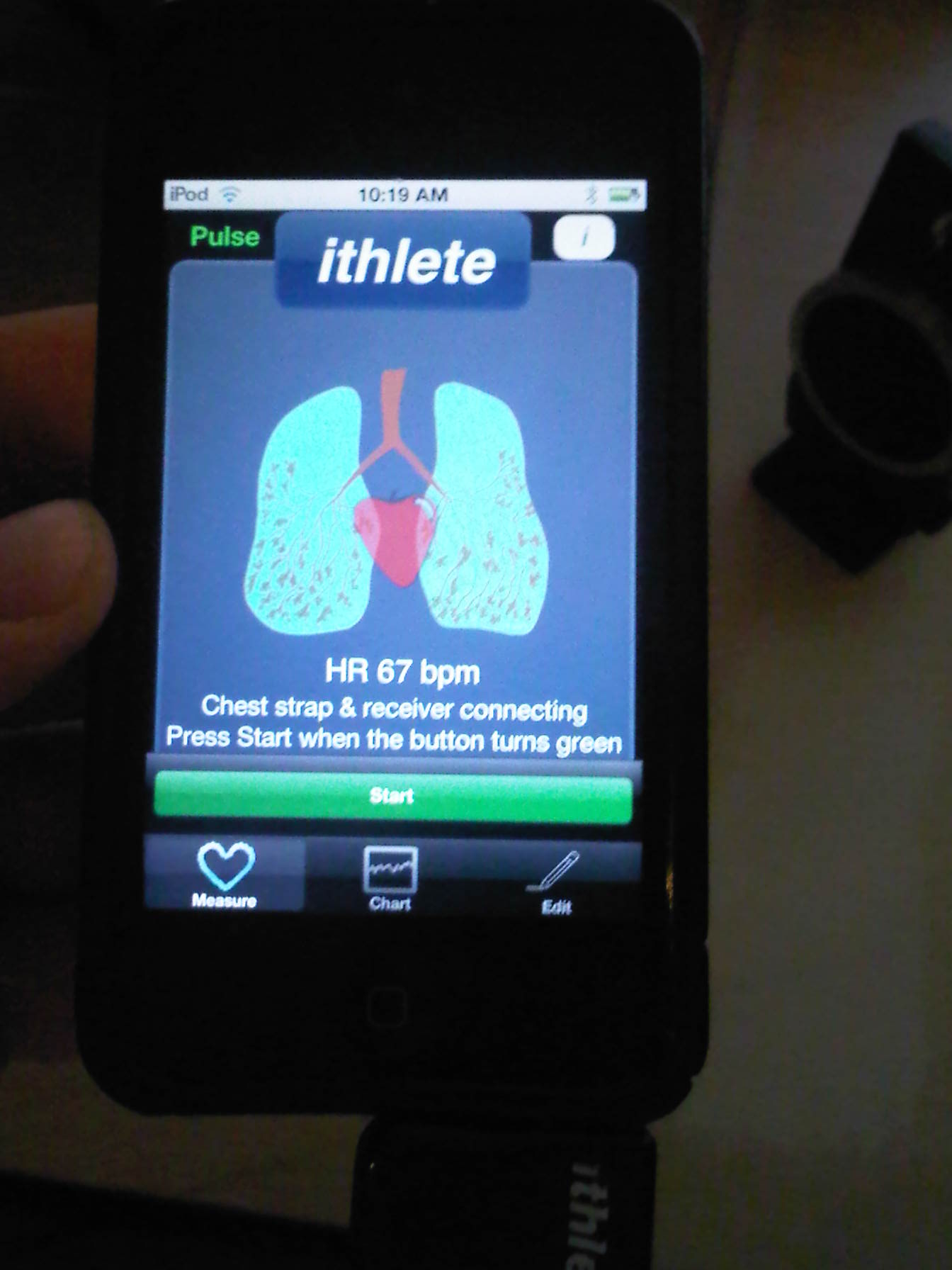
2. Initiate app and wait for “start” button to turn green as it waits for your heart rate to stabilize.

3. Hit “start” and follow the breathing cadence that the app displays.

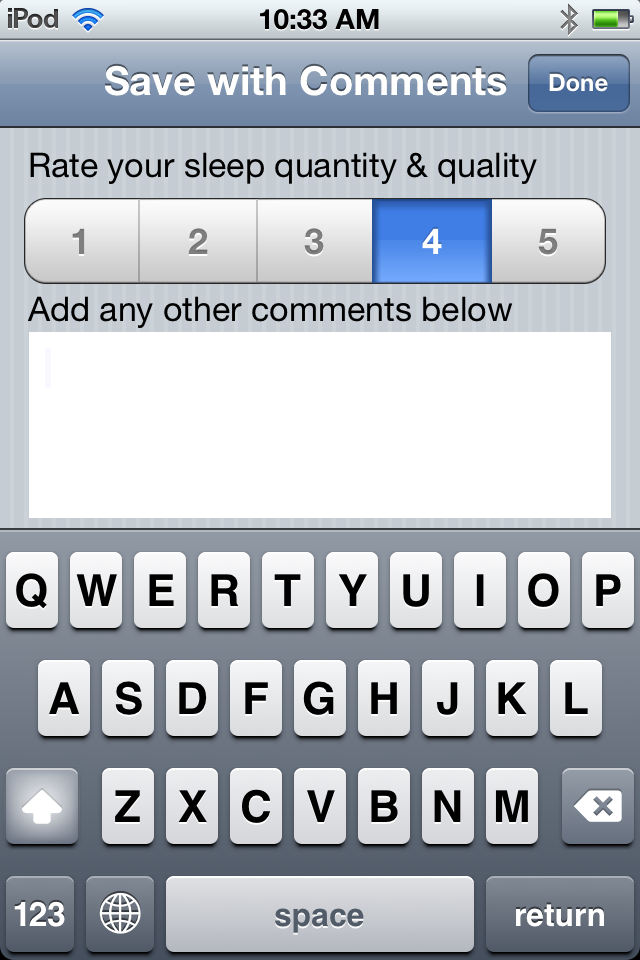
4. “Save” your score, enter comments if desired.

5. At this point you are complete. You can review your trend, input training load, analyze your data or  whatever you need to do.
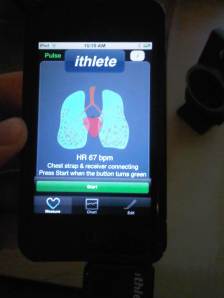
Image of app ready for measurement

The duration of the measurement is 55 seconds.

When the measurement is complete your screen will look like this;
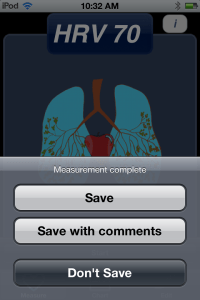
If you are satisfied with your measurement you will have the option to “Save” the measurement “with comments” or without. I prefer to use the comments option to document notes about training, stress, sleep etc. If for some reason the measurement was disturbed you can simply hit “Don’t Save” and redo the measurement.
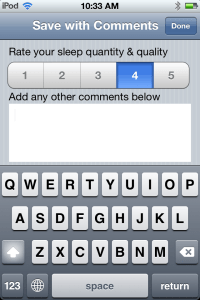
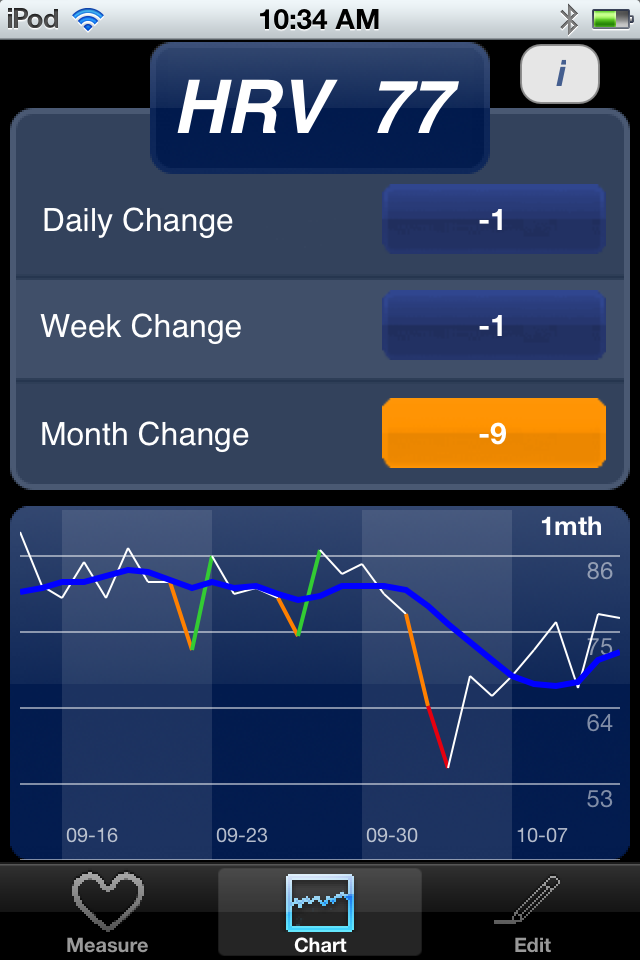
Once you have finished with your comments the app will take you to the “Chart” page. Here you will see your HRV Score with color indication, weekly change and monthly change. Your data will be charted across the bottom of the screen so you can clearly see your day to day variations. HRV trends can be viewed in 1 week, 1 month, 3 months, or all time displays.

The color indications inform you of what type of training is recommended based on your HRV score.

Green = Higher training loads

White = Moderate to high training loads

Amber = Reduce loads

Red = Rest

*77 was my actual HRV Score this morning, the image from above with a score of 70 was from a measurement I did just now to get the screen shots for this post.
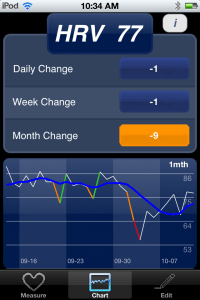
In the trend displayed above the Blue horizontal line represents baseline HRV. The white and colored deflections are your day to day changes in HRV. When you first get ithlete it will take a few days to establish a baseline HRV score. Once baseline is established you will be able to judge your recovery status based on if your score is above or below baseline.

Generally, an abundance of any form of stress or a combination thereof (mental, physical, poor nutrition) can result in a below baseline HRV day. Quality eating, sleeping and regular exercise will result in better scores. The HRV trend is very informative as you can learn how your body reacts to various workouts, eating habits, travel, etc.

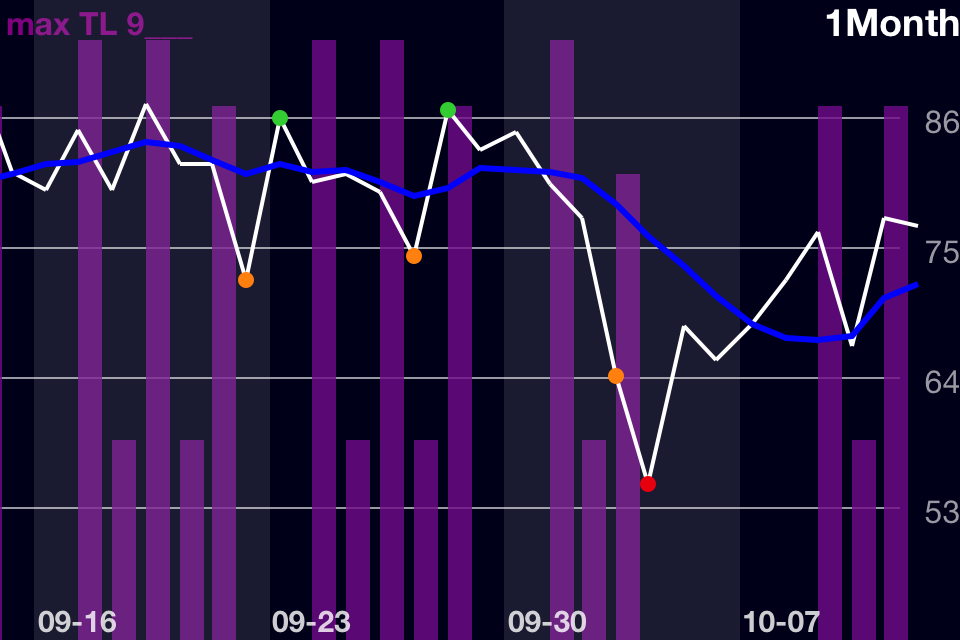
If you rotate your device sideways your trend will appear with training load values as depicted below. You can see a clear disturbance in my trend as I traveled to the US and generally had a highly stressful week. The vertical purple bars represent my training load. More info on interpreting your data will be presented further below.
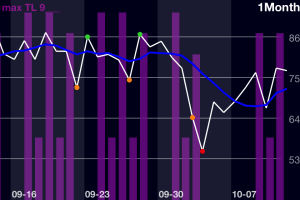
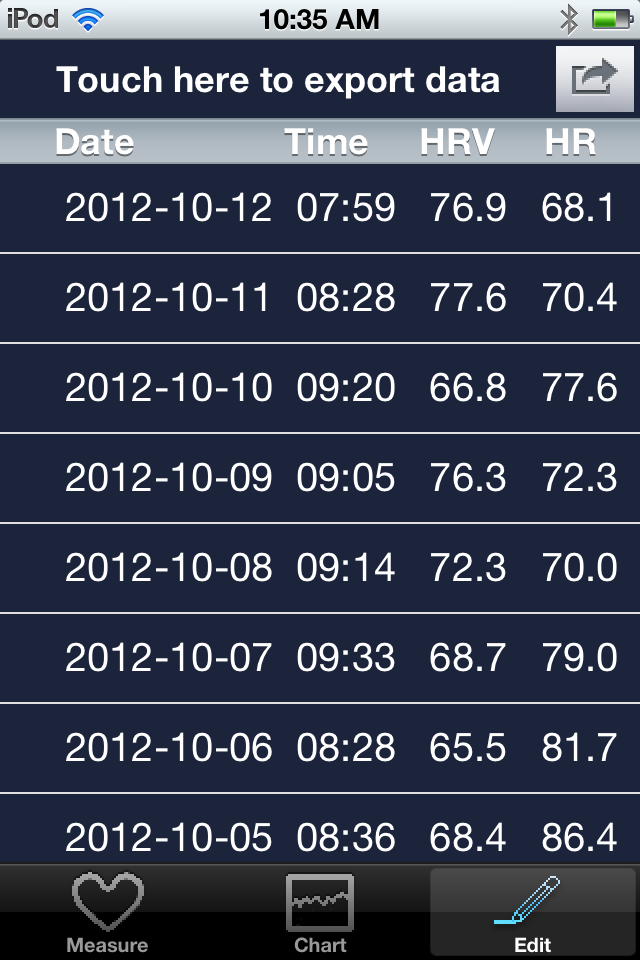
By selecting the “Edit” option from the menu along the bottom of the screen you will be taken to the screen shown below. This is a collection of all of your data ever recorded.
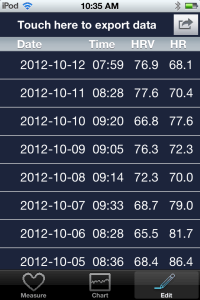
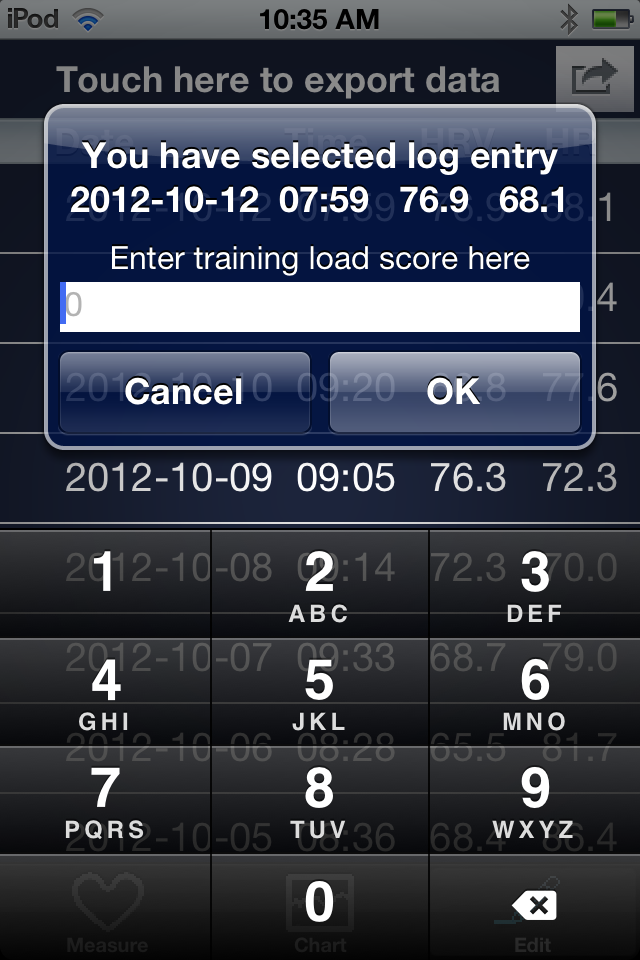
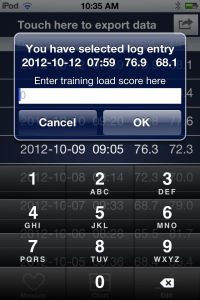
In this section you can input your training load for the day you select as shown below. Typically I input my training load from the previous day each morning. Once you enter the training load score it will appear on your chart in the expanded view. This screen also gives you the ability to e-mail your data or export it to drop box. This is handy for coaches and trainers who want to see their athletes data.
How should I measure HRV?

Perform your HRV measurement after you wake up and go to the bathroom. Do not perform any tasks that will create unnecessary stress or alter heart rate significantly. I prefer measuring with ithlete in the standing position and I provide a very thorough explanation of why here. The key is to be 100% consistent with your measuring procedure to have the most meaningful data.

How do I know what training load to input?

This will depend on what type of athlete you are and what type of training you do. See this post for ideas on how to do this. I personally use Session Rating of Perceived Exertion (sRPE).

How do I interpret my HRV Trend?

See this post for my thoughts on HRV trend interpretation.

How do I use HRV to guide my training?

See this post for my thoughts on HRV guided training and periodization.

Is HRV only for Athletes?

Anyone can benefit from monitoring their HRV. See this post if you are a non-athlete or recreational lifter.

What evidence exists to support HRV training?

For plenty of research that lends support to the efficacy of HRV training please see this post.

For more relevant information browse the following posts:

HRV, Adaptation, Progression, Training Adjustments

Illness, recovery time, travel stress, monitoring, etc.

HRV in a team setting

HRV and Nutrition

HRV and Inflammation

How effective is pre-planned training?

If you have any questions that were not addressed in this post or the ithlete Q&A please send me an e-mail. The purpose of this post was  to show everyone how the ithlete HRV app functions and to provide information about why HRV monitoring can enhance your training and lifestyle.