Unknown's avatar

About hrvtraining

Researcher and Professor. Former athlete and coach.

HRV Reflects Travel Stress

Travelling is a part of competitive sport and is an issue that most athletes deal with on a regular basis. Non-athletes may not appreciate just how stressful travelling can be, particularly when it is combined with the demands of training, practice and competition schedules. I’ve learned that travel is especially more stressful for individuals who like to maintain a regular routine. This includes athletes who like to eat at regular times, train at regular times, sleep, etc. To make things worse, crossing time zone’s can add further issues by effecting sleep patterns and disturbing circadian rhythms.

I’m sure if your athletes are open and honest enough, they will be able to communicate any issues they’re experiencing as a result of the travel. However, there’s evidence to show that HRV monitoring is capable of reflecting the time course of individual adaptation to travelling via changes in autonomic activity in healthy folks (Tateishi & Fujishiro 2002, Tateishi et al. 2000). Taken with perceived stress and fatigue, an objective measure such as HRV may provide coaches a more complete picture of their athletes response to the stresses associated with travel.

Brief Research Review

Dranitsin (2008) investigated the effects of travel across 5 times zones and acclimatization to a hot and humid environment in 13 elite junior rowers. The athletes were monitored during a training camp in Kiev for 9 days and during training camp in Beijing for 17 days before and during the Junior Rowing World Championship. HRV was collected daily in the mornings after waking and bladder emptying with a Polar S810i (presently the RS800). Data was collected for 5 minutes supine followed by 5 minutes standing.

HRV parameters remained relatively unchanged after relocation to Beijing until the 3rd day. At this point, standing HRV values decreased until day 6 at which point they returned to baseline. Supine HRV did not show any significant changes until the 8th day of acclimatization. Parasympathetic measures (RMSSD, SD1 and HF) trended upwards in the standing position in response to 3 days of competition. The authors looked at correlations between HRV indices and training load, humidity, etc., but I will not discuss them. With all of the factors involved it would be very difficult to attribute a change in HRV to a specific variable. Overall, it was interesting to see a lag in the HRV response to the change in time zone and climate. The increase in parasympathetic HRV parameters in response to competition likely reflect fatigue although this is not discussed.

Botek et al. (2009) had a case study published investigating the effects of travel across time zones in two elite athletes; a male decathlete and a female swimmer. HRV data was collected upto 10 days prior to their flights and for an additional 8 days after relocation. HRV was measured with a VarCor PF 7 system in both supine and standing positions. Training load was prescribed based on recommendations from the VarCor PF7 software analysis (similar to OmegaWave in a way).

In athlete A (male, decathlete), parasympathetic indices of HRV decreased well below baseline on the day of the flight and remained suppressed until the 4th day after relocation. In athlete B (female, swimmer), HRV remained at baseline until the third day, at which point it decreased significantly. HRV was not recorded every day in athlete B but it appears that HRV trended back toward baseline in the subsequent days. The author’s mention that athlete B experienced larger than normal drops in HRV in response to familiar training which is interesting to note. The results from this case study suggest that HRV responses to travel across time zones are individual. Information about training load and manipulation based on HRV is presented, however it would’ve been nice to see discussion on how the athletes performed in competition as this is ultimately what matters most.

Personal HRV Data from Travel

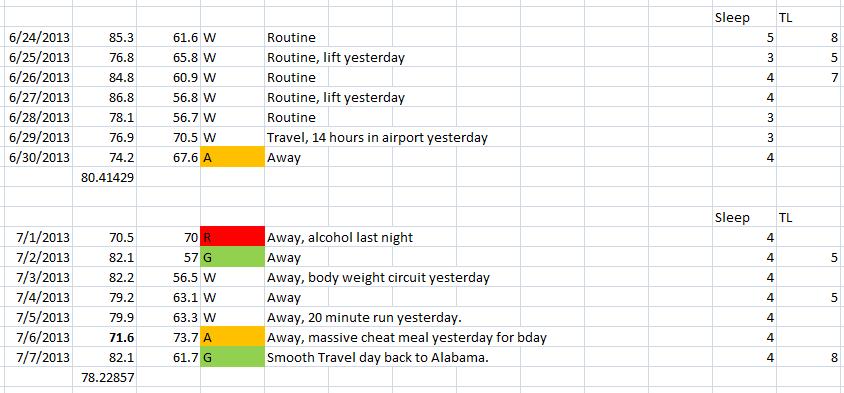
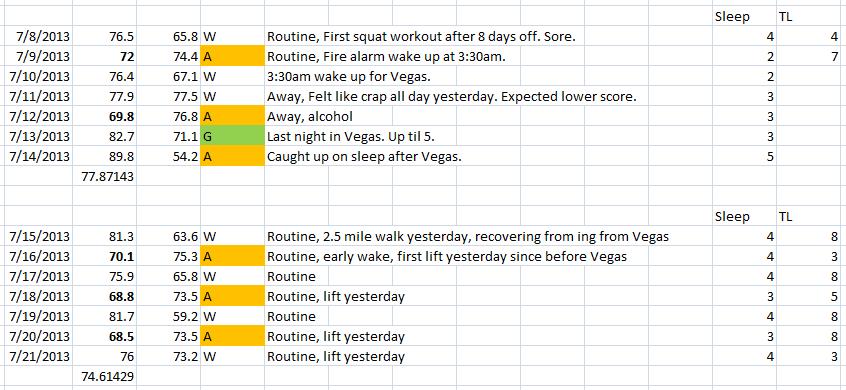
Below I’ve posted my HRV data from the past 4 weeks that involved considerable travel. The comments provide details of what was happening on a day to day basis regarding location, training, etc.

“Routine” implies I’m at home following my regular routine, “Away” obviously implies that I’m out of town, not following my routine.

Toward the end of week 1, I traveled North-East for a little over a week. I returned home only for a few days at the end of week 2 before I headed South-West to Vegas for the NSCA conference.

Week 1 & 2 Data

Week 1 & 2

Week 3 & 4 Data

Week 1 – Best representation of baseline. HRV decreased on day 1 of travel.

Week 2 – Very little training this week. HRV appears most impacted from a night of drinking and again after my birthday which I attribute mainly to my eating.

Week 3 – The scores toward the end of the week are deceiving as the green indication indicated baseline/recovery. However, after very little sleep, I woke up and performed my measurement while I was barely awake. I could have fallen asleep standing if I shut my eyes. Furthermore, with the time difference and changed sleep pattern, my HRV measure would’ve been performed at an unusual time which can impact scores. The next day after returning from Vegas I slept for 10 straight hours and woke up with the highest score I’ve had in a long time. Clearly I was in recovery mode. I opted to go for a long, very low intensity walk (to the tune of “The Very Best of Cat Stevens” every single step of the way)  and held off on training til the next day.

Week 4 – Upon returning home and resuming my training, you can really see the effects of the last few weeks. Moderate workouts (low volume with moderate intensity) were tough and caused large drops in HRV with slow recovery. Additionally, and as expected, strength was down. This is due to both the travel (and associated life style) as well as the near cessation of training during that time. It is rare for me to see scores in the high 60’s and low 70’s but it dipped that low several times over the last two weeks.

For more effect I’ve added a weekly mean trend and my ithlete screen shots below.

Weekly mean

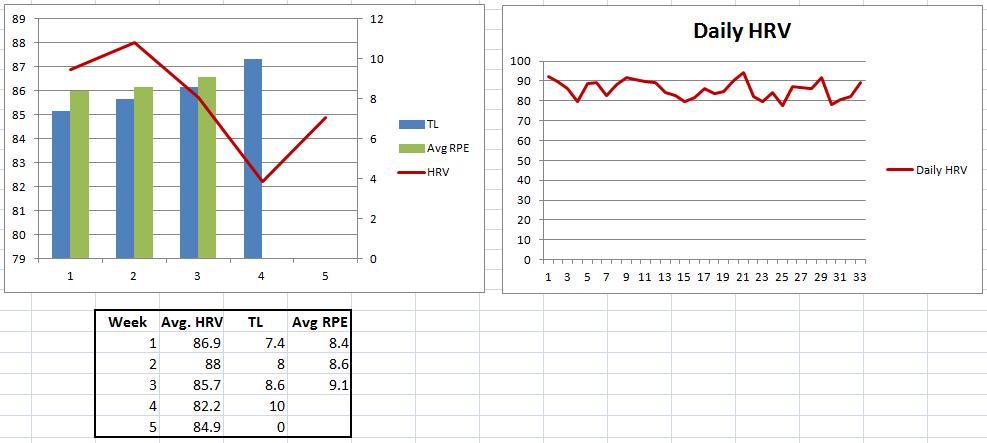
Weekly Mean HRV

Trend

TL Trend

There is a clear downward trend over the 4 week period. The result of which can be attributed to several factors, not just the travel aspect. Obviously, with more preparation and more effort, I could have minimized these effects and maintained my training. It goes without saying that competitive athletes will likely have much more structure to their transitioning from one time zone to another to reduce the negative effects as much as possible.

So, from my experience and based on the limited research on the topic, it appears that; a) response to travel stress is individual and b) when considered with subjective measures of fatigue,  HRV may serve as a useful tool for reflecting the effects of travel and the associated period of adaptation.

conference NSCA 2013

NSCA Conference 2013

References

Botek, M., Stejskal, P., & Svozil, Z. (2010). Autonomic nervous system activity during acclimatization after rapid air travel across time zones: A case study. Acta Universitatis Palackianae Olomucensis. Gymnica39(2), 13-21.

Dranitsin, O. V. (2008). The effect on heart rate variability of acclimatization to a humid, hot environment after a transition across five time zones in elite junior rowers. European Journal of Sport Science8(5), 251-258.

Tateishi, O., & Fujishiro, K. (2002). Changes in circadian rhythms in heart rate parasympathetic nerve activity after an eastward transmeridian flight. Biomedicine & Pharmacotherapy56, 309-313.

Tateishi, O. et al. (2000). Autonomic nerve tone after an eastward transmeridian flight as indicated by heart  rate variability. Annals of Noninvasive Electrocardiology, 5(1), 53–59.

RMSSD: The HRV Value provided by ithlete and BioForce

Most individuals who take their sport or training very seriously have likely heard of heart rate variability (HRV). Thanks to devices such as the Polar RS800 (Formerly S810) wrist-watch/heart rate monitor and eventually ithlete, the first (to my knowledge) commercially available smart phone HRV application, HRV data can be collected easily and affordably. The recent accessibility of HRV tools has resulted in greater usage, more data and of course greater popularity.

What most folks aren’t aware of however is that HRV is not a solitary figure or value. In fact, numerous HRV parameters exist that are supposedly representative of different autonomic variables. Below is a brief list and description of popular HRV analysis methods and values (many more values exist than described).

Time Domain Analysis: This method includes statistical and geometrical analysis of R-R interval data. Common statistical time domain values include:

  • SDNN – Standard Deviation of Normal to Normal intervals.
  • RMSSD – The square root of the mean squared difference between adjacent N-N intervals.

*Note:  NN or “normal to normal” is used to denote that only “normal” beats originating from the sinus node are measured. Impulses from other areas within the myocardium (non-sinus node impulses) are termed ectopic beats. Ectopic beats disturb normal cardiac rhythm and can therefore affect HRV. Generally 3 or more ectopic beats within a short-term measurement meets criteria for exclusion in many research papers.

Frequency Domain Analysis: This method is considerably more complex than time domain analysis and often requires longer measurement durations. It assesses how variance is distributed as a function of frequency.

  • HF – High Frequency Power: A marker of Parasympathetic Activity
  • LF – Low Frequency Power: A marker of both Parasympathetc and Sympathetic Activity
  • LF/HF – Low Frequncy/High Frequency Ratio: Once thought to represent the balance between sympathetic and parasympathetic activity however this remains a hot topic of debate.

As you can see, saying something along the lines of “My HRV is low today” is really vague. I’m sure I’ve been guilty of this in the past. More often than not, most people are referring to their RMSSD value as this is the same parameter provided by ithlete and BioForce (among other HRV tools).

The RMSSD is commonly used as an index of vagally (Vagus Nerve) mediated cardiac control which captures respiratory sinus arrhythmia (RSA), the frequent changes in heart rate occurring in response to respiration (Berntson et al. 2005). During inhalation, heart rate speeds up. During exhalation, heart rate slows down. RMSSD is an accepted measure of parasympathetic activity and correlates very well with HF of frequency domain analysis (discussed above).

PhD candidate and HRV researcher James Heathers provides a good explanation of why we would want to track changes in RMSSD vs. other HRV values throughout training here. I’d like to add that RMSSD is one of the few meaningful values that we can acquire with ultra-short measurement durations. It’s generally accepted that a 5 minute recording is the gold standard for HRV analysis (Task Force 1996). However, 5 minutes is entirely too long if we expect compliance from athletes or individuals. Thankfully, ample research exists that shows that ultra-short (60 seconds or less) RMSSD values (randomly selected from within a 5 minute recording) highly correlate with RMSSD from the standard 5 minute ECG recording (Katz et al. 1999; Mackay et al. 1980; Nussinovitch et al. 2012; Nussinovitch et al. 2011; Salahuddin et al. 2007; Smith et al. 2013; Thong et al. 2003). Unfortunately no research exists that tested the suitability of ultra-short RMSSD in athletic populations so my colleague Dr. Mike Esco and I went ahead and did this very recently in athletes at rest and post-exercise (paper currently in peer review). I will let you know what we found once it gets published.

Why does my HRV score (from ithlete or BioForce) look different from the values in research?

I hope you are not comparing your ithlete or BioFroce scores to data you see in published research. Simon, the creator of ithlete, decided to modify the RMSSD value collected by ithlete to make for a more intuitive and easily interpretable figure for non-expert users. The value you see from the app is the natural log transformed RMSSD multiplied by 20 (lnRMSSDx20). This modification essentially provides a figure on a 100 point scale (though ithlete scores above 100 are possible in highly fit individuals, though not common).

*Note: lnRMSSDx20 is a patented formula and therefore those interested in using this commercially must acquire a licence.

Wrap-up

To be clear, RMSSD is only one HRV parameter. By no means was this article suggesting that other HRV values are meaningless. The purpose of this blog was to simply provide an explanation of the what and why of RMSSD since so many people are using ithlete and BioForce lately. Certainly, ECG derived HRV remains the gold standard and likely multiple HRV parameters provide a more complete picture of training status verses just one. However, for the purposes of convenience in non-expert users, the RMSSD provides an easily acquired and interpretable figure in a short period of time that reflects parasympathetic activity which is quite useful for monitoring the effects of training and in the manipulation of training loads.

References:

Berntson, G. G., Lozano, D. L., & Chen, Y. J. (2005). Filter properties of root mean square successive difference (RMSSD) for heart rate. Psychophysiology,42(2), 246-252.

Camm AJ, Malik M et al. (1996) Heart rate variability: Standards of measurement, physiological interpretation and clinical use. Task Force of the European Society of Cardiology and the North American Society of Pacing and Electrophysiology. Circ 93(5): 1043-1065

Katz A, Liberty IF, Porath A, Ovsyshcher I, Prystowsky E (1999) A simple bedside test of 1-minute heart rate variability during deep breathing as a prognostic index after myocardial infarction. Am Heart J 138(1): 32-38

Mackay JD, Page MM, Cambridge J, Watkins PJ (1980) Diabetic autonomic neuropathy. Diabetol 18(6): 471-478

Nussinovitch U, Cohen O, Kaminer K, Ilani J, Nussinovitch N (2012) Evaluating reliability of ultra-short ECG indices of heart rate variability in diabetes mellitus patients. J Diabetes Complic 26(5): 450-453

Nussinovitch U, Elishkevitz KP, Katz K, Nussinovitch M, Segev S, Volovitz B, Nussinovitch N (2011) Reliability of ultra‐short ECG indices for heart rate variability. Ann Noninvasive Electrocardiol 16(2): 117-122

Salahuddin L, Cho J, Jeong MG, Kim D (2007) Ultra short term analysis of heart rate variability for monitoring mental stress in mobile settings. Conf Proc IEEE Eng Med Biol Soc 4656-4659

Smith AL, Owen H, Reynolds KJ (2013) Heart rate variability indices for very short-term (30 beat) analysis. Part 2: validation. J Clin Monit Comput E-Pub Ahead of Print

Thong T, Li K, McNames J, Aboy M, Goldstein B (2003) Accuracy of ultra-short heart rate variability measures. Conf Proc IEEE Eng Med Biol Soc 3, 2424-2427

Exam Stress Impact on HRV and the Immune System: Implications for Student Athletes

The importance of academic examination periods for student athletes at both the high school and collegiate level cannot be overstated. In most cases, academic performance can affect scholarship money (in the collegiate setting); playing time; academic standing (probation) and so forth. Any former athlete can probably attest that exam weeks involve a lot of cramming, plenty of caffeine, suboptimal eating habits and sleep deprivation. Needless to say, the added stress load from exams and exam preparation can have consequences on physical health and possibly performance. In this discussion I will review the available literature pertaining to exam periods and HRV in students to determine its potential usefulness at reflecting this stress. In addition, I will present and discuss some data I’ve collected from a couple of students during their recent exam weeks.

*Note: Very little of the research specifically involves student-athletes.

Perhaps one of the more interesting studies involving college students over exam periods was performed by Dimitriev et al. (2008). Female students (n=70, Age 20-25) were evaluated twice; once during the semester and once on the morning of examinations. Data on HRV, blood pressure, state anxiety and self-reported test performance (how they expected to perform on the exam) was collected. Essentially, students who performed the best on exams were the most pessimistic and showed the largest decrease in parasympathetic indices of HRV (HF and RMSSD). Students who performed best on the exams tended to have a higher state anxiety compared to during the semester while poor performers showed less state anxiety and less change in HRV.

Srinivasan et al. (2006) evaluated perceived stress and HRV in 36 male and female first year med students. A strong correlation was found between the high stress group and LF and LF/HF HRV parameters. Though not statistically significant, there was also a tendency for lower HF values among the high stress group. Kumar et al. (2013) also reported reductions in HRV in med students over exams compared to periods of lower stress before and after exams.

In a study by Tharion et al. (2009) a group of 18 undergraduates (9 male, age 18.7) had HRV and blood pressure assessed on the morning of examination (high stress) and one month later during holidays (low stress). As expected, during the exam period students showed lower HRV (total variability of both time and frequency domain). Interestingly changes in LF, HF, LF/HF and RMSSD were not statistically significant, though there were differences. These changes are likely still meaningful.

An investigation involving 20 female undergrads (age 18-19) showed that compared to the non-exam period, HRV parameters gathered during exams decreased (RMSSD, HF, with increases in LF and LF/HF) indicating a withdrawal of parasympathetic modulation and increase in sympathetic tone (Zaripov & Barinova, 2008). This was despite no changes in perceived stress during exams. Simic and colleagues (2006) reported a linear increase in perceived exam apprehension leading up to exams while HRV reached lowest values during exams and  increased thereafter.

This next study did not include HRV analysis however I felt it was worth including. Kang et al. (1997) collected blood samples from 87 high-school students at mid-semester, final exams and post-exams to assess immune responses to the academic stressor. Results showed that during the exam week there were significant immunological alterations; “Natural killer cell activity was significantly lower, whereas lymphocyte proliferation and neutrophil superoxide release were significantly higher. These immune changes tended to return toward baseline during the postexam period, but the enhanced neutrophil reactivity continued to rise.” Another study involving first year med students also found a strong link between stress related immunosuppression and health based on blood sample assay.

Athletes may be at greater risk of immune suppression compared to non-athletes because of the physical demands (strain, monotony) of their sport participation (Putlur et al. 2004). Enforcing responsible exam preparation will increase likelihood of exam performance and reduce the need for procrastination which is a major contributing factor to stress among students (Tice & Baumeister, 1997).

Data from a High School Football Player Over Exams

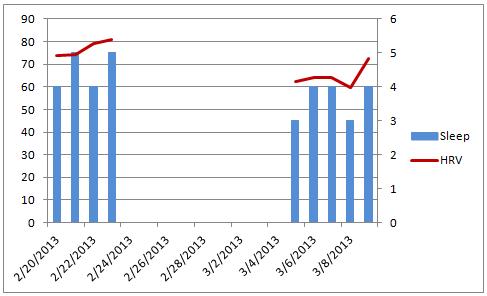
  • Exam week occurs in the last week of the ithlete trend below.
  • Following Monday, HRV remains well below baseline until Saturday
  • Poor sleep due to late nights studying
  • Though the athlete is currently involved in various Track & Field events as well as summer football, he had no competitions during exam week.

VL_Exam

Below is the weekly mean HRV in the 3 weeks prior to and the exam week.

  • HRV weekly mean does not reflect the acute stress experienced by this athlete day to day (a limitation of only assessing weekly mean)
  • Overall the exams appeared to be only a moderate stressor for this athlete
  • I included reaction test data because it was available; interestingly it was also effected (slower) during exam week
  • See here for more details and info on the Reaction Test

V_Exam_Big_Trend

I have included solo charts of the HRV and Reaction trend because I continue to see a consistent negative correlation between  HRV weekly mean and Reaction weekly mean. These charts reflect this relationship better than the above chart.

V_Exam_HRV_AVG

Weekly Mean HRV Trend

V_Exam_Reaction_AVG

Weekly Mean Reaction Time Trend

Data from a Grad Student Strength Coach in the Final Weeks of School

Below is the ithlete HRV data from a colleague who had a very stressful last month of grad school.

  • Week 1 represents baseline
  • Week 2 is the week before major presentations and a research paper due date. He reports this week to be highly stressful
  • Week 3 -5 include presentations, final exams, research paper deadlines, etc.
  • Week 6-7 represent the ascent in his HRV trend back to baseline after completing his school work.
  • Both the weekly mean trend and the daily trend provide a good reflection of his perceived stress
J_dailyHRV_exams

Daily HRV Trend

J_weeklyHRV_exams

Weekly Mean HRV Trend

Closing Thoughts 

Not surprisingly, exam periods are stressful for students. HRV appears to do a reasonably good job of reflecting this. However, responses tend to be individual with some students being more effected than others. If competitive seasons conflict with examination schedules, coaches may want to consider reducing training loads or at the very least, keep a closer eye on fatigue and stress in their athletes. Using a proactive approach by enforcing responsible exam preparation far enough in advance (study hall, tutoring, etc.) should reduce potential stress related issues by discouraging procrastination and associated changes in life style. Of course this is much easier said than done.

References

Dimitriev, D. A., Dimitriev, A. D., Karpenko, Y. D., & Saperova, E. V. (2008). Influence of examination stress and psychoemotional characteristics on the blood pressure and heart rate regulation in female students. Human Physiology, 34(5), 617-624.

Glaser, R., Rice, J., Sheridan, J., Fertel, R., Stout, J., Speicher, C., … & Kiecolt-Glaser, J. (1987). Stress-related immune suppression: Health implications. Brain, behavior, & immunity1(1), 7-20.

Kang, D. H., Coe, C. L., McCarthy, D. O., & Ershler, W. B. (1997). Immune responses to final exams in healthy and asthmatic adolescents. Nursing research46(1), 12-19.

Kumar, Y., Agarwal, V., & Gautam, S. (2013). Heart Rate Variability During Examination Stress in Medical Students. International Journal of Physiology, 1(1), 83-86.

Putur, P. et al. (2004) Alteration of immune function in women collegiate soccer players and college students. Journal of Sports Science & Medicine, 3: 234-243.

Shrinivasan, K., Vaz, M., & Sucharita, S. (2006). A study of stress and autonomic nervous function in first year undergraduate medical students. Indian Journal of Physiology & Pharmacology, 50(3), 257.

Simić, N. (2006). Evaluation of examination stress based on the changes of sinus arrhythmia parameters. Acta Medica Croatica 60(1): 27.

Tharion, E., Parthasarathy, S., & Neelakantan, N. (2009). Short-term heart rate variability measures in students during examinations. Natl Med J India, 22(2), 63-66.

Tice, D. M., & Baumeister, R. F. (1997). Longitudinal study of procrastination, performance, stress, and health: The costs and benefits of dawdling. Psychological Science, 454-458.

Zaripov, V. N., & Barinova, M. O. (2008). Changes in parameters of tachography and heart rate variability in students differing in the level of psychoemotional stress and type of temperament during an academic test week. Human Physiology, 34(4), 454-460.

HRV and Training Density

I’m about to start week 3 of a new training cycle. In reviewing my HRV trend from the past two weeks you’ll see a massive change from week 1 to week 2. Clearly, last week was significantly more stressful than week 1. This was unintentional. I decided to do some calculations to see what may have happened.

1 Month Trend

1 Month Trend

The goal of this phase is to progressively accumulate volume with moderate loads over a 3 week period with a slight reduction in week 4. However, I am very undisciplined in these phases and always go heavier than I should, too soon. I vary set/rep ranges each week but try and stick to lower RPE’s. I like to really focus on technique development during these phases since the loads are supposed to be lighter.

Here is what the two weeks looked like for my main working sets (assistance work not included as it was very similar):

Week # of Lifts Total Volume Avg. RPE
1 70 43300 7-8
2 56 43200 8-9

Total volume was pretty much unchanged but should’ve increased slightly. RPE generally went up to 9’s on my last set in each workout of week 2 (straight sets) but should’ve remained at 8 or below (no chance I was taking weight off the bar though -my meathead-self trumps my logical-self in the gym quite often). Number of lifts decreased by 20% yet volume was matched due to a relative increase in intensity; too much, too soon. If my goal was to increase training density, than I would’ve been quite successful.

I selected weight ranges in week 2 that should’ve been at the appropriate RPE based on estimations. However, for whatever reason, starting on Monday the weight didn’t feel as light as it should have. Rather than lower the load like I should have, I simply performed less sets.

Regarding HRV, I do expect to see some progressive decline as volume increases,  but not a -8 weekly change. Though I can’t think of anything major outside of training that could’ve contributed to the significant change in the trend, non-training related stressors are always a factor, whether we perceive them to be or not.

In conclusion I failed to accomplish my goal of progressively increasing volume with moderate loads but rather increased training density purely as a result of undisciplined load selection. HRV responded with a significant decrease in the trend and I am now starting week 3 in the hole. Lesson learned.

Monitoring Training in a High School Football Player

Though I’m currently a solid 17 hour drive away from home, I still correspond with several athletes I formerly worked with prior to my relocation. I’ve got a few athletes sending me their ithlete data every week. I finally had time to sit down and analyze some of it and so today I’ll present and discuss the past four weeks worth of data from a high school football player.

Basic Descriptors

This athlete is currently a high school sophomore and will be the starting Quarterback for his high school Varsity Football Team. In addition to high school football, this athlete is also competing in track and field (Javelin, Shot Put and Triple Jump) and summer football.

Monitoring Variables

HRV: The athlete measures HRV with ithlete in a standing position  every morning after waking and bladder emptying.

Subjective Sleep Score: Following his HRV measurement, sleep was rated (1-5 scale) and comments were entered regarding the previous days events on the ithlete app.

sRPE: I also asked the athlete to provide a rating of perceived exertion score after each training session, practice or competition (1-10 scale) and input this into the ithlete training load feature. This is not multiplied by session duration.

Reaction Test: Lastly, the athlete performed a simple reaction test with this application after ithlete to assess psycho-motor speed.

My rationale for the selected variables is quite simple:

  1. These tools/metrics are simple, inexpensive and non-invasive
  2. The total time required to complete these is between 3-5 minutes each day. Keeping them easy and quick helps with compliance which as you’ll see, was a non-issue for this athlete.
  3. I wanted both objective and subjective markers
  4. The Reaction test often gets talked about but rarely do I see any data. After having some personal success with it I decided to test it out with him.

4 Weeks of Data and Analysis

The following data is from the last 4 weeks where the athletes Track&Field  and Football schedules overlapped, resulting in a significant increase in physical stress. I have no influence on his current training, schedule, etc. and therefore this analysis is entirely retrospective. Furthermore, I always recommend that training and life style remain unchanged when people start using ithlete. After a few months of training we then analyze the data and determine what course of action to take from there. By making training/life style manipulations right from the start it will be hard to determine how effective they may be. With that said, the data is presented below, broken down into each constituent week.

*Note: Click images to enlarge. Reaction test results fall under “Tap” in the tables starting in week 2.

Week 1

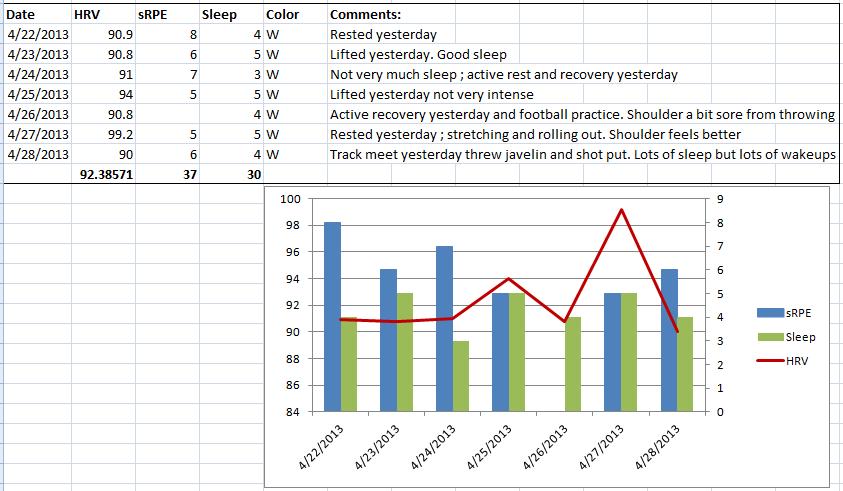
Week 1

Week 1:

  •  No Reaction Test data this week, commences in week 2.
  • Training appears to be well tolerated all week with a spike in HRV after a rest day followed by a track meet on Saturday 4/28. The track meet appears to be more stressful than is perceived by the athlete based on the 9 point drop.
  • Training load weekly sum is 31
  • HRV weekly mean is 92.4
Week 2

Week 2

Week 2:

  • He appears to be insufficiently recovered from the track meet and persists with intense training. HRV remains below 90 all week while the previous week stayed above 90.
  • With some fatigue accumulated he has a track meet on Friday followed by a Football game on Saturday. The trend this week indicates high fatigue compared to the previous week.
  • Training load weekly sum increases by 16%.
  • HRV weekly  mean drops by 8 points; Sleep total drops slightly, First Reaction weekly mean is 262.1
Week 3

Week 3

Week 3:

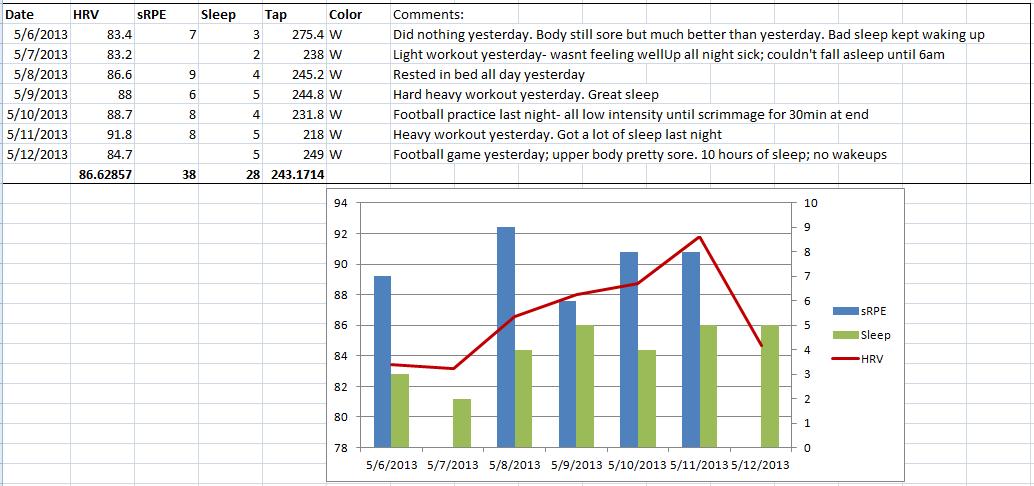
  • Poor sleep and high soreness is reported early this week after the very stressful previous week. On 5/7 he stays home from school with cold/flu symptoms.
  • He recovers quickly and the rest of the week looks pretty good as his HRV trends back  up over 90.
  • Football game on Saturday causes a decent drop in HRV. Sunday is a rest day.
  • HRV weekly mean improves to 86.6; Training load decreased; Reaction speed decreased (faster).
Week 4

Week 4

Week 4:

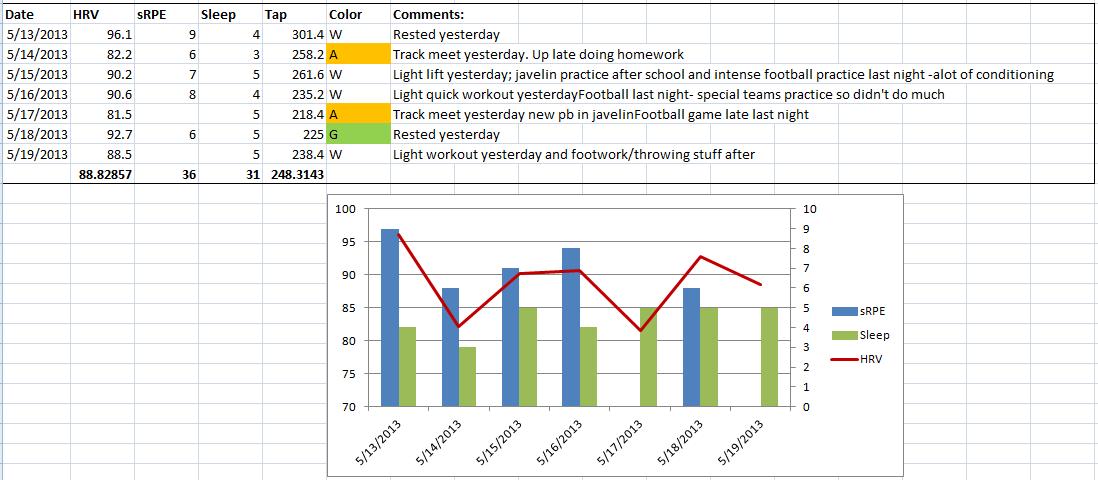
  • HRV peaks at 96 after a much needed day off on Sunday
  • 2 Track meets this week with a new personal best throw; perceived training load decreases slightly and HRV started trending up approaching 90.
  • HRV weekly mean increases slightly, Sleep quality increases, Reaction Time is similar to previous week (slight increase).
4 Week Trend

4 Week Trend

Further Analysis 

In the screen shot below, I’ve included a table and chart of the weekly mean of HRV and Reaction Time, as well as the weekly sums of Training Load and Sleep score. In the table to the right I’ve calculated some correlations.

Mean Values, Correlations

Mean Values, Correlations

Brief Thoughts

This data set supports the theory of monitoring not just the daily, but also the weekly trend changes in HRV. However, keeping tabs on the day to day changes, particularly after intense workouts or competition, can allow for more appropriate training load manipulations to try and influence the weekly changes. This is particularly important during a competitive season where overreaching is not desired. Clearly in this case, the athlete experienced some overreaching after the abrupt increase in physical stress evidenced by his illness, disturbed sleep etc. However, the overreaching was short-term and the consequences short-lived as he quickly recovers. When HRV peaks in week 4 we also see an increase in performance (Track PR). Of course the overreaching easily could have been avoided had he not been trying to train for and compete in two different sports at the same time. However, this is the reality of many high school athletes who try and juggle multiple sports in the same season.

Similar to my experience discussed here, his Reaction test essentially mirrored HRV when the weekly means were calculated. Perceived training load clearly had the biggest effect on these two variables. Unfortunately we didn’t incorporate the Reaction Test until week 2 so keep that in mind when looking at the correlation values as week 1 was not included with Reaction Time.

In this case, I do not believe that the RPE of the competitions provided a good reflection of actual competition stress. In many cases when he had a competition, HRV would decline quite a bit yet the RPE would be moderate. Competing adds another element of stress unaccounted for in these situations which should be considered by coaches.

I believe that this athletes short term overreaching and subsequent illness and sleep disturbances could easily have been avoided. Reacting to the decrease in HRV, increase in Reaction time, increased soreness, poor sleep ,etc. by allowing for more recovery time likely would’ve averted this. However, how this would effect his performance in the following weeks when HRV peaks and he see’s an increase in performance is unknown. After several days of a decreasing trend in HRV, rest should be strongly considered, particularly during competition periods.

The comments section of ithlete was valuable in communicating to me brief details about what in particular may be causing stress. This is an undervalued and underrated feature in my opinion.

HRV and Reaction test weekly mean and perceived training load weekly sum each appear to be sensitive markers of the physical stress load experienced by this athlete. Adjusting training loads appropriately in response to these variables may have prevented the unintentional overreaching and illness experienced by this athlete. From this set of data we can conclude that HRV, Reaction test and perceived exertion ratings were effective markers of training status with this athlete.

HRV Case Study of a Powerlifter with Cerebral Palsy Preparing for Competition

Shortly after my relocation to Alabama, I was given the opportunity  to oversee the competition preparation of a young powerlifter who had been training here at the AUM Human Performance Lab under the care of Dr. Mike Esco and his staff. He was about 5 weeks out from competition at the time of my arrival. Below is a detailed account of the training program with HRV data, training load and sleep score.

The athlete is a 22 year old male with Cerebral Palsy and can therefore only compete in the Bench Press. He competes in the 123lb weight class (actual weight is 121). His best competition lift was 200lbs recorded this past February at his first competition.

After observing a couple of workouts, I could see that Zarius was missing out on some poundage due to technical flaws. The focus of the program was therefore to improve his bench press technique and get him more accustomed to the competition commands. We trained 3x/week and used a full body, undulating approach that enabled us to Bench Press each session to further develop technique.

The original program is below and was followed with only minor adjustments here and there. The chosen sets/reps and percentages were inspired by those outlined Tri-Phasic Training. This allowed for the completion of only quality reps; avoiding failure and saving the grinding for competition. You’ll notice the corresponding rep ranges for each percentage are well below typical capabilities. (i.e. 85%x2 rather than 85%x5-6). Assistance work progressed in weight or reps each week based on performance.

Z_program

Beginning on day one of week one, the athlete recorded HRV each morning with ithlete on his iPod Touch in a seated position. Sleep was rated on a scale of 1-5 on the app. Training load was manually entered based on training intensity to make interpretation easier from the trend in relation to his HRV. Perceived values are not included.

Below is all of the raw data as it appears when exported from the app into Excel followed by a recreation of his 4 week trend. I’ve highlighted high and low HRV days in the respective colors used by ithlete. You’ll note that measurements are missing on two occasions; 4/18 and 5/12.

Z_raw_data

Z_trend

Below are images of his weekly averages of HRV and training load. Training load in this context is simply intended to represent a progressive increase in intensity followed by a deload and then competition.

Z_avg_table

Z_avg_trend

There’s a clear progressive increase in his HRV trend right up until the start of week 3. Week 3 was the highest intensity training week with a slight reduction in volume. It appears that intensity rather than volume created more fatigue. His HRV peaks during the deload week. The deload week included 2 workouts. On Monday we worked up to his opener of 240lb for a single and on Wednesday we worked up to 70% for a few singles with emphasis on the competition commands and pausing.

You can see that the morning of the competition (5/11) there is a small drop in HRV. I attribute this to pre-competition anxiety based on feedback of mood, perception, etc. He appears to have slept well leading up to the meet. HRV remains suppressed until the 3rd day after the competition where it starts to trend back up, however still remains below average. This clearly shows the additional psychological/emotional stress that competing places on the body.

Results

1st Attempt – 240 Good
2nd Attempt – 250 Good
3rd Attempt – 255 Miss at lockout (very debatable)

He added 50lbs to his competition best since February. His next meet will be in October where he’ll be looking to shorten the gap he has to close to fulfill his dreams of qualifying for the Paralympics.

943236_10100344933474230_863845112_n

Individual HRV Responses In Professional Soccer Players During A Competitive Season

In a team setting environment, athletes are often exposed to similar training loads during practices, training and competition. Monitoring of only the external training load provides coaches with an incomplete picture of how individual athletes may be responding and adapting to the training schedule. Two athletes can in fact respond entirely differently to the same program. A recently published case study by Bara-Filho et al. (2013) demonstrates how HRV, when measured periodically throughout training, can help distinguish these individual differences in professional soccer players exposed to the same training schedule. The following is a brief summary and review of this case study.

Materials and Methods

Subject 1 was a 26 year old Mid-Fielder with 7 years of professional playing experience. Subject 2 was a 19 year old Right Back with only 1 year of professional playing experience.

Over a 3 week period during a competitive season, both subjects participated in training that consisted of small-sided games, simulated matches, strength training, sprint training, and low-intensity aerobic recovery work. Training took place 1-2 times per day, 5 day’s/week culminating in a competition on the 6th day and rest on the 7th. Both subjects were starters in the 3 matches that occurred over the observation period.

HRV was measured on 5 occasions throughout the 3 week period on each Saturday and Monday morning (excluding the last Monday). This allowed for HRV indices to be evaluated both after the weekly training load was accumulated (Saturday) and after recovery (Monday). This is precisely the protocol that I discussed in a recent post entitled Making HRV More Practical for Athletes: Measurement Frequency.

HRV data was collected in the morning with a Polar RS800 watch while the athletes rested in a supine position.

Results

Total weekly TRIMP values were similar in both athletes. After the first measurement (M1) Subject 1 showed an increasing trend in several HRV values (RMSSD, HF, SDNN, SD1) indicating good adaptation to training and quality recovery from competition. Subject 2 showed a progressively decreasing trend in these same HRV values indicating an accumulation of fatigue and insufficient recovery.

Discussion

The authors suggest that subject 2, who saw a decreasing trend in his HRV values, may have been experiencing stressors unrelated to sport that may have contributed to his insufficient recovery. Though subjective measure (questionnaires) were not included, the physical training coach reported that athlete 2 would inform him that he was experiencing disturbed sleep, fatigue during training, and poor recovery.

A lower level of playing experience in subject 2 was reported as another possible explanation for his descending HRV trend. The psychological stressors and anxiety experienced by this younger athlete may have also contributed.

The authors briefly discuss the limitations of a supine measurement only when using HRV to monitor training load in athletes. Essentially, individuals with low resting heart rates appear to be subject to “parasympathetic saturation” in the supine position, possibly skewing the data. Therefore, including measurement performed in the standing position may serve as a resolution to this issue. I discussed this topic in a previous post entitled Supine vs. Standing HRV Measurement.

Finally, the authors conclude that HRV values were useful in monitoring the effects of a competitive training schedule in athletes as these values appear to be sensitive to individual characteristics as well as stress and recovery. A stable or increasing HRV trend appears to be favorable as it indicates quality recovery and adaptation to training. In contrast, a decreasing trend in HRV indicates higher stress and impaired recovery which may necessitate recovery interventions and reductions in training load.

Reference

Bara-Filho, M.G., et al. (2013) Heart rate variability and soccer training: a case study. Motriz: rev. educ. fis. 19(1): 171-77. Free Full-Text

Reaction Test for Athlete Monitoring: Research and Considerations

Distinguishing functional over-reaching (FOR) from non-function over-reaching (NFOR)can be difficult to do during overload periods; particularly when laboratory measures are inaccessible to the coach or athlete. A common criteria used to determine FOR from NFOR is to assess performance before and after overload training. The fatigue accumulated from the increased training loads will result in expected performance decrements. After an unloading period of 1-2 weeks, performance should return to or exceed pre-overload performance values. An athlete can be considered NFOR if performance remains suppressed after this 2 week period.

Coaches can be proactive in their efforts to avoid NFOR with their athletes by maintaining various monitoring strategies. Keeping tabs on certain variables throughout overload periods allows the coach to detect early warning signs that may indicate excessive fatigue in an athlete(s). Such a metric often discussed is the reaction test. Today I will review some of the available research that investigates the efficacy of the reaction test as a method of potentially determining or indicating NFOR in athletes.

Why The Reaction Test?

The theory behind why the reaction test may serve as a good indicator of overreaching and/or the overtraining syndrome has been postulated by Nederhof et al (2006). Essentially, the overtraining syndrome has several signs and symptoms also seen in chronic fatigue syndrome and major depression. Both chronic fatigue and major depression are associated with slower psychomotor ability. Thus, it is hypothesized that psychomotor speed may be slower in athletes with OTS.

Reaction Test and Overreaching

Nederhof and colleagues (2007) put their theory to the test and evaluated performance, perceived fatigue/mood (RESTQ-sport and POMS) and psychomotor speed (reaction tests) in trained cyclists (n=14) and a control group (n=14). Training load was monitored via sRPE (RPE x session length). Testing was performed at baseline, following a 2 week overload period and once more following a 2 week taper. Of the 14 cyclists, 5 were considered FOR (they fulfilled at least 2 out of the three objective criteria in combination with at least 1 subjective criterion during the second but not during the third exercise test) and 7 were considered well trained (WT) while the remaining 2 were excluded.

Two reaction tests were used. The first described test was the “Finger Pre-Cuing Task” that required the individual to react to a prompt by pressing the correct keys on a computer. The other test was the “Determination Test” that required either manual of pedal reaction in response to visual or auditory stimuli also on a computer. Full descriptions of these tests can be read in the full text here.

The control group and the WT group improved their reaction time at each test. The FOR group however showed increased (slower) reaction time after the overload period but improved reaction time beyond baseline values after the taper. Regarding statistical significance the authors stated; “After high load training the FO group was 20% slower than the control group and 8% slower than theWT group. For comparison, patients with major depression are 20 to 26% slower than healthy controls [21,32] and patients with chronic fatigue syndrome are 15% slower than healthy controls [21]. Thus, although not statistically significant, differences in the present study are meaningful“.

Rietjans et al (2005) aimed to determine if a combination of test parameters could help detect overreaching in 7 well trained male cyclists. Over a 2 week period, training load was doubled while intensity was increased by 15%. Values for the following tests/assessments were collected pre and post training period: Maximal incremental cycle ergometer test with continuous ventilatory measurements and blood lactate values, time trial, basal blood parameter tests, hormones (GH, IGF-1, ACTH, neuro-endocrine stress test, shortened POMS, RPE and a cognitive reaction time test.

The results: “A novel finding was that reaction times increased significantly, indicating that overreaching might adversely affect speed of information processing by the brain, especially for the most difficult conditions. After the intensified training period, neither changes in exercise-induced plasma hormone values, nor SITT values were observed. During the CAPT only cortisol showed a significant decrease after the intensified training period. Hemoglobin showed a significant decrease after the intensified training period whereas hematocrit, red blood cell count (RBC) and MCV tended to decrease. The intensified training had no effect on physical performance (Wmax or time trial), maximal blood lactate, maximal heart rate and white blood cell profile. The most sensitive parameters for detecting overreaching are reaction time performance (indicative for cognitive brain functioning), RPE and to a lesser extend the shortened POMS. This strongly suggests that central fatigue precedes peripheral fatigue. All other systems, including the neuro-endocrine, are more robust and react most likely at a later stage in exhaustive training periods.”

Reaction Test and Perceived Performance 

Nederhof and colleagues (2008) set out to determine if reaction tests are related to perceived performance in rowers. On 5 occasions over the course of a season, reaction tests were performed along with perceived performance measures (“Reduced Sense of Accomplishment” scale from the Athlete Burnout Questionaire) in varsity rowers. The same two reaction tests (Finger Pre-Cueing and the Determination Test) described above were used. The results showed that a significant relationship between the Determination Test and perceived performance. The authors stated; “…rowers who scored higher on the ‘‘Reduced Sense of Accomplishment’’ scale of the Athlete Burnout Questionnaire had longer reaction times on the determination test. For every point the rowers scored higher, their reaction times were 18 ms longer on the action mode and 12 ms on the reaction mode of the determination test. This effect was not found for the finger pre-cueing task.”

Though their hypothesis was supported, the authors affirm that several practical issues require resolution.

My Reaction Test Data Compared to HRV over 4 Different Training Periods

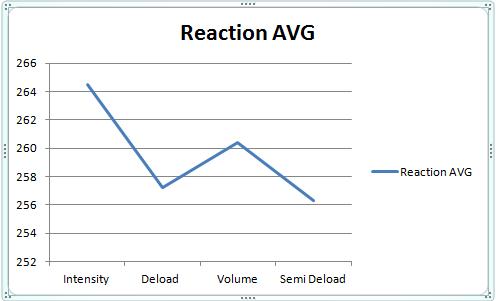
For a much more elaborate discussion on this experiment you can see the original post here. Essentially what I found was that Reaction test average and HRV average mirrored each other at each training period. HRV decreased and Reaction time increased (slower) during High Intensity and again during High Volume training reflecting fatigue. During reduced training loads HRV increased and Reaction time decreased (faster).

Reaction average trend

HRV Avg Trend Reaction Blog

Considerations and Limitations

The reaction test appears to be a test worthy of consideration for coaches looking to incorporate monitoring variables into their training regime. The following is a list of factors to keep in mind regarding this test:

• Caffeine has a well-established effect on reaction time and should therefore be controlled for when implementing reaction testing

• Psychological factors can impact the effectiveness and reliability of the test. Though this is an objective test, the effort put forth by the athlete may not be consistent. Since this test is sensitive to small changes in reaction time, this can obscure data and thus interpretation.

• As with HRV, it is probably best to experiment with a reaction test with a small sample of athletes to determine its usefulness before trying to implement with an entire team.

• Just like any other monitoring variable, reaction time should be considered with other factors when attempting to draw meaningful interpretations from the results.

Reaction time test results appear to respond early to fatigue during overload training. Reaction times (test dependent) may correlate with perceived performance. The simplicity, practicality, affordability and non-invasiveness of a reaction test make it appealing to coaches as a field test.

References

Nederhof, E., et al. (2006) Psychomotor speed: possibly a new marker for overtraining syndrome. Sports Medicine, 36(10): 817-28.

Nederhof, E., Lemmink, K., Zwerver., J. & Mulder, T. (2007) The effect of high load training on psychomotor speed. International Journal of Sports Medicine, 28: 595-601.

Nederhof, E., Visscher, C. & Lemmink, K. (2008) Psychomotor speed is related to perceived performance in rowers. European Journal of Sport Science, 8(5): 259-265

Rietjans, GJ., et al. (2005) Physiological, biochemical and psychological markers of strenuous training induced fatigue. International Journal of Sports Medicine, 26(1): 16-26.

Spring Break Impact on HRV and Performance: Comparing Data From 2 Athletes

Generally, one of two things can happen when an athlete heads off for spring break or vacation:

Scenario 1: He or she parties all week with friends; drinking alcohol excessively each day, eating terribly and sleeping poorly. These athletes return in rough shape, exhausted and dehydrated.

Scenario 2: He or she vacations with family, thus eating and sleeping reasonably well and likely not binge drinking daily. This athlete returns refreshed and recovered.

This can be problematic when working in a team environment as some athletes will be ready (both physically and mentally) to continue with the training program while the others certainly will not be. Oftentimes, a coach or trainer will schedule these vacation breaks as planned unloading periods, marking the transition from one phase to another.

Below is some HRV data from a hockey player I was working with prior to my relocation to Alabama. Preceding his departure for Cuba, his HRV was averaging mid to high 70’s with the odd 80. He then departs for Cuba with some friends for a week or so to enjoy some time off. Upon returning from vacation it becomes quite clear as to what went down (pun intended) during the trip. He did not maintain daily measurements while being away but when he resumes his measurements after returning we can see the consequences of his behavior.

 HRV Data Before and After Vacation in a Hockey Player AEvacadata

AEvacatrend

It is quite clear that his ability to resume his daily routine is compromised. For his first week back from vacation, I reduced the volume and intensity of his workouts and changed his conditioning work from highly anaerobic/interval based to much more moderate and aerobic based.  Even though training loads were reduced, the workouts were still a bit of a struggle to get through for him. We can also see that his perceived sleep quality is also down.

The above data set appears to be in direct contrast with that of a football player who vacationed with family (he is much younger than the hockey player). Unfortunately, this athlete has no data prior to vacation as he didn’t have the ithlete hardware yet. His daily measurements commenced on his first morning back from vacation. Based on his average’s following the vacation it would be safe to assume that his trip was hardly stressful. He was able to resume training without the need for any adjustments in intensity or volume. He essentially picked up right where he left off.

HRV Trend Upon Return From Spring Break in a Football PlayerVLtrendpostvaca

Final Thoughts

HRV appears to reflect the nature of the vacation in these two athletes. One athlete spent his vacation partying, drinking and eating and sleeping poorly. His HRV trend is significantly affected as a result. Performance, work capacity and perceived sleep quality are negatively affected upon his return and resumption of daily routine. A significant reduction in training load was required. The athlete who vacationed with his family and maintained a reasonable eating and sleeping schedule while avoiding excessive daily alcohol consumption saw apparently no effect in his HRV trend. Training and daily routine resumed without effect.

HRV and Reaction Test Data and some updates on our HRV research

I posted some data a couple of months ago comparing my HRV to my tap test results to see if there was any correlation between the two. You can see that post here if you missed it. It was around that time that I also started using a Reaction Test app. Today I’ll be posting and reviewing my Reaction Test data with my HRV data to see what it might reveal. At the end of the post I’ll provide some brief updates on what’s been happening since I started working in the Human Performance Lab here at Auburn (Montgomery).

HRV: I continue to use ithlete as my main HRV metric. Daily measurements are performed each morning after waking and bladder emptying. All measurements are performed in the standing position with paced breathing. The HRV value provided by ithlete is Ln RMSSD x 20; a time domain measure of parasympathetic tone.

Reaction Test: The reaction test is performed after my HRV test and my Tap test (I’m still doing these but will not include them today). All reaction tests were performed using right index finger. The app functions as follows;

  1. initiate app
  2. Tap target area to start the test
  3. React to stimuli (color change) as fast as possible by tapping the screen
  4. Repeat for a total of 5 reactions (variable time intervals between)

Image

I used excel to calculate daily average with the reaction test data (plotted on the charts below).

Keep in mind that for a correlation between high HRV and good Reaction Test, we want to see an inverse relationship in the trends. We’re looking for a fast Reaction time (trending down) with a higher HRV score (trending up).

Chart 1 – HRV, Reaction Test Average and Session RPE (secondary axis)  

Image

For more clarity I’ve also included excel screen shots of the raw data. I’ve sectioned off 4 different areas and noted the goal/purpose of that particular time of training. It works out so that there is a High Intensity section, a Deload section, a High Volume Section, and a Semi-Deload section. The “Semi-Deload” period occurs over the past week that I’ve moved to Alabama. I figured it would be wise to scale intensity and volume back very slightly while I settle in to a new place and new work environment. To give an example, I essentially removed a main working set and stuck with familiar weights. Assistance work was relatively unchanged.

ImageImage

* I must have forgotten to perform a reaction test or forgot to save it on 03/16 which was a Saturday and therefore it is not included.

I’ve highlighted any score that was +/- 10% from the total average. So for exampme; if HRV was 10% higher than the average of all HRV scores, I would shade that day green. Likewise for Reaction Test. Red shading denotes 10% or greater reduction.

After examining the acute relationship between Reaction Test and HRV I decided to examine the averages for each training block. I’ve shifted my focus lately a little bit more on weekly trend changes vs. daily trend changes. As you can see in the charts below, there is a very strong relationship between HRV AVG and Reaction Test AVG during each training section.

ImageImage

–          Intensity Section – This section was the last 2 weeks of my 9 week training cycle that I performed after the Christmas break (discussed here). Volume was low but intensity was Maximal. HRV is at it’s lowest average while Reaction Test is at its highest (slowest reaction time) average.

–          Deload – During the deload week HRV average rebounds to peak levels while reaction time improves to near peak levels.

–          High Volume – This marks the start of a new training cycle. HRV drops quite a bit and Reaction Time average increases (slower reaction).

–          Semi-Deload – HRV returns to near peak values while Reaction Test peaks (quickest reaction time average).

From this data set, intensity appeared to have the biggest effect on Reaction Test average and HRV average. High volume work with moderate intensity also had a significant impact on these averages. It should be kept in mind that the Intensity period followed several weeks of training and therefore some fatigue had already been accumulated. I didn’t start using the reaction test until late February.  HRV and Reaction averages improve over periods of reduced training load.

Given that I was able to hit some PR’s in the gym during the Intensity section (under high fatigue), I’m inclined to say at this point, based on this data set, that these tests are not necessarily indicators of performance potential (strength), but rather markers of fatigue. In the future I would like to see how these tests match up with “finer” motor skills in other athletes.

Quick Updates

I made it safely to Montgomery, AL after a nice visit with some family at my folks place in Cincinnati over Easter. Total travel time was about 17.5 hours. We wasted no time in getting to work in the lab. We’ve got 3 projects going on right now (the first two being more health related  as opposed to sports/performance).

  1. I’m helping Dr. Esco complete a study comparing post-exercise HRV recovery after two different modes of exercise (cycling vs. treadmill at same intensity/duration).
  2. We are starting a new study comparing post-exercise HRV in middle aged men after 3 modes or resistance training; Eccentric only; Concentric Only; Traditional Resistance Training
  3. We have put the wheels in motion for a cross-validation study comparing ithlete to EKG. We did some pilot work with about 6 subjects so far and have IRB Forms and Consent Forms about ready for submission. We’ll measure ithlete and EKG simultaneously in about 20 males and 20 females then run the data. This is a very important study to me. In order to improve what we know about HRV and performance, we need more data. Using EKG’s in the field is not practical. What we need to start seeing is data from athletes that are performing measurements at home when they wake up. The device needs to be extremely easy to use and the data needs to be immediately available to the coach. At this time, smart phone app’s are the best way to do this. There are plenty of limitations with this but at the end of the day, if we’re going to apply this stuff in a team setting we need easy to use, affordable tools.
  4. This last project doesn’t exist yet. But I’m hoping to collect data on either the men’s tennis team or the women’s soccer team. I’ll provide more info on this if and when it starts to take shape.

Let me be clear right from the start in saying that Dr. Esco is running the show here. I’ve learned a ton from him already about the research process and anything that I accomplish over the next little while will be because of him.

Lastly, I attended my first Roller Derby which was quite the experience.