HRV stabilization in athletes: towards more convenient data acquisition

Our “stability” paper has recently been published in Clinical Physiology and Functional Imaging.

http://onlinelibrary.wiley.com/doi/10.1111/cpf.12233/abstract

ABSTRACT

Resting heart rate variability (HRV) is a potentially useful marker to consider for monitoring training status in athletes. However, traditional HRV data collection methodology requires a 5-min recording period preceded by a 5-min stabilization period. This lengthy process may limit HRV monitoring in the field due to time constraints and high compliance demands of athletes. Investigation into more practical methodology for HRV data acquisition is required. The aim of this study was to determine the time course for stabilization of ECG-derived lnRMSSD from traditional HRV recordings. Ten-minute supine ECG measures were obtained in ten male and ten female collegiate cross-country athletes. The first 5 min for each ECG was separately analysed in successive 1-min intervals as follows: minutes 0–1 (lnRMSSD0–1), 1–2 (lnRMSSD1–2), 2–3 (lnRMSSD2–3), 3–4 (lnRMSSD3–4) and 4–5 (lnRMSSD4–5). Each 1-min lnRMSSD segment was then sequentially compared to lnRMSSD of the 5- to 10-min ECG segment, which was considered the criterion (lnRMSSDCriterion). There were no significant differences between each 1-min lnRMSSD segment and lnRMSSDCriterion, and the effect sizes were considered trivial (ES ranged from 0·07 to 0·12). In addition, the ICC for each 1-min segment compared to the criterion was near perfect (ICC values ranged from 0·92 to 0·97). The limits of agreement between the prerecording values and lnRMSSDCriterion ranged from ±0·28 to ±0·45 ms. These results lend support to shorter, more convenient ECG recording procedures for lnRMSSD assessment in athletes by reducing the prerecording stabilization period to 1 min.

CPFI figure

In collaboration with Dr. Fabio Nakamura, we have a new paper currently in review that assesses the suitability of ultra-short (60-s) measures with minimal stabilization in elite team-sport athletes using the Polar system. We will also be assessing if these modified HRV recording procedures sufficiently reflect changes in fitness after a training program. Overall, shortened lnRMSSD recording procedures appear very promising. This will hopefully enhance the practicality of HRV monitoring among sports teams.

Weekly endurance performance and HRV: A case study of a collegiate cross-country athlete

During the fall season of 2013, we collected daily HRV, perceived wellness, training load and performance (race times) from a collegiate cross country runner. We wrote this up as a case study and it was published this month in JASC.

Endurance performance relates to resting heart rate and its variability: A case study of a collegiate male cross-country athlete.

This post is a brief summary of our findings.

This athlete competed in 8 km races on Saturday’s throughout the 8 week competitive season for a total of 6 races. HRV data was collected daily with ithlete in a seated position after waking and elimination. Daily wellness questionnaires were delivered to the athletes e-mail via SurveyMonkey (thanks to Carl Valle for this idea) which asked the subject to rate his perceived sleep quality, muscle soreness, fatigue, mood and stress levels out of 5 for a total wellness score /25. Training sessions were quantified with sRPE and a basic TRIMP value. Race times were collected from the host University’s official final results.

Resting heart rate and HRV derived from the smartphone measures were averaged weekly. In addition the coefficient of variation (CV) was calculated for all weekly HR measures.

*Note: lnRMSSD (i.e., HRV) is modified by the application (lnRMSSDx20) which is how the data is presented.

Our initial hypothesis was that the weekly mean of HRV would relate best to performance (8 km races) and that HRV would be a more sensitive measure than basic RHR. However, we found a near perfect correlation between the CV of HRV and performance (r = 0.92). When the CV was high for a given week, performance was worse (slower 8 km race time) whereas when the CV was lower, performance was better. A very similar, but slightly weaker correlation was found with the CV of resting heart rate. The figure below represents the relationship between weekly HRVcv and 8 km race times.

CV 8 km

The weekly mean related less well to performance. Quoting from the paper:

It has been suggested that as a result of tapering and the associated decrease in lnRMSSDmean, the relationship between lnRMSSDmean and performance is reversed (1). This may explain our finding of only a moderate correlation between lnRMSSDmean and 8 km race time and indicates that associations between endurance performance and lnRMSSDmean must be assessed within the context of the training phase and period (1).

The CV reflects the fluctuation in a metric (i.e., HRV/HR in this case) across the week. It’s been suggested that this marker represents the fatigue (decrease in HRV) and recovery process (return toward baseline). However, we also know that non-training related stressors may also effect daily changes. Therefore, a week with higher CV likely represents higher overall stress whereas a decrease in CV might indicate lower stress and/or better recovery, etc. This however should be taken into context with other indications of training status (e.g., TL, wellness, etc.) as a decreased CV has previously been associated with non-functional overreaching in an elite female triathlete in a case study by Daniel Plews and colleagues.

Two races were held at the same course, several weeks apart at the same time of day on Saturday. See excerpt from the paper below:

HRmean and lnRMSSDmean measures were similar on both occasions this season (lnRMSSDmean 73.8, HRmean 70.1 in week 3, lnRMSSDmean 72.6, HRmean 70.5 in week 8), however lnRMSSDcv and HRcv values in week 8 were nearly half of the values in week 3 (lnRMSSDcv 17, HRcv 12.7 in week 3, lnRMSSDcv 9.2, HRcv 6.5 in week 8). Most importantly, race time was 1:49 (min:sec) faster in week 8.  

Obviously, as this was only a case study of a single athlete across a single season, our results need to be interpreted with caution. However, if you’re monitoring HRV in yourself or of athletes, it would likely be best to include the CV in addition to the weekly mean when evaluating training status.

Looking ahead, we have 2 new manuscripts in review right now that evaluate the mean and CV of smartphone-derived HRV in a team of collegiate female soccer players as we make associations with training load changes and performance adaptations. These are very practical papers and the first, to my knowledge, that utilize smartphone applications with ultra-short measures (~1 min) for athlete monitoring.


HRV Monitoring Interview

Here’s a recent interview I had the pleasure of doing with Chris Beardsley of the Strength and Conditioning Research site:

http://www.strengthandconditioningresearch.com/2014/11/18/andrew-flatt-hrv/

We go over;

  • What HRV is and why we measure it
  • Practical and valid recording methodology as it pertains to shortened measurement duration and stabilization periods
  • HRV data interpretation for training and athlete monitoring
  • Practical recommendations

Trend Analysis: Importance of Context

It’s pretty well documented that regular aerobic exercise can result in an increase in resting HRV. Generally, you can expect no change or even a slight increase in HRV the day following low to moderate intensity aerobic exercise. However, with higher intensity training, HRV can take up to 48-72 hours to return to baseline, depending on intensity, duration, training status, fitness level, age, gender, etc. (Stanley et al. 2014). I’ve seen this numerous times with my own data where HRV decreases significantly 24 hours following interval sessions (particularly when they are not performed regularly) and increase beyond baseline by 48 hours.

Because low-moderate aerobic work tends to have an acute stimulatory effect of parasympathetic activity, it has been suggested that this would be useful as active recovery following high intensity sessions.

“because (at least) autonomic supercompensation following low-intensity training may occur within 24 h and since cardiac parasympathetic reactivation is delayed by the build-up of metabolites, inclusion of low intensity training subsequent to a high-intensity session may accelerate metabolite breakdown [88]. Athletes who train twice daily may also benefit from the accelerated recovery (metabolic recovery, as reflected by autonomic recovery) afforded by a low-intensity training session” (Stanley et el. 2013)

I recently included moderate intensity aerobic work on off days (approx.10 mins each on treadmill, cycle and rower for a total of 30 mins) and following my training sessions (10-12 mins on cycle) over about a three week period. Previous to this, very little aerobic work was being done, at least not consistently. During this time I lifted on Mon-Tue-Thurs-Fri each week. Below is my HRV data (lnRMSSDx20, standing) that includes a few weeks prior to the inclusion of regular aerobic work as well as the few weeks that followed.

daily trend aerobic weeks Next, I’ve included the weekly mean HRV and %CV (coefficient of variation) values.

mean and CV o2 weeks


I started performing the aerobic work midway through week 3 and continued until week 6. The trends both clearly show an increase in HRV during this time. We also see quite a large change in %CV with the regular aerobic work. In the weeks before and following the aerobic work, there are much bigger day to day changes in HRV which is quite typical for me. The inclusion of regular moderate aerobic work attenuated the daily changes I’d typically see following heavy training sessions. Clearly the post-workout aerobic work and active recovery work on off days was effective at promoting recovery. However,it’s important to clarify that HRV parameters are reflective of cardiovascular-autonomic activity, which does not necessarily include neuromuscular ability, CNS potential, etc.

“changes in cardiac parasympathetic activity are useful for monitoring aspects of recovery that are dependent on cardiovascular function. By contrast, changes in cardiac parasympathetic activity are less useful for monitoring other aspects of recovery such as restoration of muscle and liver glycogen, or repair of damaged muscle tissue” (Stanley et al. 2013)

Therefore, the lack of day to day changes in my HRV following heavy resistance training workouts does not imply that I was fully recovered within 24 hours and could repeat performances (e.g., heavy squats), only that that particular system was recovered. Thus, for strength athletes in particular, HRV is only one marker to consider when assessing daily recovery status. More work needs to be done in this area to determine how useful HRV monitoring is in this population and how it can be used effectively.

This data also shows how interpretation of a trend is context dependent, as mean and %CV values are affected by exercise mode and intensity. Thus, if working with team sport athletes, we may expect larger fluctuation and a lower mean when less aerobic exercise is prescribed and vice versa. Even endurance athletes will experience similar HRV changes when preparing for competition as the amount of high intensity/interval training increases and low-moderate intensity/steady state work decreases. This is often characterized with a bell-shaped HRV trend (example below).

bell shaped trend

The above data is taken from a case study we did of a collegiate endurance athlete over his competitive season (will be in a future edition of JASC). There is clearly a progressive increase in HRV up to a peak, at which point there is a progressive decrease. This is likely a result of more high intensity training and lower volumes of moderate/steady state  work as the athletes prepares to peak, further supporting the need to assess HRV changes in context to training phase, goal, structure, etc. (Buchheit,2014).

Changes in HRV are always context dependent. Decreases in the trend are not always associated with fatigue, nor are increases always associated with higher “readiness”. Nothing is ever as black and white as we’d like it to be. Additional reference to training load, psychometrics and performance will help with interpretation and if necessary intervention.

Refs:

Buchheit, M. (2014). Monitoring training status with HR measures: do all roads lead to Rome?Frontiers in Physiology5.

Stanley, J., Peake, J. M., & Buchheit, M. (2013). Cardiac parasympathetic reactivation following exercise: implications for training prescriptionSports Medicine43(12), 1259-1277.

Our HRV posters and abstracts from NSCA National Conference

Below are the 4 abstracts and screen shots of our posters that we presented last weekend at the NSCA National Conference in Las Vegas. Many of these projects were in progress at the time of submission deadlines so 3/4 of the posters are actually just small parts of bigger projects. Following the title links will take you to the NSCA page where the posters can be viewed with zoom-in feature. There were plenty of good posters being presented all weekend so it would be worth your time to scroll through the website and view some of the other applied S&C research.

BODY POSITION’S AFFECT ON THE RELATIONSHIP BETWEEN HEART RATE VARIABILITY AND HEART RATE RECOVERY IN COLLEGIATE-FEMALE ATHLETES

Michael R. Esco,  Andrew A. Flatt, Robert L. Herron

PURPOSE:  Heart rate variability (HRV) and heart rate recovery (HRR) are noninvasive indicators of cardiovascular autonomic control and are becoming popular for observing physiological changes associated exercise training and reflecting recovery status.  Previous research suggests there is a relationship between HRV and HRR, though the extent of this link remains unclear.  Additionally, measuring HRV in different body positions (supine vs. stand [SUP vs STA]) could further help explain the variance found in HRR following maximal exercise.  The purpose of this study was to determine the extent of variation in HRR that could be accounted for by HRV measured in SUP and STA in collegiate-female athletes.  METHODS: Twenty-three females (height = 1.65 ± 0.06 m, weight = 60.8 ± 6.3 kg, VO2peak = 44.6 ± 5.2 mL∙kg-1∙min-1) participated in this study.  Each participant rested in the supine position while HRV was recorded during the last 5-min of a 10-min SUP period, followed by an additional 6-min STA period of which the final 5-min was analyzed.  Participants completed a modified Bruce protocol treadmill exercise test to attain VO2peak.  Immediately following the exercise test, each subject actively walked at 0.89 m∙s-1 and 1.5% grade, while recording HRR at the 1-min (HRR1) and 2-min recovery mark (HRR2).  HRV values were expressed as root mean of successive R-R interval differences (RMSSD).  Pearson-product moment correlations were used to investigate the relationships between the HRR and HRV variables.  RESULTS:  The STA and SUP values were as follows; RMSSD = 40.4 ± 26.3 ms and 87.17 ± 38.8 ms, respectively.  Mean values for HRR1 was 28 ± 11 bpm and for HRR2 was 49 ± 11 bpm.  Significant correlations were found for STA and HRR1 (r = 0.54, p = 0.008) and HRR2 (r = 0.48, p = 0.020).  However, no significant relationships were found between SUP and HRR1 (r = 0.25, p = 0.255) or HRR2 (r = 0.38, p = 0.073).  CONCLUSIONS:  These results provide evidence that HRR is related to resting parasympathetic modulation when measured in the standing position within collegiate-female athletes. However, no association was found between HRR and supine HRV.  Therefore, when compared to the resting supine measures, standing RMSSD appears to be more strongly related to post-exercise vagal return.  PRACTICAL APPLICATIONS:  HRV and HRR are two non-invasive markers of cardiovascular autonomic control.  Both markers are becoming popular objective measures to consider when monitoring athletic recovery status and physiological adaptation to training.  Practitioners need to be aware that resting HRV and HRR may be independently associated with cardiac-autonomic control.  Therefore, these measures could reflect different responses to training.  Additional research involving longitudinal investigation is needed.

HRR HRV poster


COMPARING HEART RATE VARIABILITY MEAN VALUES FROM 7, 5, AND 3 DAYS IN A TEAM OF FEMALE COLLEGIATE SOCCER ATHLETES

 Andrew A. Flatt, Michael R. Esco

PURPOSE: The purpose of this study was to determine if the mean value of 5 and 3 day per week heart rate variability (HRV) recordings from both supine and standing positions would accurately reflect the weekly mean value in collegiate female soccer players during spring season training. METHODS: Twelve female soccer players (height = 165.12 ± 5.32 cm; weight = 60.78 ± 6.00 kg; body fat = 27.3 ± 4.98; VO2max = 46.08 ± 3.14 ml.kg.-1min-1) recorded their HRV with a smart phone application, a wireless ECG receiver and a chest-strap transmitter each morning for a one week period during a spring season strength and conditioning cycle. The participants first performed a supine followed by a standing measurement after waking and elimination. Upon completion of their morning HRV recordings, each athlete manually exported their data to a spreadsheet via the smart phone application to the investigator for analysis. The HRV parameter that was evaluated by the application was the natural log transformed root mean square of successive normal-to-normal interval differences multiplied by 20 (lnRMSSDx20) from a 55-sec recording. Weekly (7 day) mean values were calculated for each athlete for the supine and standing lnRMSSDx20 measures. Thereafter, mean values were gathered from Monday through Friday for the 5 day recordings and Monday, Wednesday and Friday for the 3 day recordings.  Agreement between the 5 and 3 day mean lnRMSSDx20 values and the weekly mean values were determined with repeated measures analysis of variance, intraclass correlations (ICC), and the method of Bland-Altman. RESULTS: The mean supine lnRMSSDx20 values were as follows: 89.39 +/- 6.84 for the 7 day; 89.72 +/- 7.00 for 5 day; 89.09 +/- 7.09 for 3 day.  When compared to the 7 day supine measures, the 5 and 3 day values revealed ICC values of 0.99 and 0.96, respectively, with tight limits of agreement (2.53 above to 1.87 below the mean difference of 0.33 for 5 day and 3.50 above to 4.10 below the mean difference of -0.30 for 3 day).  The mean standing lnRMSSDx20 values were as follows: 70.43 +/- 9.36 for 7 day; 70.65 +/- 9.17 for 5 day; 70.31 +/- 9.62 for 3 day.  When compared to the 7 day standing measures, the 5 and 3 day values revealed ICC values of 0.98 and 0.96, respectively, with tight limits of agreement (4.25 above to 4.01 below to mean difference of 0.22 for 5 day and 5.31 above to 5.55 below the mean difference of -0.12 for 3 day). CONCLUSIONS: This study showed that lnRMSSDx20 recordings in supine and standing positions averaged over 5 and 3 days showed good agreement with the 7 day mean in female collegiate soccer players during a spring season microcycle. Future research should aim to determine if 5 and 3 day recordings reflect changes in training status over a chronic period. PRACTICAL APPLICATIONS: lnRMSSDx20 values averaged over a one week period can be used as an objective measure of training status in athletes. However, obtaining data with a daily frequency is challenging in the applied sports setting, limiting the potential usefulness of HRV as a monitoring tool among sports teams. It appears that 5 day or 3 day recordings of ultra-short-term lnRMSSDx20 obtained by athletes on their smart phone device will suitably reflect the 7 day mean. This greatly reduces compliance demands of athletes.  Limiting data acquisition to 5 or 3 weekdays instead of over the entire 7 day period may enhance the practicality and convenience of HRV monitoring in field settings.

comparing poster


*This was taken from one week of what was actually 12 week training study.  However, data collection was still ongoing during the time of submission deadlines for the conference. The full paper will include additional weeks with an overload and unloading period to see if the 3 and 5 days still reflect the 7 day mean. CV will also be included. This paper was inspired by recent work by Plews et al. 

HEART RATE VARIABILITY RESPONSES TO FIRST DAY OF SPRING SEASON STRENGTH AND CONDITIONING IN FEMALE COLLEGIATE SOCCER PLAYERS

Andrew A. Flatt, Michael R. Esco

PURPOSE: This study aimed to determine if resting heart rate variability (HRV) values reflect previous day training load in a team of collegiate female soccer players after the first day of spring season strength and conditioning (S&C) training. METHODS: A team of female collegiate soccer players (n = 11; height = 165.16 ± 5.82 cm; weight = 60.26 ± 6.30 kg; body fat = 27.07 ± 5.39 %; VO2max = 46.76 ± 2.40 ml.kg.-1min-1) volunteered for this study. Supine and standing HRV values were acquired from each participant with a specialized smart phone application that utilized a wireless ECG receiver and a chest-strap transmitter. Supine and standing measures were obtained following waking and bladder emptying on the first day of spring S&C training (SUPRE and STPRE, respectively) and on the two days that followed (SUPOST1, STPOST1, respectively and SUPOST2, STPOST2, respectively). The natural log transformed root mean square of successive normal-to-normal interval differences multiplied by 20 (lnRMSSDx20) was the HRV parameter evaluated in this study. This value was automatically determined by the smart-phone application following a 55-sec recording which was manually exported to the investigator for analysis via e-mail. A one-way repeated measures analysis of variance (ANOVA) procedure with Tukey Post-hoc follow up tests were used to determine if there was any significant differences across the three days in lnRMSSDx20. RESULTS: The mean supine lnRMSSDx20 values for SUPRE, SUPOST1, SUPOST2 were 92.68 ± 8.19, 90.07 ± 7.58 and 90.62 ± 10.52, respectively. The supine values were not significantly different (p > 0.05). The mean standing lnRMSSDx20 values for STPRE, STPOST1, STPOST2 were 71.73 ± 10.07, 66.85 ± 10.10 and 70.78 ± 11.41, respectively. STPRE and STPOST2 were significantly higher compared to STPOST1 (p < 0.05).   CONCLUSIONS: The results of this study show changes in mean standing lnRMSSDx20 following a heavy training day in collegiate female soccer players.  However, there were no significant mean differences in the supine HRV values across the three days. Therefore, standing HRV measures may better reflect recovery status following a day of heavy training compared to HRV measured in the supine position. Future work should assess whether HRV measures can reflect training load over a longitudinal training program. PRACTICAL APPLICATIONS: Advancements in technology have made for more affordable and convenient tools for acquiring HRV data in the field for the purposes of monitoring fatigue and training status in athletes. Though HRV has been traditionally measured in a supine position, this data suggests that a standing position may be a more sensitive marker in response to heavy training load in female team-sport athletes. It should be noted that while mean HRV values provide the coach with a general indication of recovery status of the team, individual assessment should also be considered.

first day poster

*As with the above abstract, the full paper will include multiple weeks of data looking at the acute responses to training in both standing and supine positions.

EVALUATING THE AGREEMENT BETWEEN ULTRA-SHORT-TERM HEART RATE VARIABILITY INDEXES AND ACCEPTED RECOMMENDATIONS IN COLLEGIATE ATHLETES 

Michael R. Esco, Andrew A. Flatt

This paper was recently published and can be accessed here.

ultra short poster


We actually had one more abstract to present in an oral presentation, but we ended up not being able to do it last minute and pulled it. Will save it for the future. The title was:

VALIDITY OF A SMART PHONE APPLICATION AND FINGER SENSOR FOR EVALUATING SUPINE AND STANDING HEART RATE VARIABILITY IN ATHLETES

Is a 60 second HRV measurement sufficient for valid assessment?

When I first moved out to Auburn to work on some HRV projects, I fully expected to jump right into some training study’s where we’d have team’s use an HRV app and start collecting data. I realized pretty quickly that these projects would probably have a hard time making it through the review process with a journal without validation of the field devices and the modified recording methodology that they utilize. Our first projects were therefore to cross-validate an HRV app that we could use with the athletes (link to study), assess the agreement between the ultra-short measurement duration typically used by app’s, and determine how long it took for an athlete to achieve a physiologically stable condition prior to recording HRV.

In our latest project we recorded 5 minute ECG’s from 23 collegiate male athletes (from the Soccer and Basketball teams) at rest and following a maximal graded exercise test. 5 minutes has been established as the standard for short-term HRV assessment. However, for lnRMSSD (the value used by the smart phone app’s like ithlete and BioForce), there is evidence suggesting that ultra-short measures (60 seconds or less) may be sufficient. From the 5 minute ECG’s, we randomly selected 10, 30 and 60 second segments to compare to the 5 minute lnRMSSD values. Essentially, we found that 60 second measures showed near perfect agreement with the 5 minute measures both at rest and post-exercise. However, as might be suspected, as measurement duration decreased (to 30 and 10 seconds), the agreement with the 5 minute measures also decreased. The key points of the study are listed below.

key points ultra short


Our results make us quite confident that 60 seconds is sufficient for valid HRV assessment in athletes. The full text for this study is linked below.

Ultra-Short-Term Heart Rate Variability Indexes at Rest and Post-Exercise in Athletes: Evaluating the Agreement with Accepted Recommendations

Our latest project, currently in the process of being submitted for review, assesses how long the pre-recording resting period needs to be for “stabilization” prior to an HRV recording. One of our primary goals is to determine the shortest valid recording methodology possible to enhance convenience of HRV monitoring in field settings. Next is to determine how this can be practically applied in the sports field for training management as there is very little longitudinal data from team sport settings reported in the literature. We hope that the shorter measurement protocols and validity of field tools will encourage more work in this area.

Some Soccer Team HRV Data

One observation I’ve made from monitoring my own HRV is that I will typically see major acute decreases in my trend following new training stimuli. However, after a few weeks of consistent training with the new program, I will see much smaller fluctuation in response to workouts despite high RPE. Essentially, with familiarity of the training stimulus, the body may experience less of an “alarm” stage. This enables higher training frequencies and volumes with less soreness and so forth.

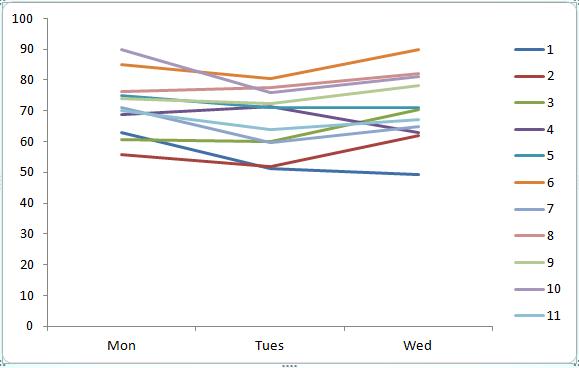
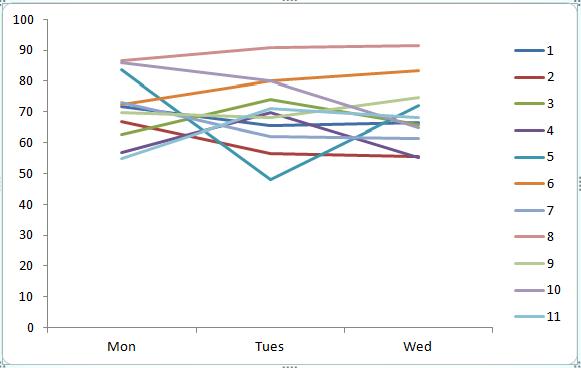
Below is a small sample of some team data I’ve collected in a collegiate soccer team I worked with this past year. What your viewing is the first 3 days (Mon-Tues-Wed) of a new training cycle (Figure 1) and then the same training cycle performed a few weeks later with typical incremental progressions in resistance (for strength training) and distance (for conditioning) (Figure 2). On Monday’s we lifted in the morning and practiced and conditioned in the afternoon. Tuesday’s were off entirely. Therefore Monday’s HRV scores follow a weekend of rest representing “baseline”, Tuesday scores reflect Monday’s workload, and Wednesday marks 48 hours post workout (training resumed Wednesday afternoon).


Figure 1.

Figure 1.

Figure 2.

Figure 2.

In the first week of the new training program and structure (figure 1), 9 of 11 players showed a decrease in HRV following Monday’s workout (some more than others). A few weeks later, only 5 of 11 players showed an acute decrease.

Further discussion and analysis with much more data (complete weeks, periods of overload and deload, sRPE, psychometrics, etc.) and from measures obtained in supine and standing positions will be left for the manuscript.

HRV Recording Methodology: Stabilization

Smart phone app’s and other field tools have made HRV data collection relatively simple and affordable for coaches, athletes and recreational lifters. However, the shortened recording methodology utilized by these devices requires validation. Standardized guidelines recommend that short-term (i.e., 5-min) HRV be collected under physiologically stable conditions (Task Force). Most HRV papers will allow for 5 minutes or greater of supine rest prior to HRV recording to allow for stabilization. However, this 5+ minute pre-recording period is not practical for daily monitoring. A 1 – 2 minute HRV recording period with a very minimal stabilization period used by many app’s is still too long for some individuals to comply with daily measures.

The issue of “stabilization” was the topic of our latest research project that we just presented at the ACSM Annual Meeting in Orlando this past weekend. We looked at the time-course for stabilization of HRV across 5-min ECG segments (e.g., 0-5 min, 1-6 min, 2-7 min, 3-8 min, etc.)  in 12 endurance athletes (6 female) and 12 non-athletes (6 female). We included lnHFnu, lnLFnu, and lnRMSSD.

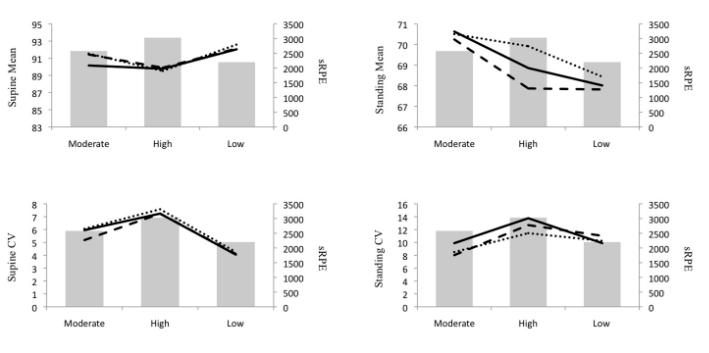
The figures from the poster are displayed below (Athletes on left)

Stab Poster title

stability figures


The full manuscript for this project (with a different methodological approach) is currently in review so I will not get into too much depth on the discussion of the results. However, it is quite clear that lnRMSSD demonstrates the most and earliest stability of the 3 HRV parameters. Therefore, for lnRMSSD assessment, a minimal stabilization period is likely a non-issue. When including spectral measures (e.g., HF, LF), a longer period for stabilization may be required, though lnHFnu was relatively stable in the athletic group in the current sample.


HRV: Means and Variation

At this point, most of you are aware that a single HRV (lnRMSSD) score taken in isolation does not necessarily imply or reflect an acute change in performance, fatigue, recovery, etc (though it may sometimes).

Here’s why:

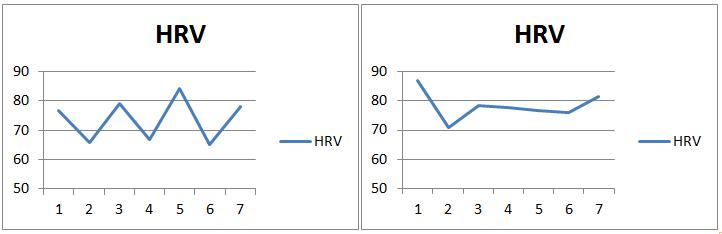
Below are two separate HRV trends I pulled from a training cycle I did last year at week 1 and week 8.

Week 1 and Week 8

If someone were taking once per week recordings, or pre and post training phase recordings on isolated days, you can see how they can get entirely different results based on which day they measured. Suppose measures were taken on Friday’s from the above trends. These values are 84 and 76.7, respectively. However, if we look at the weekly mean values, we would get 73.6 and 78.3. From the isolated readings, one would conclude that HRV decreased nearly 10 points. However, the weekly mean shows an entirely different change (HRV actually increased from 73.6 to 78.3).  Therefore, it’s quite clear that when averaged weekly, HRV scores allow for more meaningful interpretation.

  Isolated Measure (Friday) Weekly Mean
Week 1 84 73.6
Week 8 76.7 78.3

See the following papers for more on weekly mean vs. isolated recordings (Le Meur et al. 2013; Plews et al. 2012; Plews et al. 2013)


One limitation of the weekly mean value is that is does not reflect the fluctuation in scores throughout the 7 day period. A simple way of determining this is to calculate the coefficient of variation (CV) from the 7 day HRV values (see Plews et al. 2012 for more on CV).

The coefficient of variation is calculated as follows;

CV = (Standard Deviation/Mean)x100

Below is 9 weeks worth of data from a training cycle I performed early last year that resulted in some personal records (PR’s) and was discussed in this post. This time, in addition to the weekly mean values I have also calculated the CV for each week.

9 weeks CV and Mean

Without going into too much detail about the training cycle (see the original post for that), I will highlight a few keep observations.

HRV Avg HRV CV Brief Notes
73.6 7.5 1st week after detraining, Good
77.4 5.6  Good
77.5 2.3  Good
76.2 5.7 Stress, poor sleep, deload
79.37 3.0  Good
79.7 4.0  Good
77.9 11.4 Stressful week
77.8 6.8 ↑ intensity, ↓ Volume, Good
78.2 4.8 PR(1RMs)
81.1 4.7 Deload, Good


Below are the HRV trends from Week 1 – 4 of the cycle.

weeks 1 to 4

Week 1 was my first week training after about 10 days off from lifting (Christmas holidays). Clearly the trend from week 1 reflects the fatigue and recovery as I lifted on M W F that week. On week 2 I performed the same workouts on the same days but with a little more weight for each set. However, it appears (based on CV) that this may have been less stressful. In week 3, I moved to lifting 4 days/week with moderate loads and CV decreases further. Interestingly, the following week (week 4), the weights feel heavy, I feel pretty rough and I take an unplanned deload (CV increases, mean decrease).

Further analysis of the CV and weekly mean can include calculating the smallest worthwhile change (see Buchheit, 2014) to see if a change is practically meaningful. (Will do this in the future once I figure out how to display SWC on a chart).

The point of this post was to introduce the CV concept for those who may not be familiar. I believe that the CV likely provides information regarding stress, fatigue and adaptation that the weekly mean may not reflect. Therefore, the CV and mean values should be considered together.

References:

Buchheit, M. (2014). Monitoring training status with HR measures: do all roads lead to Rome? Frontiers in physiology5. http://journal.frontiersin.org/Journal/10.3389/fphys.2014.00073/full

Le Meur, Y., Pichon, A., Schaal, K., Schmitt, L., Louis, J., Gueneron, J., … & Hausswirth, C. (2013). Evidence of parasympathetic hyperactivity in functionally overreached athletes. Medicine and Science in Sports and Exercise45(11), 2061-2071.

Plews, D. J., Laursen, P. B., Kilding, A. E., & Buchheit, M. (2012). Heart rate variability in elite triathletes, is variation in variability the key to effective training? A case comparison. European journal of applied physiology112(11), 3729-3741.

Plews, D. J., Laursen, P. B., Kilding, A. E., & Buchheit, M. (2013a). Evaluating training adaptation with heart-rate measures: a methodological comparison. International Journal of Sports Physiology & Performance8(6).

HRV Measurement Frequency: Comparing 3 day to 7 day per week recordings

There is very little longitudinal HRV data within the research, particularly in team sport athletes. In many cases, HRV will be assessed pre and post or pre, mid and post of a pre-season camp or what have you. This is very likely due to the inconvenience of acquiring this type of data in athletic populations. For the study to be research quality, validated tools must be used (ECG, Polar, Suunto, Omegawave, etc.). In addition, standard measurement procedures are required to ensure that the data is of sufficient quality. This generally involves a 5 minute rest period followed by a 5 minute recording. However, some researchers have used shorter resting and recording durations. Measurement standards for athlete monitoring in the field need to be developed. This is an area my colleague Dr. Esco and I are working on in our lab. This includes cross-validating field HRV tools, assessing the suitability of shorter recording durations and determining the time course for stabilization of HRV (i.e., how long should the resting condition be prior to recording).

Apart from the issue of valid and reliable tools and measurement protocols, another major issue that prevents HRV from being widely used as a component of a comprehensive athlete monitoring program is compliance. Due to day to day variations it is highly unlikely that a single HRV recording per week is sufficient. A recent paper by Le Meur et al. (2013) found that:

using mean weekly values obtained from daily HRV recordings, rather than isolated HRV assessments, may improve the diagnostic utility of HRV indices in endurance-trained athletes to assess training-induced adaptations of the autonomic nervous system. The present results suggest that the day-to-day variability of HRV values is too high to allow clear detection of autonomic modulations associated with F-OR using single-day values.”

Understanding that daily HRV recordings can be difficult to obtain from our athletes, Plews et al. (2013) sought to determine what the minimum measurement frequency is that still appropriately reflects the weekly mean value.

We have previously demonstrated HRV values averaged over 1 week provide a superior representation of training-induced changes than HRV values taken on a single day. In the current study, we have shown that HRV values averaged at random over a minimum number of 3 days will allow for an equivalent representation of training adaptation than values averaged for up to 7 days in trained triathletes. Conversely, recreational athletes will need a slightly greater number of days averaging (~5 days) due to their greater day-to-day variations in Ln rMSSD values.”

Last March, I posted some data that assessed the trends of daily vs. once per week and twice per week HRV recordings here. Today I’d like to revisit this topic. However, in this post I will be comparing weekly mean values to 3 day/week values. In the study mentioned above by Plews et al., the 3 days were randomly selected and were compared with performance changes. I’ve elected to consistently use Mon-Wed-Fri recordings to assess how a more structured and consistent approach would work and compare to the weekly mean trend. Working with a team of athletes, it would be much easier to designate 3 specific week days as HRV recording days. However, which 3 days are selected should likely depend on the training/competition schedule. Selecting days that all fall after intense training/competition may skew the results and not sufficiently reflect the recovery seen on days after lower intensity or rest days.

Below is the first week of every month from the last year (Jan 2013 – Jan2014) of my ithlete data. I figured 1 week per month would sufficiently show trend changes due to changes in fitness, lifestyle etc, without having to spending too much time analyzing data in excel for every week of the year.

1 Year Trend

Below is HRV data from a Collegiate Cross Country athlete throughout the fall competitive season.

Cross Country Season

Below is some in-season data from a female Collegiate soccer player.

Female Soccer

Lastly, below I’ve posted a randomly selected week from each month over 9 months from a competitive male powerlifter with Cerebral Palsy.

powerlifter CP

It was specifically stated that non-elite athletes may require more than a 3 day average to sufficiently reflect performance changes. This is due to a higher degree of variation in day to day measures.

Conversely, recreational athletes will need a slightly greater number of days averaging (~5 days) due to their greater day-to-day variations in Ln rMSSD values.” Plews et al. 

None of the above athletes are “elite” (as much as I’d like to think I am). Clearly there are a few weeks that do not match up for each data set, but the 3 day average (drawn from Mon-Wed-Fri in each set) appears to follow the weekly mean trend reasonably well. Having your athletes record HRV on a mobile device 3 days per week would certainly be more manageable than daily recordings. I intend to investigate this more officially in the future.

Refs:

Le Meur, Y., Pichon, A., Schaal, K., Schmitt, L., Louis, J., Gueneron, J., … & Hausswirth, C. (2013). Evidence of Parasympathetic Hyperactivity in Functionally Overreached Athletes. Medicine and Science in Sports and Exercise.

Plews, D. J., Laursen, P. B., Le Meur, Y., Hausswirth, C., Kilding, A. E., & Buchheit, M. (2013). Monitoring Training With Heart Rate Variability: How Much Compliance is Needed for Valid Assessment?. International Journal of Sports Physiology and Performance. Ahead of print.