Here’s our latest study testing the accuracy of the ithlete vs ECG.
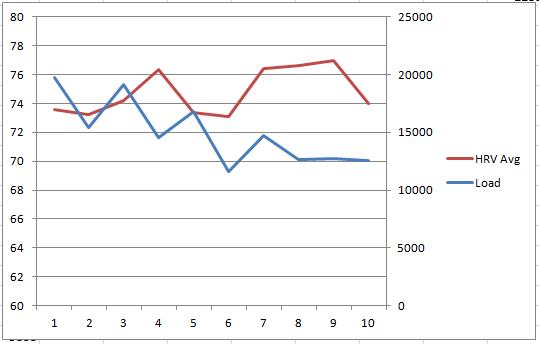
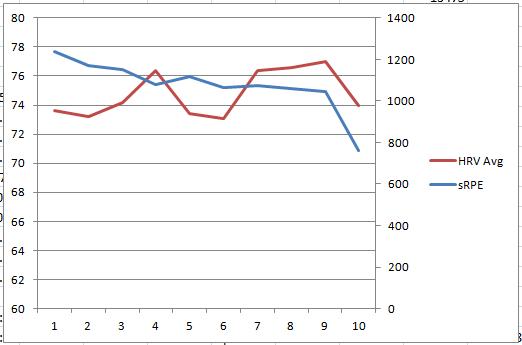
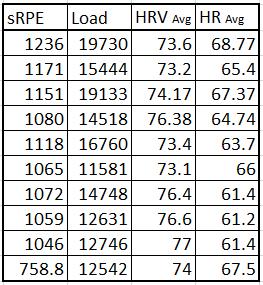
Below is 10 weeks worth of my own training data that includes;
All data is presented as weekly mean values.
Training
– Training volume in weeks 1-5 involved 3 straight working sets for main lifts alternating between weeks of 5’s, triples and singles. Working weight for each set was predetermined based on previous week but would be adjusted if need be. Training volume progressively decreases as working sets were reduced from 3 top sets to 1 top set. Assistance work was mostly just maintained during the reduced load period. Week 10 was more of a true deload where all working set weights were reduced but only to about 80% while assistance work was reduced slightly as well. Keep in mind that volume for each week would vary based on whether I was performing sets of 5, 3, or 1 for top sets.
Thoughts
– Even prior to week 1 displayed in the data, I had not taken a deload in quite some time (end of August). Performance (strength) had progressively been increasing and I didn’t feel the need so I kept at it. My HRV was consistently averaging in the low 70’s which is quite low compared to my typical average of about 80 (based on several years of data). Once I started having some nagging soft tissue problems accumulate I decided to taper the volume. I was seeing how my body and HRV responded to deloading keeping intensity high but just cutting volume. HRV trended back towards baseline though soft tissue problems weren’t quite resolved.
– Week 10 was Thanksgiving week and I traveled to my folks place. Training was reduced yet HRV decreased. I attribute this entirely to the drastic change in my nutrition during this week. Fruit and Vegetable intake decreased significantly. Processed foods and carb intake increased dramatically. It was an atrocious but delicious week of eating. This is not the first time that I’ve seen HRV change due to similar changes in eating.
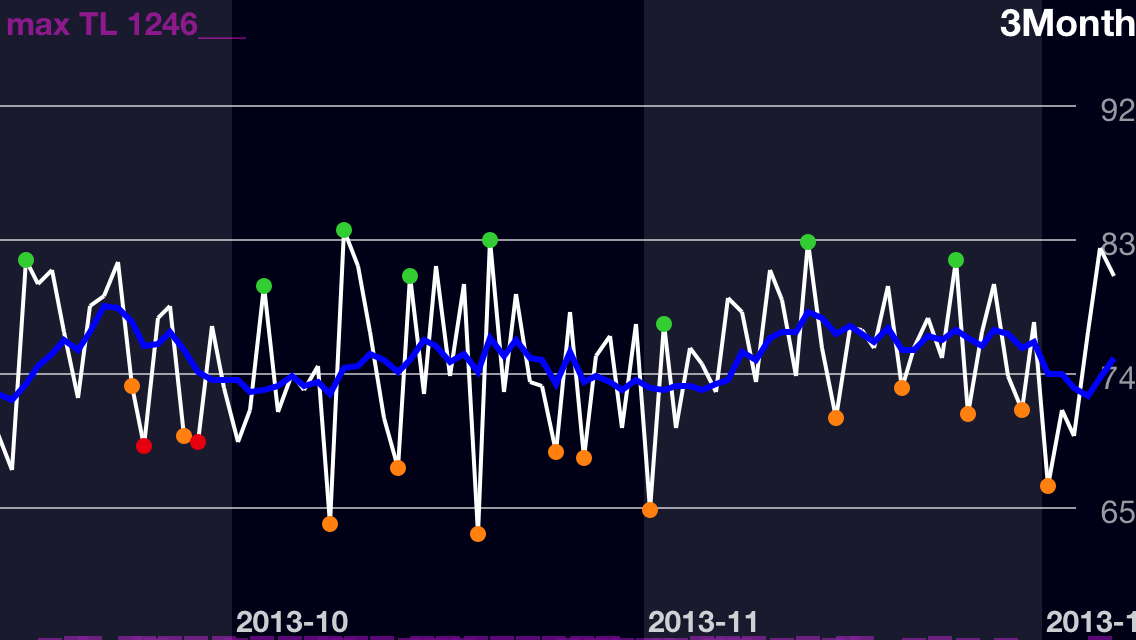
– In the chart below you can see HRV decline during the high volume/load period followed by a progressive increase during the taper. This is then disrupted with a progressive drop during Thanksgiving week of binge eating. HRV then trends back up this week as eating improves and regular training resumes.
– HRV and HR need to be taken into context when being used to guide or monitor training. Other stressors always need to be considered. Neither will ever perfectly correlate with training load as this would assume that only training affects the ANS. It also worth mentioning that HR reflected training load better than HRV in this case and simple RHR should certainly not be dismissed or overlooked.
– Acute changes in HRV/HR won’t always “make sense” or correspond to perceptions of soreness, fatigue, mood etc. (though they do quite often). The weekly mean values tend to provide a better reflection of training/life style. I don’t adjust training on a day to day basis basis until I’m approaching my top sets.
Part 1 of this series provided information on heart function, ECG basics, HRV basics and how the Autonomic nervous system influences heart rate. For Part 2, I’ll discuss and display basic HRV analysis concepts to try and enhance your understanding of HRV. I’ll relate as much of this discussion as possible to smart-phone based HRV tools as it is unlikely that most readers of this site have access to an ECG.
Athlete vs. Non-Athlete
Fit individuals generally have lower resting heart rates and greater parasympathetic activity at rest. These adaptations to training may be a result of both intrinsic heart adaptations (SA node remodeling, increase in ventricle capacity) and autonomic adaptations (greater vagal activity).
Below is an ECG segment from a collegiate male endurance athlete. This sample is likely capturing the normal fluctuation in heart rate that occurs in response to respiration (breathing). Heart rate tends to speed up on inspiration and slow down on expiration. The technical term used to describe this phenomenon is “Respiratory Sinus Arrhythmia”.
For comparison, below is a screen shot of a healthy non-athlete ECG. Here, you can clearly see a higher resting heart rate and less variability.
The Excel snap shot below is what R-R interval data looks like once exported from the ECG software (Acqknowledge in this case) to a workbook. Though specialized HRV software is much more functional, it’s certainly possible to perform some time series (statistical) analysis on the R-R interval data with basic excel functions (i.e. Standard Deviation, Mean R-R Interval, RMSSD, etc.). Today, we’ll focus primarily on RMSSD as this parameter appears to be the preferred HRV index for athlete monitoring (See Plews et al. 2013 and this for more on RMSSD).
Tachogram
With HRV software analysis, ECG recordings are converted to a tachogram, which plot the successive R-R intervals on the y-axis and the number of beats within the ECG segment on the x-axis. This provides a nice visual representation of heart rate variability over a given time and makes for easy software analysis.
Below is a 5 minute ECG segment from an endurance athlete converted to a tachogram with our Nevrokard HRV software. Notice how the R-R intervals vary considerably over a broad range. The time domain values follow.
In contrast, below is the tachogram and time domain analysis of an age matched non-endurance athlete for comparison. Note how the R-R intervals are relatively stable and within a narrow range, demonstrating less variability.
To put this in perspective for the good folks using ithlete or BioForce, I’ll convert the raw RMSSD values (displayed in the “Summary Statistics” screen shots above) to ithlete/BioForce values. To do this, we simply log transform the raw RMSSD and multiply it by 20 (lnRMSSDx20). Keep in mind that the ithlete uses a 55-sec test and BioForce uses 2.5-min test. The values shown here are from 5-min ECG samples, but you get the idea.
Ectopic Beats and Artifacts
Last post, I discussed “normal” beats originating from the SA node. Any beats originating from outside the SA node disturb cardiac rhythm and can therefore impact HRV. These are called ectopic beats. Electrical interference, or excessive noise or movement can create “artifacts” which can also affect the data. It’s important to manually inspect ECG data for ectopic beats or artifacts and correct them (replace with the adjacent “normal” cycle) or discard the ECG sample entirely if there are excessive disturbances. Most smart-phone HRV tools do not provide R-R interval data and therefore manual inspection for ectopic beats is impossible. Conveniently, devices such as ithlete and BioForce are designed to automatically detect and correct irregular beats. For example, the application will detect and replace R-R intervals that are unlikely to occur in healthy, resting individuals (e.g., R-R intervals below 500ms or above 1800ms). I’d assume OmegaWave Pro, SweetBeat and other devices also have this feature.
Below is an example of an ectopic beat from an ECG which appears to be a premature atrial contraction. You’ll see this again in a moment on the tachogram as well.
Measurement Protocol
For athlete monitoring, HRV data is ideally collected as soon after waking in the morning as possible after bladder emptying. We want as close to resting conditions as possible. It would be wise to avoid checking e-mails, text messages and anything else that can alter mood, excite you, upset you, etc. Even water consumption will have an acute impact on HRV. Consistency of measurement protocol and time of measurement are important for longitudinal monitoring. In addition, being as motionless as possible and undisturbed is equally as important.
In the screen shot below towards the right hand side, we can clearly see when the individual gets restless and moves or adjusts his position. We can also see the ectopic beat that occurs toward the start of the measure (same ectopic beat shown above in the ECG). Slight and subtle movements can clearly impact heart rate so be as still as possible when you perform your measures at home.
In the tachogram below, notice how heart rate changes considerably at around the 10 minute mark. This is a result of a researcher entering the exam room where the subject was resting during an ECG recording. Clearly, the resting condition was disturbed as the subject was excited/stressed from the person entering the room. Thus, do your best to remain as undisturbed as possible when performing a measure at home.
All data shown today were from supine ECG recordings. Next post I’ll discuss and show HRV changes in response to postural change (i.e., from supine to standing).
Over the next several posts I will attempt to provide a little more depth to the typical explanations of heart rate variability that I’ve provided in the past. I will be displaying ECG data and HRV software screen shots to provide a better visual representation of HRV analysis. I will present and discuss things like;
Today’s post will serve as a brief, but slightly more in depth introduction to heart rate physiology. To really get a handle on HRV, it’s important to have an understanding of the interplay between the brain and heart and the details therein. I encourage interested readers to check out an actual physiology text for a more elaborate and detailed discussion for which I’ll provide a few recommendations at the end.
Heart Rate
The human heart is equipped with an intrinsic pacemaker within the wall of the right atrium called the sinoatrial node (SA node). The SA node randomly depolarizes, generating action potentials that ultimately result in a contraction (heart beat). All heart beats that originate from the SA node are “normal” beats and provide normal cardiac rhythm. However, as we’ll get into eventually when I display some ectopic beats, depolarization also regularly occurs in other areas within the myocardium, which if reach threshold, can initiate a contraction on its own. Non SA node action potentials disturb cardiac rhythm that is ideally dictated by the SA node (more on ectopic beats in future). Left alone, the SA node would give you a resting heart rate of about 100 beats per minute. Obviously, healthy individuals have much lower heart rates while at rest. Other times, we can experience quite high elevations in heart rate to facilitate blood distribution requirements (e.g., during physical activity). We’ll get into how these changes in heart rate occur momentarily.
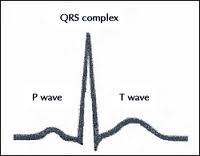
In the lab, we can evaluate heart beat information with electrocardiographic (ECG) recordings. An ECG detects electrical currents at the surface of the skin generated by the action potentials that propagate through the heart. In our lab, since we’re mainly interested in heart rate variability and not intricate ECG analysis, we use a simple, modified lead II electrode placement. From the ECG we can observe 3 distinct patters that represent the electrical conductivity involved in the cardiac cycle;
P wave – Displays as a small upward deflection and represents atrial depolarization. The P wave indicates that the impulse originated from the SA node and therefore results in a “normal” beat.
QRS Complex – Begins with a shallow downward deflection (Q), followed by a tall upward deflection (R) and ends with another downward deflection (S). Collectively, this represents ventricular depolarization.
T wave – Oftend described as dome-shaped in appearance and represents ventricular repolarization
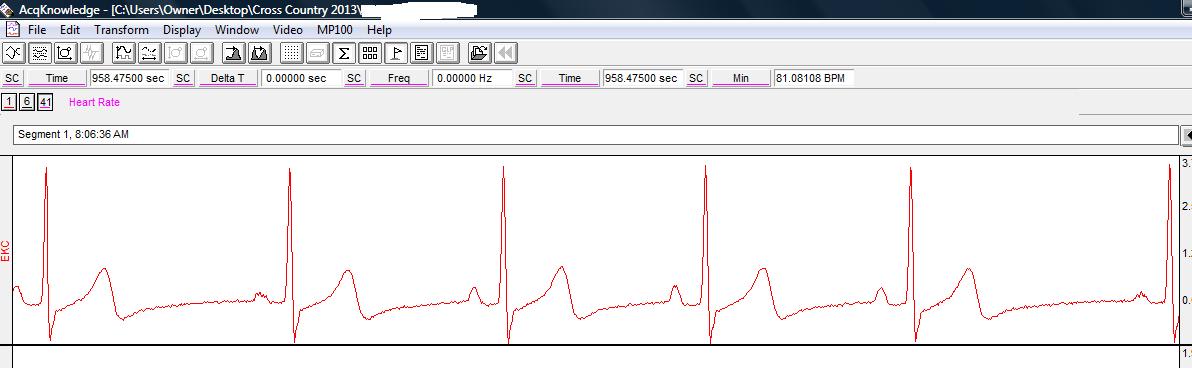
As you can see, the R wave has a high peak making measurements between cardiac cycles rather easy. The elapsed time between two R waves creates an R-R interval. The time between R-R intervals varies across successive R-R intervals and is termed heart rate variability. In the screen shot below of the AcqKnowledge software, notice how the space between R waves (the tall peaks) is inconsistent as some intervals are wider and some are more narrow.
Centrally Mediated Cardiac Control
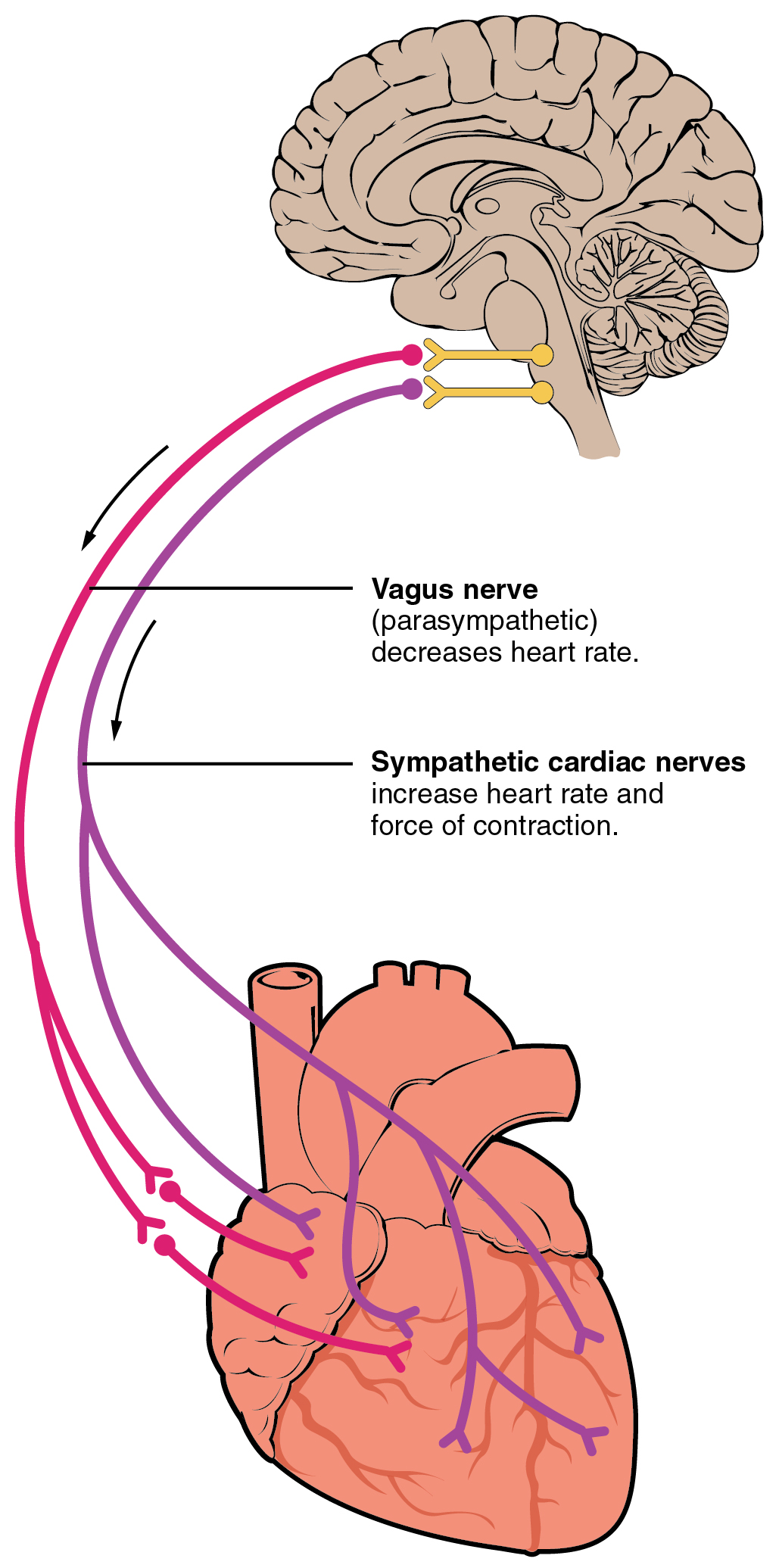
Now we’ll return to our discussion on heart rate control. Heart rate is influenced by both intrinsic and extrinsic mechanisms, however for this discussion, our interest is primarily with central nervous system regulation of cardiac control via autonomic innervations of the heart. Heart rate is largely mediated by both sympathetic and parasympathetic influence which originates in the cardiovascular center of the brain. The cardiovascular center is located on the lower portion of the brain stem at the medulla oblongata. From here, sympathetic neurons extend from the brain, through the spinal cord and directly into the heart. Increased sympathetic activity increases the release of norepinephrine which speeds up SA node depolarization (increases heart rate) and increases the force of contraction. This response occurs to facilitate increased blood distribution requirements that may arise due to physical activity, stress, standing up, etc.

Image taken from http://cnx.org/content/m46672/latest/?collection=col11496/latest
Parasympathetic influence of the heart occurs via the Vagus nerve (10th cranial nerve) which originates in the medulla and has axons that terminate directly into the heart. Vagal stimulation elicits an inhibitory effect on the SA node via release of acetylcholine, effectively reducing heart rate and is associated with “rest and digest” activity. Since vagal activity inhibits SA node activity, vagal withdrawal will result in less SA node inhibition and allow the heart to beat faster. At the onset of exercise, the initial increase in heart rate is a result of vagal withdrawal with a progressive increase in sympathetic activity as exercise persists (Yamamoto et al. 1991).
Since heart rate is directly affected by autonomic activity, it serves as a relatively simple marker for us to monitor to assess autonomic status. Increased parasympathetic activity will reduce heart rate and result in greater variability between R waves. In contrast, a higher heart rate with less variability (think more metronomic) is the result of reduced parasympathetic activity and possibly increased sympathetic activity. HRV has thus become a valuable metric to monitor in athletes as it provides information regarding the relative balance of “stress” in the individual. Though I’m a proponent of HRV monitoring in athletes, its interpretation requires caution as nothing is black and white when it comes to determining an athlete’s training status from HRV, particularly from isolated measurements. Rather, taken with performance trends, psychometrics (perception of mood, soreness, fatigue, etc.), and training load, HRV becomes more meaningful.
In the next post, I will start to get into HRV analysis with some software screenshots to provide a good visual representation of HRV.
References/Recommended Reading:
Smith, D. & Fernhall, B. (2010) Advanced Cardiovascular Exercise Physiology. Human Kinetics. http://www.amazon.com/Advanced-Cardiovascular-Exercise-Physiology/dp/0736073922
Tortora, G. & Derrickson, B. (2006) Principles of Anatomy and Physiology 11th Edition. Biological Sciences Textbooks Inc.
Yamamoto, Y., Hughson, R. L., & Peterson, J. C. (1991). Autonomic control of heart rate during exercise studied by heart rate variability spectral analysis. Journal of Applied Physiology, 71(3), 1136-1142.
I’ve been continuing to collect data on a competitive powerlifter that trains out of our facilities here at AUM. This athlete has cerebral palsy and therefore only competes in raw bench press. Currently, he can press approximately 2.21x his bodyweight (265lbs at 120lb). I’ve posted his older training cycle data previously here and here. This time around, I’ve been tracking a few different variables that are listed and described below. The purpose of this was to see if any of the monitored variables were able to reflect or predict daily variations in 1RM strength.
1RM – Unlike previous cycles, I calculated his 1RM bench press each session based on reps performed and RPE. For example; on his first working set of the day, if he performed 3 reps at an RPE of 9 (1 rep left in the tank), this was considered a 4RM weight and approximately 85% of 1RM using Mike Tuchscherer’s 1RM formula/table. I’ve chosen this specific formula because it is designed for powerlifters. We pause each bench press rep at the bottom which obviously decreases the total amount of reps that can be performed. After trying a few different formulas I found that most were under-predicting his actual strength.
Example:
230×3 RPE @9 = 4RM
Tuchsherer’s Formula: 1RM = 271.4
ExRx.net Calculator: 1RM = 251
Obviously, since many of these are calculated and not true 1RM’s, there is some give or take with these values.
sRPE – Following his workout, I asked him to rate the entire session on a 10 point scale. I do not multiply this by total reps performed but rather just use the rating as a general indicator of how hard the workout was for him.
Hand Dynamometry – Grip strength for each hand was assessed prior to each session via hand dynamometer (starting after week 2). You’ll note that there is a difference between his right and left grip strength due to his condition.
HRV – The athlete measured HRV each morning after waking on his iPod Touch with ithlete in a seated position.
Details of First Training Cycle (Weeks 1-3):
Details of Second Training Cycle (Weeks 4-6):
Assistance work progressed each week and would consist of rowing/pull ups, dumbbell pressing variations and some lower body exercise.
Data is presented below:
*Regarding the last two 1RM’s on the above chart, 26o is likely lower than his true 1RM that day. He smoked it but I cut him off there. The 277 1RM was based off a 3RM calculation that is probably a little higher than his current ability.
Raw Data Below
This data set has a laundry list of limitations. The main one being that 1RM’s were mostly calculated based on the athletes reported RPE of a set and not a true RM attempt, thus leaving plenty of room for error.
I attribute the adjustment in cycle 2 to its success compared to cycle 1. Adding in the speed work and removing the sets of 5 resulted in less fatigue and allowed for more recovery.
This data set convinces me of nothing, but simply encourages me to continue to explore the relationship between HRV and strength in athletes. Though no conclusions should be drawn, the main findings of this small case study are as follows;
I’ve been continuing to work with Zarius out of our lab here at AUM. I provided a detailed account of his recent powerlifting meet prep and competition data in this post. Zarius is 22 years old, weighs 120lbs and has Cerebral Palsy. Due to travel/work schedules we have had a hard time completing a solid training cycle since his last competition earlier this summer. We were finally able to get a good 1 month of training in before one of us had to travel again. Here is an overview of the training and HRV data from our most recent training cycle.
The Plan:
Our schedules allow for 3 training days per week. We train full body every Mon-Wed-Fri. Zarius is able to do some lower body exercises and we always finish each session with some walking laps around the track. (As an aside, prior to getting involved with the Human Performance Lab here at AUM about a year ago, Zarius’ main mode of transportation was his wheel chair. Now he walks most of the time. A testament to the great work done by Dr. Esco and the staff here at AUM as well as the effort put forth by Zarius.) Since we’re not currently preparing for a meet, we only performed the competition press once per week and performed incline and narrow-grip press on the other two training days as his main movements. I also started recording RPE for each set of his main lifts. There is definitely a learning curve to using RPE so I take the earlier values with a grain of salt. Volume for the main lifts remained constant while intensity increased each week. For his assistance work we just did some basic progressive overload. Since we wouldn’t be training for at least a week after the training cycle I wanted to overreach him a little. Zarius recorded his HRV each morning after waking with ithlete in a seated position.
The Data and Analysis:
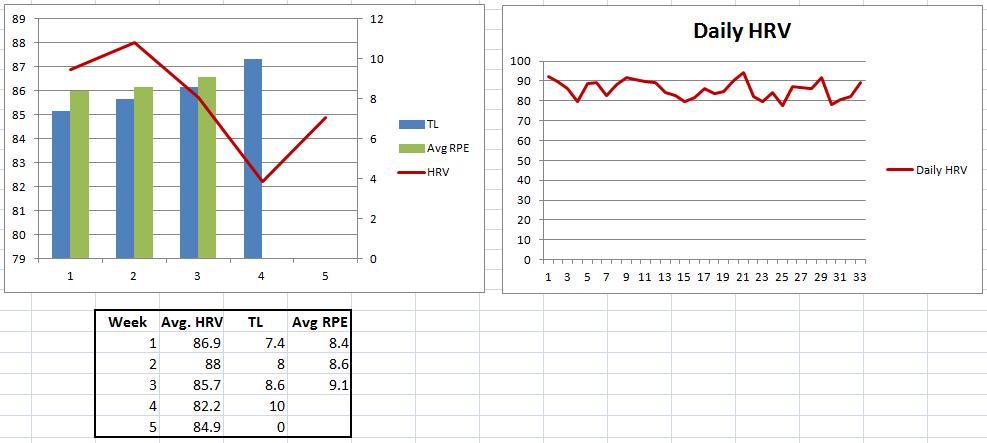
* Training Load (TL) above is simply referring to the average intensity (%1RM) that we used for his main lifts that week. 7.4=74% , etc. For his future cycles, I’ll be collecting sRPE as he gets more comfortable with the rating system.
Week 1:
– Lowest intensity week
– Avg. RPE for main lift this week was 8.4
– Previous week mean HRV was 85.2 to serve as a baseline, though not on chart. Near +2 increase (86.9) in HRV after week 1.
Week 2:
– Intensity increases
– Avg. RPE for main lifts this week increases slightly to 8.6
– +1 increase in week mean HRV. Training is well tolerated and apparently not very stressful.
Week 3:
– Highest intensity week
– Avg. RPE for main lifts this week increases to 9.1. This week he had four RPE@10 compared to week 2 which had 1 RPE@10 and 0 in week 1. (RPE@10 means it was a maximal set, no further reps could be performed)
– As expected and consistent with his previous meet prep cycle, HRV declines this week -2.3 to 85.7. You’ll note that on weekends his HRV tends to climb back up, indicating good recovery even though the week was quite physically stressful.
Week 4:
– Low intensity lift on Monday
– Bench 1RM Test with competition rules (pause and rack command) on Wednesday. Zarius pressed 260lbs cleanly (at 120lbs bodyweight) which is a 10lb Gym personal record and is 5lbs over his competition best of 255lbs.
– – 3.5 change in HRV this week down to 82.2. This is consistent with his competition cycle where HRV reached lowest values the week of competition. However, we deloaded after week 3 of his competition prep which allowed HRV to recover and peak going in to competition. In this case, due to time constraints, we tested before the deload. It’s possible he may have been stronger with a proper deload before testing.
Week 5:
– No training this week due to travel
– HRV week mean returns to baseline at 84.9 (the week before the start of the cycle with no training had a week mean HRV of 85.2).
Overall, this was a successful training cycle based on the result of his 1RM test. Training to at or very near failure with high intensity appeared to have a large effect on his HRV during training evidenced by the downward trend starting in week 3. Though volume was reduced considerably, the 1RM test day appeared to be very taxing as it had the biggest effect on his HRV (consistent with his previous competition). During week 5 where there were no training sessions, HRV returned to baseline values.
Here is a little video interview that the local media did on Zarius. Take a second and check it out. http://www.montgomeryadvertiser.com/apps/pbcs.dll/article?AID=2013130726027
Travelling is a part of competitive sport and is an issue that most athletes deal with on a regular basis. Non-athletes may not appreciate just how stressful travelling can be, particularly when it is combined with the demands of training, practice and competition schedules. I’ve learned that travel is especially more stressful for individuals who like to maintain a regular routine. This includes athletes who like to eat at regular times, train at regular times, sleep, etc. To make things worse, crossing time zone’s can add further issues by effecting sleep patterns and disturbing circadian rhythms.
I’m sure if your athletes are open and honest enough, they will be able to communicate any issues they’re experiencing as a result of the travel. However, there’s evidence to show that HRV monitoring is capable of reflecting the time course of individual adaptation to travelling via changes in autonomic activity in healthy folks (Tateishi & Fujishiro 2002, Tateishi et al. 2000). Taken with perceived stress and fatigue, an objective measure such as HRV may provide coaches a more complete picture of their athletes response to the stresses associated with travel.
Brief Research Review
Dranitsin (2008) investigated the effects of travel across 5 times zones and acclimatization to a hot and humid environment in 13 elite junior rowers. The athletes were monitored during a training camp in Kiev for 9 days and during training camp in Beijing for 17 days before and during the Junior Rowing World Championship. HRV was collected daily in the mornings after waking and bladder emptying with a Polar S810i (presently the RS800). Data was collected for 5 minutes supine followed by 5 minutes standing.
HRV parameters remained relatively unchanged after relocation to Beijing until the 3rd day. At this point, standing HRV values decreased until day 6 at which point they returned to baseline. Supine HRV did not show any significant changes until the 8th day of acclimatization. Parasympathetic measures (RMSSD, SD1 and HF) trended upwards in the standing position in response to 3 days of competition. The authors looked at correlations between HRV indices and training load, humidity, etc., but I will not discuss them. With all of the factors involved it would be very difficult to attribute a change in HRV to a specific variable. Overall, it was interesting to see a lag in the HRV response to the change in time zone and climate. The increase in parasympathetic HRV parameters in response to competition likely reflect fatigue although this is not discussed.
Botek et al. (2009) had a case study published investigating the effects of travel across time zones in two elite athletes; a male decathlete and a female swimmer. HRV data was collected upto 10 days prior to their flights and for an additional 8 days after relocation. HRV was measured with a VarCor PF 7 system in both supine and standing positions. Training load was prescribed based on recommendations from the VarCor PF7 software analysis (similar to OmegaWave in a way).
In athlete A (male, decathlete), parasympathetic indices of HRV decreased well below baseline on the day of the flight and remained suppressed until the 4th day after relocation. In athlete B (female, swimmer), HRV remained at baseline until the third day, at which point it decreased significantly. HRV was not recorded every day in athlete B but it appears that HRV trended back toward baseline in the subsequent days. The author’s mention that athlete B experienced larger than normal drops in HRV in response to familiar training which is interesting to note. The results from this case study suggest that HRV responses to travel across time zones are individual. Information about training load and manipulation based on HRV is presented, however it would’ve been nice to see discussion on how the athletes performed in competition as this is ultimately what matters most.
Personal HRV Data from Travel
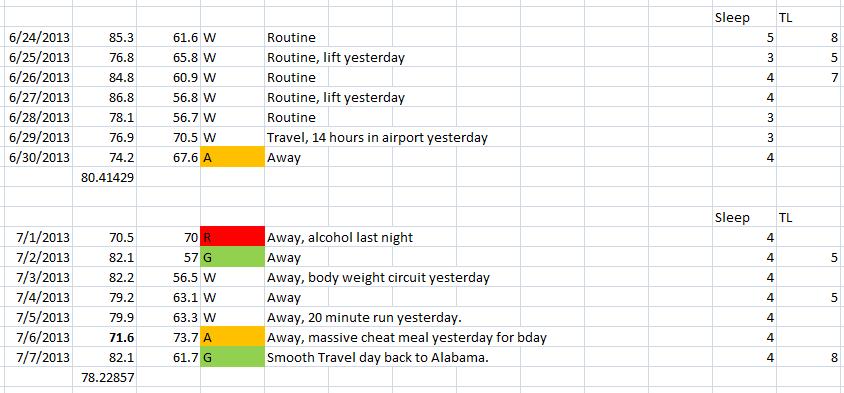
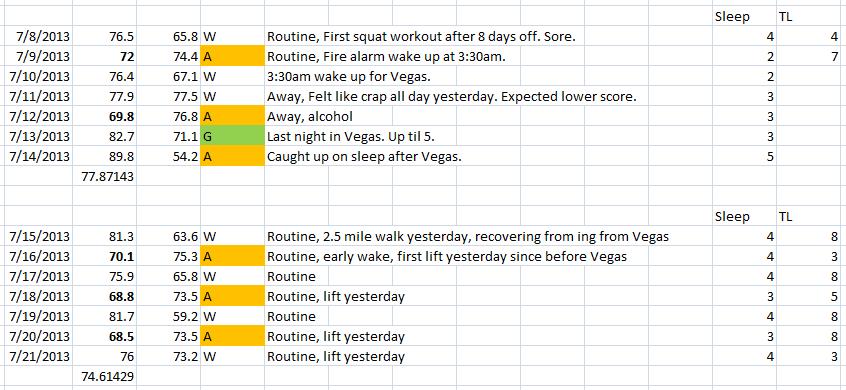
Below I’ve posted my HRV data from the past 4 weeks that involved considerable travel. The comments provide details of what was happening on a day to day basis regarding location, training, etc.
“Routine” implies I’m at home following my regular routine, “Away” obviously implies that I’m out of town, not following my routine.
Toward the end of week 1, I traveled North-East for a little over a week. I returned home only for a few days at the end of week 2 before I headed South-West to Vegas for the NSCA conference.
Week 1 – Best representation of baseline. HRV decreased on day 1 of travel.
Week 2 – Very little training this week. HRV appears most impacted from a night of drinking and again after my birthday which I attribute mainly to my eating.
Week 3 – The scores toward the end of the week are deceiving as the green indication indicated baseline/recovery. However, after very little sleep, I woke up and performed my measurement while I was barely awake. I could have fallen asleep standing if I shut my eyes. Furthermore, with the time difference and changed sleep pattern, my HRV measure would’ve been performed at an unusual time which can impact scores. The next day after returning from Vegas I slept for 10 straight hours and woke up with the highest score I’ve had in a long time. Clearly I was in recovery mode. I opted to go for a long, very low intensity walk (to the tune of “The Very Best of Cat Stevens” every single step of the way) and held off on training til the next day.
Week 4 – Upon returning home and resuming my training, you can really see the effects of the last few weeks. Moderate workouts (low volume with moderate intensity) were tough and caused large drops in HRV with slow recovery. Additionally, and as expected, strength was down. This is due to both the travel (and associated life style) as well as the near cessation of training during that time. It is rare for me to see scores in the high 60’s and low 70’s but it dipped that low several times over the last two weeks.
For more effect I’ve added a weekly mean trend and my ithlete screen shots below.
There is a clear downward trend over the 4 week period. The result of which can be attributed to several factors, not just the travel aspect. Obviously, with more preparation and more effort, I could have minimized these effects and maintained my training. It goes without saying that competitive athletes will likely have much more structure to their transitioning from one time zone to another to reduce the negative effects as much as possible.
So, from my experience and based on the limited research on the topic, it appears that; a) response to travel stress is individual and b) when considered with subjective measures of fatigue, HRV may serve as a useful tool for reflecting the effects of travel and the associated period of adaptation.
References
Botek, M., Stejskal, P., & Svozil, Z. (2010). Autonomic nervous system activity during acclimatization after rapid air travel across time zones: A case study. Acta Universitatis Palackianae Olomucensis. Gymnica, 39(2), 13-21.
Dranitsin, O. V. (2008). The effect on heart rate variability of acclimatization to a humid, hot environment after a transition across five time zones in elite junior rowers. European Journal of Sport Science, 8(5), 251-258.
Tateishi, O., & Fujishiro, K. (2002). Changes in circadian rhythms in heart rate parasympathetic nerve activity after an eastward transmeridian flight. Biomedicine & Pharmacotherapy, 56, 309-313.
Tateishi, O. et al. (2000). Autonomic nerve tone after an eastward transmeridian flight as indicated by heart rate variability. Annals of Noninvasive Electrocardiology, 5(1), 53–59.
Most individuals who take their sport or training very seriously have likely heard of heart rate variability (HRV). Thanks to devices such as the Polar RS800 (Formerly S810) wrist-watch/heart rate monitor and eventually ithlete, the first (to my knowledge) commercially available smart phone HRV application, HRV data can be collected easily and affordably. The recent accessibility of HRV tools has resulted in greater usage, more data and of course greater popularity.
What most folks aren’t aware of however is that HRV is not a solitary figure or value. In fact, numerous HRV parameters exist that are supposedly representative of different autonomic variables. Below is a brief list and description of popular HRV analysis methods and values (many more values exist than described).
Time Domain Analysis: This method includes statistical and geometrical analysis of R-R interval data. Common statistical time domain values include:
*Note: NN or “normal to normal” is used to denote that only “normal” beats originating from the sinus node are measured. Impulses from other areas within the myocardium (non-sinus node impulses) are termed ectopic beats. Ectopic beats disturb normal cardiac rhythm and can therefore affect HRV. Generally 3 or more ectopic beats within a short-term measurement meets criteria for exclusion in many research papers.
Frequency Domain Analysis: This method is considerably more complex than time domain analysis and often requires longer measurement durations. It assesses how variance is distributed as a function of frequency.
As you can see, saying something along the lines of “My HRV is low today” is really vague. I’m sure I’ve been guilty of this in the past. More often than not, most people are referring to their RMSSD value as this is the same parameter provided by ithlete and BioForce (among other HRV tools).
The RMSSD is commonly used as an index of vagally (Vagus Nerve) mediated cardiac control which captures respiratory sinus arrhythmia (RSA), the frequent changes in heart rate occurring in response to respiration (Berntson et al. 2005). During inhalation, heart rate speeds up. During exhalation, heart rate slows down. RMSSD is an accepted measure of parasympathetic activity and correlates very well with HF of frequency domain analysis (discussed above).
PhD candidate and HRV researcher James Heathers provides a good explanation of why we would want to track changes in RMSSD vs. other HRV values throughout training here. I’d like to add that RMSSD is one of the few meaningful values that we can acquire with ultra-short measurement durations. It’s generally accepted that a 5 minute recording is the gold standard for HRV analysis (Task Force 1996). However, 5 minutes is entirely too long if we expect compliance from athletes or individuals. Thankfully, ample research exists that shows that ultra-short (60 seconds or less) RMSSD values (randomly selected from within a 5 minute recording) highly correlate with RMSSD from the standard 5 minute ECG recording (Katz et al. 1999; Mackay et al. 1980; Nussinovitch et al. 2012; Nussinovitch et al. 2011; Salahuddin et al. 2007; Smith et al. 2013; Thong et al. 2003). Unfortunately no research exists that tested the suitability of ultra-short RMSSD in athletic populations so my colleague Dr. Mike Esco and I went ahead and did this very recently in athletes at rest and post-exercise (paper currently in peer review). I will let you know what we found once it gets published.
Why does my HRV score (from ithlete or BioForce) look different from the values in research?
I hope you are not comparing your ithlete or BioFroce scores to data you see in published research. Simon, the creator of ithlete, decided to modify the RMSSD value collected by ithlete to make for a more intuitive and easily interpretable figure for non-expert users. The value you see from the app is the natural log transformed RMSSD multiplied by 20 (lnRMSSDx20). This modification essentially provides a figure on a 100 point scale (though ithlete scores above 100 are possible in highly fit individuals, though not common).
*Note: lnRMSSDx20 is a patented formula and therefore those interested in using this commercially must acquire a licence.
Wrap-up
To be clear, RMSSD is only one HRV parameter. By no means was this article suggesting that other HRV values are meaningless. The purpose of this blog was to simply provide an explanation of the what and why of RMSSD since so many people are using ithlete and BioForce lately. Certainly, ECG derived HRV remains the gold standard and likely multiple HRV parameters provide a more complete picture of training status verses just one. However, for the purposes of convenience in non-expert users, the RMSSD provides an easily acquired and interpretable figure in a short period of time that reflects parasympathetic activity which is quite useful for monitoring the effects of training and in the manipulation of training loads.
References:
Berntson, G. G., Lozano, D. L., & Chen, Y. J. (2005). Filter properties of root mean square successive difference (RMSSD) for heart rate. Psychophysiology,42(2), 246-252.
Camm AJ, Malik M et al. (1996) Heart rate variability: Standards of measurement, physiological interpretation and clinical use. Task Force of the European Society of Cardiology and the North American Society of Pacing and Electrophysiology. Circ 93(5): 1043-1065
Katz A, Liberty IF, Porath A, Ovsyshcher I, Prystowsky E (1999) A simple bedside test of 1-minute heart rate variability during deep breathing as a prognostic index after myocardial infarction. Am Heart J 138(1): 32-38
Mackay JD, Page MM, Cambridge J, Watkins PJ (1980) Diabetic autonomic neuropathy. Diabetol 18(6): 471-478
Nussinovitch U, Cohen O, Kaminer K, Ilani J, Nussinovitch N (2012) Evaluating reliability of ultra-short ECG indices of heart rate variability in diabetes mellitus patients. J Diabetes Complic 26(5): 450-453
Nussinovitch U, Elishkevitz KP, Katz K, Nussinovitch M, Segev S, Volovitz B, Nussinovitch N (2011) Reliability of ultra‐short ECG indices for heart rate variability. Ann Noninvasive Electrocardiol 16(2): 117-122
Salahuddin L, Cho J, Jeong MG, Kim D (2007) Ultra short term analysis of heart rate variability for monitoring mental stress in mobile settings. Conf Proc IEEE Eng Med Biol Soc 4656-4659
Smith AL, Owen H, Reynolds KJ (2013) Heart rate variability indices for very short-term (30 beat) analysis. Part 2: validation. J Clin Monit Comput E-Pub Ahead of Print
Thong T, Li K, McNames J, Aboy M, Goldstein B (2003) Accuracy of ultra-short heart rate variability measures. Conf Proc IEEE Eng Med Biol Soc 3, 2424-2427
The importance of academic examination periods for student athletes at both the high school and collegiate level cannot be overstated. In most cases, academic performance can affect scholarship money (in the collegiate setting); playing time; academic standing (probation) and so forth. Any former athlete can probably attest that exam weeks involve a lot of cramming, plenty of caffeine, suboptimal eating habits and sleep deprivation. Needless to say, the added stress load from exams and exam preparation can have consequences on physical health and possibly performance. In this discussion I will review the available literature pertaining to exam periods and HRV in students to determine its potential usefulness at reflecting this stress. In addition, I will present and discuss some data I’ve collected from a couple of students during their recent exam weeks.
*Note: Very little of the research specifically involves student-athletes.
Perhaps one of the more interesting studies involving college students over exam periods was performed by Dimitriev et al. (2008). Female students (n=70, Age 20-25) were evaluated twice; once during the semester and once on the morning of examinations. Data on HRV, blood pressure, state anxiety and self-reported test performance (how they expected to perform on the exam) was collected. Essentially, students who performed the best on exams were the most pessimistic and showed the largest decrease in parasympathetic indices of HRV (HF and RMSSD). Students who performed best on the exams tended to have a higher state anxiety compared to during the semester while poor performers showed less state anxiety and less change in HRV.
Srinivasan et al. (2006) evaluated perceived stress and HRV in 36 male and female first year med students. A strong correlation was found between the high stress group and LF and LF/HF HRV parameters. Though not statistically significant, there was also a tendency for lower HF values among the high stress group. Kumar et al. (2013) also reported reductions in HRV in med students over exams compared to periods of lower stress before and after exams.
In a study by Tharion et al. (2009) a group of 18 undergraduates (9 male, age 18.7) had HRV and blood pressure assessed on the morning of examination (high stress) and one month later during holidays (low stress). As expected, during the exam period students showed lower HRV (total variability of both time and frequency domain). Interestingly changes in LF, HF, LF/HF and RMSSD were not statistically significant, though there were differences. These changes are likely still meaningful.
An investigation involving 20 female undergrads (age 18-19) showed that compared to the non-exam period, HRV parameters gathered during exams decreased (RMSSD, HF, with increases in LF and LF/HF) indicating a withdrawal of parasympathetic modulation and increase in sympathetic tone (Zaripov & Barinova, 2008). This was despite no changes in perceived stress during exams. Simic and colleagues (2006) reported a linear increase in perceived exam apprehension leading up to exams while HRV reached lowest values during exams and increased thereafter.
This next study did not include HRV analysis however I felt it was worth including. Kang et al. (1997) collected blood samples from 87 high-school students at mid-semester, final exams and post-exams to assess immune responses to the academic stressor. Results showed that during the exam week there were significant immunological alterations; “Natural killer cell activity was significantly lower, whereas lymphocyte proliferation and neutrophil superoxide release were significantly higher. These immune changes tended to return toward baseline during the postexam period, but the enhanced neutrophil reactivity continued to rise.” Another study involving first year med students also found a strong link between stress related immunosuppression and health based on blood sample assay.
Athletes may be at greater risk of immune suppression compared to non-athletes because of the physical demands (strain, monotony) of their sport participation (Putlur et al. 2004). Enforcing responsible exam preparation will increase likelihood of exam performance and reduce the need for procrastination which is a major contributing factor to stress among students (Tice & Baumeister, 1997).
Data from a High School Football Player Over Exams
Below is the weekly mean HRV in the 3 weeks prior to and the exam week.
I have included solo charts of the HRV and Reaction trend because I continue to see a consistent negative correlation between HRV weekly mean and Reaction weekly mean. These charts reflect this relationship better than the above chart.
Data from a Grad Student Strength Coach in the Final Weeks of School
Below is the ithlete HRV data from a colleague who had a very stressful last month of grad school.
Closing Thoughts
Not surprisingly, exam periods are stressful for students. HRV appears to do a reasonably good job of reflecting this. However, responses tend to be individual with some students being more effected than others. If competitive seasons conflict with examination schedules, coaches may want to consider reducing training loads or at the very least, keep a closer eye on fatigue and stress in their athletes. Using a proactive approach by enforcing responsible exam preparation far enough in advance (study hall, tutoring, etc.) should reduce potential stress related issues by discouraging procrastination and associated changes in life style. Of course this is much easier said than done.
References
Dimitriev, D. A., Dimitriev, A. D., Karpenko, Y. D., & Saperova, E. V. (2008). Influence of examination stress and psychoemotional characteristics on the blood pressure and heart rate regulation in female students. Human Physiology, 34(5), 617-624.
Glaser, R., Rice, J., Sheridan, J., Fertel, R., Stout, J., Speicher, C., … & Kiecolt-Glaser, J. (1987). Stress-related immune suppression: Health implications. Brain, behavior, & immunity, 1(1), 7-20.
Kang, D. H., Coe, C. L., McCarthy, D. O., & Ershler, W. B. (1997). Immune responses to final exams in healthy and asthmatic adolescents. Nursing research, 46(1), 12-19.
Kumar, Y., Agarwal, V., & Gautam, S. (2013). Heart Rate Variability During Examination Stress in Medical Students. International Journal of Physiology, 1(1), 83-86.
Putur, P. et al. (2004) Alteration of immune function in women collegiate soccer players and college students. Journal of Sports Science & Medicine, 3: 234-243.
Shrinivasan, K., Vaz, M., & Sucharita, S. (2006). A study of stress and autonomic nervous function in first year undergraduate medical students. Indian Journal of Physiology & Pharmacology, 50(3), 257.
Simić, N. (2006). Evaluation of examination stress based on the changes of sinus arrhythmia parameters. Acta Medica Croatica 60(1): 27.
Tharion, E., Parthasarathy, S., & Neelakantan, N. (2009). Short-term heart rate variability measures in students during examinations. Natl Med J India, 22(2), 63-66.
Tice, D. M., & Baumeister, R. F. (1997). Longitudinal study of procrastination, performance, stress, and health: The costs and benefits of dawdling. Psychological Science, 454-458.
Zaripov, V. N., & Barinova, M. O. (2008). Changes in parameters of tachography and heart rate variability in students differing in the level of psychoemotional stress and type of temperament during an academic test week. Human Physiology, 34(4), 454-460.
I’m about to start week 3 of a new training cycle. In reviewing my HRV trend from the past two weeks you’ll see a massive change from week 1 to week 2. Clearly, last week was significantly more stressful than week 1. This was unintentional. I decided to do some calculations to see what may have happened.
The goal of this phase is to progressively accumulate volume with moderate loads over a 3 week period with a slight reduction in week 4. However, I am very undisciplined in these phases and always go heavier than I should, too soon. I vary set/rep ranges each week but try and stick to lower RPE’s. I like to really focus on technique development during these phases since the loads are supposed to be lighter.
Here is what the two weeks looked like for my main working sets (assistance work not included as it was very similar):
| Week | # of Lifts | Total Volume | Avg. RPE |
| 1 | 70 | 43300 | 7-8 |
| 2 | 56 | 43200 | 8-9 |
Total volume was pretty much unchanged but should’ve increased slightly. RPE generally went up to 9’s on my last set in each workout of week 2 (straight sets) but should’ve remained at 8 or below (no chance I was taking weight off the bar though -my meathead-self trumps my logical-self in the gym quite often). Number of lifts decreased by 20% yet volume was matched due to a relative increase in intensity; too much, too soon. If my goal was to increase training density, than I would’ve been quite successful.
I selected weight ranges in week 2 that should’ve been at the appropriate RPE based on estimations. However, for whatever reason, starting on Monday the weight didn’t feel as light as it should have. Rather than lower the load like I should have, I simply performed less sets.
Regarding HRV, I do expect to see some progressive decline as volume increases, but not a -8 weekly change. Though I can’t think of anything major outside of training that could’ve contributed to the significant change in the trend, non-training related stressors are always a factor, whether we perceive them to be or not.
In conclusion I failed to accomplish my goal of progressively increasing volume with moderate loads but rather increased training density purely as a result of undisciplined load selection. HRV responded with a significant decrease in the trend and I am now starting week 3 in the hole. Lesson learned.