Reaction Test for Athlete Monitoring: Research and Considerations

Distinguishing functional over-reaching (FOR) from non-function over-reaching (NFOR)can be difficult to do during overload periods; particularly when laboratory measures are inaccessible to the coach or athlete. A common criteria used to determine FOR from NFOR is to assess performance before and after overload training. The fatigue accumulated from the increased training loads will result in expected performance decrements. After an unloading period of 1-2 weeks, performance should return to or exceed pre-overload performance values. An athlete can be considered NFOR if performance remains suppressed after this 2 week period.

Coaches can be proactive in their efforts to avoid NFOR with their athletes by maintaining various monitoring strategies. Keeping tabs on certain variables throughout overload periods allows the coach to detect early warning signs that may indicate excessive fatigue in an athlete(s). Such a metric often discussed is the reaction test. Today I will review some of the available research that investigates the efficacy of the reaction test as a method of potentially determining or indicating NFOR in athletes.

Why The Reaction Test?

The theory behind why the reaction test may serve as a good indicator of overreaching and/or the overtraining syndrome has been postulated by Nederhof et al (2006). Essentially, the overtraining syndrome has several signs and symptoms also seen in chronic fatigue syndrome and major depression. Both chronic fatigue and major depression are associated with slower psychomotor ability. Thus, it is hypothesized that psychomotor speed may be slower in athletes with OTS.

Reaction Test and Overreaching

Nederhof and colleagues (2007) put their theory to the test and evaluated performance, perceived fatigue/mood (RESTQ-sport and POMS) and psychomotor speed (reaction tests) in trained cyclists (n=14) and a control group (n=14). Training load was monitored via sRPE (RPE x session length). Testing was performed at baseline, following a 2 week overload period and once more following a 2 week taper. Of the 14 cyclists, 5 were considered FOR (they fulfilled at least 2 out of the three objective criteria in combination with at least 1 subjective criterion during the second but not during the third exercise test) and 7 were considered well trained (WT) while the remaining 2 were excluded.

Two reaction tests were used. The first described test was the “Finger Pre-Cuing Task” that required the individual to react to a prompt by pressing the correct keys on a computer. The other test was the “Determination Test” that required either manual of pedal reaction in response to visual or auditory stimuli also on a computer. Full descriptions of these tests can be read in the full text here.

The control group and the WT group improved their reaction time at each test. The FOR group however showed increased (slower) reaction time after the overload period but improved reaction time beyond baseline values after the taper. Regarding statistical significance the authors stated; “After high load training the FO group was 20% slower than the control group and 8% slower than theWT group. For comparison, patients with major depression are 20 to 26% slower than healthy controls [21,32] and patients with chronic fatigue syndrome are 15% slower than healthy controls [21]. Thus, although not statistically significant, differences in the present study are meaningful“.

Rietjans et al (2005) aimed to determine if a combination of test parameters could help detect overreaching in 7 well trained male cyclists. Over a 2 week period, training load was doubled while intensity was increased by 15%. Values for the following tests/assessments were collected pre and post training period: Maximal incremental cycle ergometer test with continuous ventilatory measurements and blood lactate values, time trial, basal blood parameter tests, hormones (GH, IGF-1, ACTH, neuro-endocrine stress test, shortened POMS, RPE and a cognitive reaction time test.

The results: “A novel finding was that reaction times increased significantly, indicating that overreaching might adversely affect speed of information processing by the brain, especially for the most difficult conditions. After the intensified training period, neither changes in exercise-induced plasma hormone values, nor SITT values were observed. During the CAPT only cortisol showed a significant decrease after the intensified training period. Hemoglobin showed a significant decrease after the intensified training period whereas hematocrit, red blood cell count (RBC) and MCV tended to decrease. The intensified training had no effect on physical performance (Wmax or time trial), maximal blood lactate, maximal heart rate and white blood cell profile. The most sensitive parameters for detecting overreaching are reaction time performance (indicative for cognitive brain functioning), RPE and to a lesser extend the shortened POMS. This strongly suggests that central fatigue precedes peripheral fatigue. All other systems, including the neuro-endocrine, are more robust and react most likely at a later stage in exhaustive training periods.”

Reaction Test and Perceived Performance 

Nederhof and colleagues (2008) set out to determine if reaction tests are related to perceived performance in rowers. On 5 occasions over the course of a season, reaction tests were performed along with perceived performance measures (“Reduced Sense of Accomplishment” scale from the Athlete Burnout Questionaire) in varsity rowers. The same two reaction tests (Finger Pre-Cueing and the Determination Test) described above were used. The results showed that a significant relationship between the Determination Test and perceived performance. The authors stated; “…rowers who scored higher on the ‘‘Reduced Sense of Accomplishment’’ scale of the Athlete Burnout Questionnaire had longer reaction times on the determination test. For every point the rowers scored higher, their reaction times were 18 ms longer on the action mode and 12 ms on the reaction mode of the determination test. This effect was not found for the finger pre-cueing task.”

Though their hypothesis was supported, the authors affirm that several practical issues require resolution.

My Reaction Test Data Compared to HRV over 4 Different Training Periods

For a much more elaborate discussion on this experiment you can see the original post here. Essentially what I found was that Reaction test average and HRV average mirrored each other at each training period. HRV decreased and Reaction time increased (slower) during High Intensity and again during High Volume training reflecting fatigue. During reduced training loads HRV increased and Reaction time decreased (faster).

Reaction average trend

HRV Avg Trend Reaction Blog

Considerations and Limitations

The reaction test appears to be a test worthy of consideration for coaches looking to incorporate monitoring variables into their training regime. The following is a list of factors to keep in mind regarding this test:

• Caffeine has a well-established effect on reaction time and should therefore be controlled for when implementing reaction testing

• Psychological factors can impact the effectiveness and reliability of the test. Though this is an objective test, the effort put forth by the athlete may not be consistent. Since this test is sensitive to small changes in reaction time, this can obscure data and thus interpretation.

• As with HRV, it is probably best to experiment with a reaction test with a small sample of athletes to determine its usefulness before trying to implement with an entire team.

• Just like any other monitoring variable, reaction time should be considered with other factors when attempting to draw meaningful interpretations from the results.

Reaction time test results appear to respond early to fatigue during overload training. Reaction times (test dependent) may correlate with perceived performance. The simplicity, practicality, affordability and non-invasiveness of a reaction test make it appealing to coaches as a field test.

References

Nederhof, E., et al. (2006) Psychomotor speed: possibly a new marker for overtraining syndrome. Sports Medicine, 36(10): 817-28.

Nederhof, E., Lemmink, K., Zwerver., J. & Mulder, T. (2007) The effect of high load training on psychomotor speed. International Journal of Sports Medicine, 28: 595-601.

Nederhof, E., Visscher, C. & Lemmink, K. (2008) Psychomotor speed is related to perceived performance in rowers. European Journal of Sport Science, 8(5): 259-265

Rietjans, GJ., et al. (2005) Physiological, biochemical and psychological markers of strenuous training induced fatigue. International Journal of Sports Medicine, 26(1): 16-26.

HRV and Reaction Test Data and some updates on our HRV research

I posted some data a couple of months ago comparing my HRV to my tap test results to see if there was any correlation between the two. You can see that post here if you missed it. It was around that time that I also started using a Reaction Test app. Today I’ll be posting and reviewing my Reaction Test data with my HRV data to see what it might reveal. At the end of the post I’ll provide some brief updates on what’s been happening since I started working in the Human Performance Lab here at Auburn (Montgomery).

HRV: I continue to use ithlete as my main HRV metric. Daily measurements are performed each morning after waking and bladder emptying. All measurements are performed in the standing position with paced breathing. The HRV value provided by ithlete is Ln RMSSD x 20; a time domain measure of parasympathetic tone.

Reaction Test: The reaction test is performed after my HRV test and my Tap test (I’m still doing these but will not include them today). All reaction tests were performed using right index finger. The app functions as follows;

  1. initiate app
  2. Tap target area to start the test
  3. React to stimuli (color change) as fast as possible by tapping the screen
  4. Repeat for a total of 5 reactions (variable time intervals between)

Image

I used excel to calculate daily average with the reaction test data (plotted on the charts below).

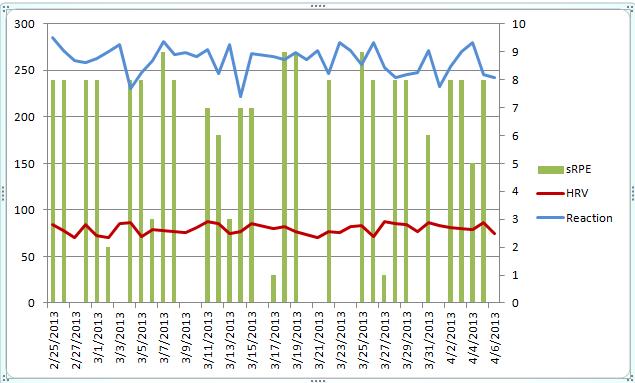
Keep in mind that for a correlation between high HRV and good Reaction Test, we want to see an inverse relationship in the trends. We’re looking for a fast Reaction time (trending down) with a higher HRV score (trending up).

Chart 1 – HRV, Reaction Test Average and Session RPE (secondary axis)  

Image

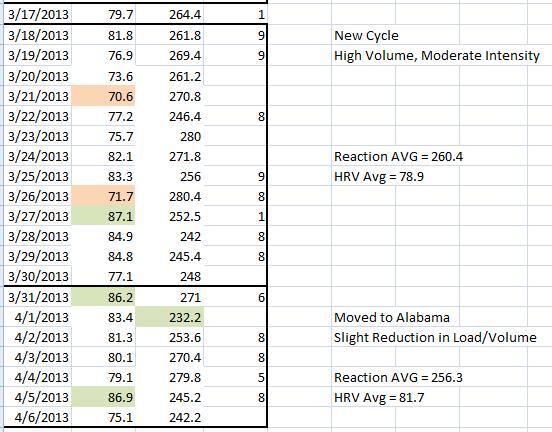
For more clarity I’ve also included excel screen shots of the raw data. I’ve sectioned off 4 different areas and noted the goal/purpose of that particular time of training. It works out so that there is a High Intensity section, a Deload section, a High Volume Section, and a Semi-Deload section. The “Semi-Deload” period occurs over the past week that I’ve moved to Alabama. I figured it would be wise to scale intensity and volume back very slightly while I settle in to a new place and new work environment. To give an example, I essentially removed a main working set and stuck with familiar weights. Assistance work was relatively unchanged.

ImageImage

* I must have forgotten to perform a reaction test or forgot to save it on 03/16 which was a Saturday and therefore it is not included.

I’ve highlighted any score that was +/- 10% from the total average. So for exampme; if HRV was 10% higher than the average of all HRV scores, I would shade that day green. Likewise for Reaction Test. Red shading denotes 10% or greater reduction.

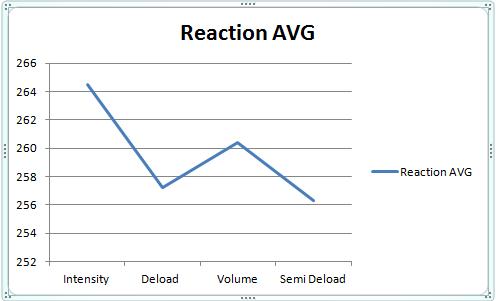
After examining the acute relationship between Reaction Test and HRV I decided to examine the averages for each training block. I’ve shifted my focus lately a little bit more on weekly trend changes vs. daily trend changes. As you can see in the charts below, there is a very strong relationship between HRV AVG and Reaction Test AVG during each training section.

ImageImage

–          Intensity Section – This section was the last 2 weeks of my 9 week training cycle that I performed after the Christmas break (discussed here). Volume was low but intensity was Maximal. HRV is at it’s lowest average while Reaction Test is at its highest (slowest reaction time) average.

–          Deload – During the deload week HRV average rebounds to peak levels while reaction time improves to near peak levels.

–          High Volume – This marks the start of a new training cycle. HRV drops quite a bit and Reaction Time average increases (slower reaction).

–          Semi-Deload – HRV returns to near peak values while Reaction Test peaks (quickest reaction time average).

From this data set, intensity appeared to have the biggest effect on Reaction Test average and HRV average. High volume work with moderate intensity also had a significant impact on these averages. It should be kept in mind that the Intensity period followed several weeks of training and therefore some fatigue had already been accumulated. I didn’t start using the reaction test until late February.  HRV and Reaction averages improve over periods of reduced training load.

Given that I was able to hit some PR’s in the gym during the Intensity section (under high fatigue), I’m inclined to say at this point, based on this data set, that these tests are not necessarily indicators of performance potential (strength), but rather markers of fatigue. In the future I would like to see how these tests match up with “finer” motor skills in other athletes.

Quick Updates

I made it safely to Montgomery, AL after a nice visit with some family at my folks place in Cincinnati over Easter. Total travel time was about 17.5 hours. We wasted no time in getting to work in the lab. We’ve got 3 projects going on right now (the first two being more health related  as opposed to sports/performance).

  1. I’m helping Dr. Esco complete a study comparing post-exercise HRV recovery after two different modes of exercise (cycling vs. treadmill at same intensity/duration).
  2. We are starting a new study comparing post-exercise HRV in middle aged men after 3 modes or resistance training; Eccentric only; Concentric Only; Traditional Resistance Training
  3. We have put the wheels in motion for a cross-validation study comparing ithlete to EKG. We did some pilot work with about 6 subjects so far and have IRB Forms and Consent Forms about ready for submission. We’ll measure ithlete and EKG simultaneously in about 20 males and 20 females then run the data. This is a very important study to me. In order to improve what we know about HRV and performance, we need more data. Using EKG’s in the field is not practical. What we need to start seeing is data from athletes that are performing measurements at home when they wake up. The device needs to be extremely easy to use and the data needs to be immediately available to the coach. At this time, smart phone app’s are the best way to do this. There are plenty of limitations with this but at the end of the day, if we’re going to apply this stuff in a team setting we need easy to use, affordable tools.
  4. This last project doesn’t exist yet. But I’m hoping to collect data on either the men’s tennis team or the women’s soccer team. I’ll provide more info on this if and when it starts to take shape.

Let me be clear right from the start in saying that Dr. Esco is running the show here. I’ve learned a ton from him already about the research process and anything that I accomplish over the next little while will be because of him.

Lastly, I attended my first Roller Derby which was quite the experience.

New HRV Research: Vol. 3

Here are 7 new studies pertaining to HRV and training.

New HRV Research: Vol. 1

New HRV Research: Vol. 2 

1.

Dupuy, O. et al. (2013) Night and postexercise cardiac autonomic control in functional overreaching. Applied Physiology, Nutrition, and Metabolism, 2013, 38(2): 200-208, 10.1139/apnm-2012-0203

ABSTRACT

The purpose of this study was to evaluate the effect of a 2-week overload period immediately followed by a 1-week taper period on the autonomic control of heart rate during the night or after exercise cessation. Eleven male endurance athletes increased their usual training volume by 100% for 2 weeks (overload) and decreased it by 50% for 1 week (taper). A maximal graded exercise test and a constant-speed test at 85% of peak treadmill speed, both followed by a 10-min passive recovery period, were performed at baseline and after each period. Heart rate variability was also measured during a 4-h period in the night or during estimated slow-wave sleep. All participants were considered to be overreached based on performance and physiological and psychological criteria. We found a decrease in cardiac parasympathetic control during slow-wave sleep (HFnu = 61.3% ± 11.7% vs 50.0% ± 10.1%, p < 0.05) but not during the 4-h period, as well as a faster heart rate recovery following the maximal graded exercise test (τ = 61.8 ± 14.5 s vs 54.7 ± 9.0 s, p < 0.05) but not after the constant-speed test, after the overload period. There was a return to baseline for both measures after the taper period. Other indices of cardiac autonomic control were not altered by the overload period. Care should be taken in selecting the most sensitive heart rate measures in the follow-up of athletes, because cardiac autonomic control is not affected uniformly by overload training.


2.

Vargas, W. et al. (2013) Higher mean blood pressure is associated with autonomic imbalance but not with endothelial dysfunction in young soccer players. American Journal of Hypertension, doi: 10.1093/ajh/hps034

BACKGROUND Blood pressure (BP) should be kept within a narrow range to allow adequate tissue perfusion. In particular, heart-rate variability (HRV) can be used to assess autonomic cardiovascular modulation, and flow-mediated dilation (FMD) can provide valuable information about the ability of the cardiovascular system to adapt to different pressures. Our objective in the study described here was to investigate the effect of a difference of 10mm Hg in mean arterial pressure (MAP) on endothelial function and autonomic balance in young and normotensive soccer players.

METHODS Twenty-nine young male soccer players (mean age 17.7 years) were divided into two groups according to their MAP (mm Hg): MAP-84 and MAP-94. The BP, FMD, HRV and maximum oxygen uptake (VO2max) of each group were measured.

RESULTS Systolic BP (SBP) and diastolic BP (DBP) were significantly higher (P < 0.0001 and P < 0.006, respectively) in the MAP-94 group. There were no differences in VO2max and endothelial function in the two groups (P < 0.7699). However, the standard deviation (SD) of normal RR intervals (SDNN) and the square root of the mean squared differences in successive RR intervals (RMSSD) were significantly lower in the MAP-94 than in the MAP-84 group (P < 0.0001 and P < 0.005, respectively). In the MAP-94 group, both the high-and low-frequency components were significantly (P< 0.001, P < 0.021, P < 0.017, respectively) lower in both absolute and normalized units, whereas the LF/HF ratio was significantly (P < 0.012) higher.

CONCLUSIONS Collectively, our findings indicate that in young soccer players, autonomic cardiovascular modulation is impaired when MAP is increased by 10mm Hg, even within an optimal range of BP and regardless of endothelial function and VO2max.


3.

Heydari, M., Boutcher & Boutcher. (2013) High-intensity intermittent exercise and cardiovascular and autonomic function. Clinical Autonomic Research, 23(1): 57-65

Objective

The effect of 12 weeks of high-intensity intermittent exercise (HIIE) on cardiac, vascular, and autonomic function of young males was examined.

Methods

Thirty-eight young men with a BMI of 28.7 ± 3.1 kg m−2 and age 24.9 ± 4.3 years were randomly assigned to either an HIIE or control group. The exercise group underwent HIIE three times per week, 20 min per session, for 12 weeks. Aerobic power and a range of cardiac, vascular, and autonomic measures were recorded before and after the exercise intervention.

Results

The exercise, compared to the control group, recorded a significant reduction in heart rate accompanied by an increase in stroke volume. For the exercise group forearm vasodilatory capacity was significantly enhanced, P < 0.05. Arterial stiffness, determined by pulse wave velocity and augmentation index, was also significantly improved, after the 12-week intervention. For the exercise group, heart period variability (low- and high-frequency power) and baroreceptor sensitivity were significantly increased.

Conclusion

High-intensity intermittent exercise induced significant cardiac, vascular, and autonomic improvements after 12 weeks of training.


4.

Souza, G., et al. (2013) Resting vagal control and resilience as predictors of cardiovascular allostasis in peacekeepers. Stress, doi:10.3109/10253890.2013.767326

Abstract

The body’s adaptive reaction to a stressful event, an allostatic response, involves vigorous physiological engagement with and efficient recovery from stress. Our aim was to investigate the influence of individual predispositions on cardiac responses to and recovery from a standardized psychosocial stress task (Trier Social Stress Task) in peacekeepers. We hypothesized that those individuals with higher trait resilience and those with higher resting vagal control would be more likely to present an allostatic response: a vigorous cardiac response to stress (i.e., reduction in interbeat intervals and heart rate variability (HRV)) coupled with a significant cardiac recovery in the aftermath. Fifty male military personnel with a mean age of 25.4 years (SD ± 5.99) were evaluated after returning from a peacekeeping mission. Electrocardiogram recordings were made throughout the experimental session, which consisted five conditions: basal, speech preparation, speech delivery, arithmetic task, and recovery. Mean interbeat intervals and HRV were calculated for each condition. An Ego-Resilience Scale and resting vagal control assessed individual predispositions. Stress tasks reduced interbeat intervals (tachycardia) and HRV in comparison with basal, with return to basal in the aftermath (p < 0.001, for all comparisons). Resilience and resting vagal control correlated positively with cardiac parameters for both stress reactivity and recovery (r ≥ 0.29; p < 0.05). In conclusion, peacekeepers showing higher trait resilience and those with higher resting vagal control presented a more adaptive allostatic reaction characterized by vigorous cardiac response to stress (i.e., tachycardia and vagal withdrawal) and efficient cardiac recovery after stress cessation.

5.

Lujan, H.L. & DiCarlo. (2013) Physical activity, by enhancing parasympathetic tone and activating the cholinergic anti-inflammatory pathway, is a therapeutic strategy to restrain chronic inflammation and prevent many chronic diseases. Medical Hypotheses, doi:10.1016/j.mehy.2013.01.014

Abstract

Chronic diseases are the leading cause of death in the world and chronic inflammation is a key contributor to many chronic diseases. Accordingly, interventions that reduce inflammation may be effective in treating multiple adverse chronic conditions. In this context, physical activity is documented to reduce systemic low-grade inflammation and is acknowledged as an anti-inflammatory intervention. Furthermore, physically active individuals are at a lower risk of developing chronic diseases. However the mechanisms mediating this anti-inflammatory phenotype and range of health benefits are unknown. We hypothesize that the “cholinergic anti-inflammatory pathway” (CAP) mediates the anti-inflammatory phenotype and range of health benefits associated with physical activity. The CAP is an endogenous, physiological mechanism by which acetylcholine from the vagus nerve, interacts with the innate immune system to modulate and restrain the inflammatory cascade. Importantly, higher levels of physical activity are associated with enhanced parasympathetic (vagal) tone and lower levels of C-reactive protein, a marker of low-grade inflammation. Accordingly, physical activity, by enhancing parasympathetic tone and activating the CAP, may be a therapeutic strategy to restrain chronic inflammation and prevent many chronic diseases.


6.

Luque-Casado A, Zabala M, Morales E, Mateo-March M, Sanabria D (2013) Cognitive Performance and Heart Rate Variability: The Influence of Fitness Level. PLoS ONE 8(2): e56935. doi:10.1371/journal.pone.0056935

Abstract

In the present study, we investigated the relation between cognitive performance and heart rate variability as a function of fitness level. We measured the effect of three cognitive tasks (the psychomotor vigilance task, a temporal orienting task, and a duration discrimination task) on the heart rate variability of two groups of participants: a high-fit group and a low-fit group. Two major novel findings emerged from this study. First, the lowest values of heart rate variability were found during performance of the duration discrimination task, compared to the other two tasks. Second, the results showed a decrement in heart rate variability as a function of the time on task, although only in the low-fit group. Moreover, the high-fit group showed overall faster reaction times than the low-fit group in the psychomotor vigilance task, while there were not significant differences in performance between the two groups of participants in the other two cognitive tasks. In sum, our results highlighted the influence of cognitive processing on heart rate variability. Importantly, both behavioral and physiological results suggested that the main benefit obtained as a result of fitness level appeared to be associated with processes involving sustained attention.


7.

Oliveira, T.P. et al. (2013) Absence of parasympathetic reactivation after maximal exercise. Clinical Physiology and Functional Imagine, 33(2): 143-149.

Summary

The ability of the human organism to recover its autonomic balance soon after physical exercise cessation has an important impact on the individual’s health status. Although the dynamics of heart rate recovery after maximal exercise has been studied, little is known about heart rate variability after this type of exercise. The aim of this study is to analyse the dynamics of heart rate and heart rate variability recovery after maximal exercise in healthy young men. Fifteen healthy male subjects (21·7 ± 3·4 years; 24·0 ± 2·1 kg m−2) participated in the study. The experimental protocol consisted of an incremental maximal exercise test on a cycle ergometer, until maximal voluntary exhaustion. After the test, recovery R-R intervals were recorded for 5 min. From the absolute differences between peak heart rate values and the heart rate values at 1 and 5 min of the recovery, the heart rate recovery was calculated. Postexercise heart rate variability was analysed from calculations of the SDNN and RMSSD indexes, in 30-s windows (SDNN30s and RMSSD30s) throughout recovery. One and 5 min after maximal exercise cessation, the heart rate recovered 34·7 (±6·6) and 75·5 (±6·1) bpm, respectively. With regard to HRV recovery, while the SDNN30s index had a slight increase, RMSSD30s index remained totally suppressed throughout the recovery, suggesting an absence of vagal modulation reactivation and, possibly, a discrete sympathetic withdrawal. Therefore, it is possible that the main mechanism associated with the fall of HR after maximal exercise is sympathetic withdrawal or a vagal tone restoration without vagal modulation recovery.

Correlation between HRV, sRPE and subjective fatigue in athletes

Today I will review the research I’ve read that investigates the relationship between perceived exertion ratings of a workout session (sRPE), subjective levels of fatigue and HRV in effort to examine the usefulness of HRV in reflecting training load in athletic populations. Like all of my articles, this report is based on my interpretation of the research and perspectives from personal experience.

The Research

In a brand new study from the JSCR, Sartor and colleagues (2013) followed elite male gymnasts (n=6, age 16) over 10 weeks of training. HRV was monitored daily every other week while sRPE was collected immediately following each workout. HRV strongly correlated to previous day sRPE in both supine (HF%, HF%/LF%) and supine to seated measurements (mean RR, mean HR, HF%, SD1). Relationships were also seen between HRV, and perceived wellness (foster’s index). HRV correlated with training load (sRPE) and psychophysiological status.

Though sRPE wasn’t used in this next study, KeTien (2012) monitored HRV, blood-urine nitrogen (BUN) and profile of mood states (POMS) in 24 national level rugby players over an 8 week conditioning program. The program progressed from more aerobic based work to more anaerobic/interval based work. Spectral measures of HRV correlated with both POMS and BUN at each time point throughout the training period.

During the 2006 World Cup, Parrado and colleagues (2010) set out to determine if perceived tiredness could predict cardiac autonomic response to overload in elite field hockey players (n=8).  A strong correlation was found between per­ceived tiredness scores and HRV. Higher levels of perceived tiredness (acquired from questionnaire) were related to lower values of parasympathetic tone (RMSSD), pNN50 and higher LF/HF ratio. In order to discern changes in HRV brought on by fatigue from changes in HRV caused by pre-competitive anxiety, the researchers had the athletes complete anxiety questionnaires.

“Results show that cognitive anxiety and self-confidence sub­scales of the CSAI–2 were not related to perceived tiredness nor to heart rate variability. In the absence of a relation between cognitive anxiety and heart rate variability, it can be assumed that the relationship established between heart rate variability indexes and perceived tiredness scores are attributable to the fatigue state.”

Accounting for pre-game anxiety is very important as previous research has shown this to affect HRV (Edmonds et al. 2012, Mateo et al. 2012, Murray et al. 2008), thus making it difficult to distinguish fatigue from acute anxiety on the morning of a competition.

Edmonds et al. (2012) found that HRV (HF) correlated with sRPE in youth rugby players (n=9) during a one week microcycle of practices and a game. However, game day HRV values were lower which was attributed to the aforementioned pre-game anxiety since training loads were reduced before the competition.

Smith and Hopkins (2011) monitored performance, HRV, sRPE and subjective fatigue in elite rowers (n=10) throughout an intense 4 week training period. Interestingly, the most improved athlete and the only overtrained athlete both had statistically similar levels of perceived fatigue and changes in LF/HF ratio. However, after looking closely at the data, RMSSD showed a noticeable decline in the OT athlete compared to the most improved who had a moderate increase in RMSSD. The determining factor however in this case was performance changes.

Thiel at al. (2012) found that in 3 elite male tennis players, HRV, serum urea and psycho-physical state (assessed by EBF-52 questionnaire) each responded to overload training. As training load increased, HRV (RMSSD) decreased, perceived fatigue increased and serum urea increased. However, performance increased (V02 max, Single Leg CMJ, DJ index) and therefore performance metrics should always be considered when trying to discern functional overreaching (FOR) from non-functional overreaching (NFOR). HRV changes act as an early warning sign while performance decrements may represent the initial transition from FOR to NFOR.

Cipryan et al (2007) found that HRV correlated to performance in hockey players (age 17, n=4) but did not correlate to self-reported health status. Therefore, coaches should use caution when using perceived stress to predict ANS status and thus an objective measure (like HRV) is still recommended.

In elite female wrestlers, perceived stress (in the form of; excessive competition schedule, social, education, occupational, economical, travel, nutritional, etc) contributed to NFOR when HRV parameters were significantly increased (Tian et al. 2012). There was no mention of perceived stress/recovery in the NFOR group with significant decreases in HRV parameters. Regardless, subjective measures of stress including non-training related events require consideration when planning training. Monitoring the global stress of an athlete is more meaningful then simply training load.

Plews et al. (2012) monitored HRV and perceived measures of recovery (sleep, soreness, etc.) in two elite triathletes over a 77 day period leading up to competition. One athlete was considered NFOR. Perceived levels of recovery were not associated with HRV. However, the NFOR athlete admitted that she felt deterred from  reporting  low scores as anything below a certain score would be automatically sent to the coach. Therefore, when relying on perceptual measures from athletes, coaches must be prudent in ensuring honest reports. HRV was a better indicator of fatigue in this study.

The last study I’d like to mention only appears to be available in German at the moment. I translated the paper with google, however it was very rough to say the least. Therefore I will simply quote the pertinent information from the abstract:

“6 endurance athletes measured morning heart rate, heart rate variability (HRV) and mood state during a normal training period, a 17 day ultrarace (Deutschlandlauf) and following a recovery period. 4 out of 6 runners could not finish the race due to injury or exhaustion. 3 of them showed diagnostically relevant criteria of overreaching. All runners who quit the race showed increased morning heart rate, decreased HRV and a decreased mood state during competition. The studied parameters showed individually different adaptations but there were early changes that preceded the abortion of the run that gave diagnostically relevant information.” (Bossmann 2012)

Thoughts

Though there appears to be a strong tendency for HRV to reflect perceived training load and subjective fatigue, an objective measure of ANS status should still be considered. Subjective measures from athletes are only meaningful if honestly reported.

I’ve personally seen a strong correlation between morning HRV score and session rating of perceived exertion (sRPE) of the previous day’s workout. However, I’ve learned that this relationship isn’t perfect. I’ve experienced situations where;

–          Perceived exertion may be high but HRV response may be minimal if the workout is familiar (exercise selection, order, intensity, etc.).

–          In direct contrast to the above, perceived exertion may be moderate but HRV response may be significant if the workout is unfamiliar.

–          Non-training related factors affect HRV. Sleep, aerobic fitness, mental stress, nutrition, etc. can all impact ANS activity, possibly obscuring the relationship between training load and HRV.

–          Stress from travel, illness, occupation, etc. may have a larger impact on ANS than is perceived and reported.

–          More on other factors effecting HRV here.

In conclusion, obtaining both objective and subjective measures of fatigue along with performance indicators will provide a more accurate indication of training status. Monitoring of these variables regularly should enable the coach to better manipulate training loads to ensure progression and avoid unintentional overreaching.

References

Bossman, T. (2012) Effects of ultra-long-distance running on selected physiological and psychological parameters as a possible marker of overloading. Swiss Journal of Sports Medicine, 60(1): 21-5. Full Text

Cipryan, L., Stejskal, P., Bartakova, O., Botek, M., Cipryanova, H., Jakubec, A., Petr, M., & Řehova, I. (2007)  Autonomic nervous system observation through the use of spectral analysis of heart rate variability in ice hockey players.  Acta Universitatis Palackianae Olomucensis. Gymnica, 37(4): 17-21. Free Full-Text

Edmonds, RC., Sinclair, WH., and Leicht, AS. (2012) The effect of weekly training and a game on heart rate variability in elite youth Rugby League players. Proceedings of the 5th Exercise & Sports Science Australia Conference and 7th Sports Dietitians Australia Update. Research to Practice  Abstract

Ke-Tien, Y.(2012) Effects of Cardiovascular Endurance Training Periodization on Aerobic performance and Stress Modulation in Rugby Athletes. Life Science Journal, 9(2): 1218-25. Full-Text

Mateo, M. et al. (2012) Heart rate variability and pre-competitive anxiety in BMX discipline. European Journal of Applied Physiology, 112(1): 113-23.

Murray, N. P. et al. (2008) Heart rate variability as an indicator of pre-competitive arousal. International Journal of Sport Psychology, 39: 346-355.

Plews, DJ., Laursen, PB., Kilding & Buchheit, M. (2012) Heart rate variability in elite triathletes, is variation in variability the key to effective training? A case comparison. European Journal of Applied Physiology, 112(11): 3729-41.

Parrado, E.  et al. (2010)Perceived tiredness and HRV in relation to overload during a field hockey world cup. Perceptual and Motor Skills, 110(3): 699-713 Abstract

Sartor, F. et al. (2013) Heart rate variability reflects training load and psychophysiological status in young elite gymnasts. Journal of Strength & Conditioning Research, Published ahead of print.

Smith, T.B., & Hopkins, WG. (2011) Heart rate variability and psychological stress in an elite female rower who developed over-training syndrome. New Zealand Journal of Sports Medicine, 38(1): 18-20.

Thiel, C. et al. (2012) Functional overreaching in preparation training of elite tennis professionals. Journal of Human Kinetics, DOI: 10.2478/v10078-011-0025-x

Tian, Y., He, ZH., Zhao, JX., Tao, DL., Xu, KY., Earnest, CP. & McNaughton, LR. (2012) Heart rate variability threshold values for early-warning non-functional overreaching in elite women wrestlers. Journal of Strength & Conditioning Research, Published ahead of print


New HRV Research Vol: 2

Here are 5 new studies pertaining to HRV and training.

Previous Edition: Vol: 1       

1.

Sartor, F. et al. (2013) Heart rate variability reflects training load and psychophysiological status in young elite gymnasts. Journal of Strength & Conditioning Research, Published ahead of print. 

Abstract

In gymnastics monitoring of the training load and assessment of the psychophysiological status of elite athletes is important for training planning and to avoid overtraining, consequently reducing the risk of injures. The aim of this study was to examine whether heart rate variability (HRV) is a valuable tool to determine training load and psychophysiological status in young elite gymnasts. Six young male elite gymnasts took part in a 10 week observational study. During this period, beat to beat heart rate intervals were measured every training day in week 1, 3, 5, 7 and 9. Balance, agility, upper limb maximal strength, lower limb explosive and elastic power were monitored during weeks 2, 4, 6, 8 and 10. Training load of each training session of all 10 weeks was assessed by session-RPE and psychophysiological status by Foster’s index. Morning supine HRV (HF% and LF%/ HF%) correlated with the training load of the previous day (r=0.232, r=-0.279, p<0.05 ). Morning supine to sitting HRV difference (mean RR, mean HR, HF%, SD1) correlated with session-RPE of the previous day (r=-0.320, r=0.301 p<0.01, r=0.265, r=-0.270, p<0.05) but not with Foster’s index. Training day/reference day HRV difference (mean RR, SD1) showed the best correlations with session-RPE of the previous day (r=-0.384, r=-0.332, p<0.01) and Foster’s index (r=-0.227, r=-0.260, p<0.05). In conclusion, HRV, and in particular training day/reference day mean RR difference or SD1 difference, could be useful in monitoring training load and psychophysiological status in young male elite gymnasts.

2.

Boutcher, S.H. et al. (2013) The relationship between cardiac autonomic function and maximal oxygen uptake response to high-intensity intermittent exercise training. Journal of Sports Sciences, Published ahead of print.

Abstract

Major individual differences in the maximal oxygen uptake response to aerobic training have been documented. Vagal influence on the heart has been shown to contribute to changes in aerobic fitness. Whether vagal influence on the heart also predicts maximal oxygen uptake response to interval-sprinting training, however, is undetermined. Thus, the relationship between baseline vagal activity and the maximal oxygen uptake response to interval-sprinting training was examined. Exercisers (n = 16) exercised three times a week for 12 weeks, whereas controls did no exercise (n = 16). Interval-sprinting consisted of 20 min of intermittent sprinting on a cycle ergometer (8 s sprint, 12 s recovery). Maximal oxygen uptake was assessed using open-circuit spirometry. Vagal influence was assessed through frequency analysis of heart rate variability. Participants were aged 22 ± 4.5 years and had a body mass of 72.7 ± 18.9 kg, a body mass index of 26.9 ± 3.9 kg · m−2, and a maximal oxygen uptake of 28 ± 7.4 ml · kg−1 · min−1. Overall increase in maximal oxygen uptake after the training programme, despite being anaerobic in nature, was 19 ± 1.2%. Change in maximal oxygen uptake was correlated with initial baseline heart rate variability high-frequency power in normalised units (r = 0.58; P < 0.05). Thus, cardiac vagal modulation of heart rate was associated with the aerobic training response after 12 weeks of high-intensity intermittent-exercise. The mechanisms underlying the relationship between the aerobic training response and resting heart rate variability need to be established before practical implications can be identified.


3.      

James, DVC. Et al (2012) Heart Rate Variability: Effect of Exercise Intensity of Post-Exercise Response.  Research Quarterly for Exercise & Sport. 83(4)

Abstract:

The purpose of the present study was to investigate the influence of two exercise intensities (moderate and severe) on heart rate variability (HRV) response in 16 runners 1 hr prior to (-1 hr) and at +1 hr, +24 hr, +48 hr, and +72 hr following each exercise session. Time domain indexes and a high frequency component showed a significant decrease (p < .001) between -1 hr and +1 hr for severe intensity. The low frequency component in normalized units significantly increased (p < .01) for severe intensity at +1 hr. Only severe exercise elicited a change in HRV outcomes postexercise, resulting in a reduction in the parasympathetic influence on the heart at +1 hr; however, values returned to baseline levels by +24 hr.


4.

Gravitis, U. et al (2012) Correlation of basketball players physical condition and competition activity indicators. Lase Journal of Sports Science, 3(2): 39-46

Abstract

We failed to find any research about whether physical condition affects the indicators of a basketball player’s competition activity, and if yes, then to what extent; whether there is direct correlation between the indicators of a basketball player’s physical condition and his shooting accuracy in a game, as well as the number of obtained and lost balls by him.

Aim of the research: to investigate correlation of basketball players’ indicators of physical condition and competition activity.

Male basketball players aged 21-25 years participated in the research. On the pre-game day all basketball players were tested. Players’ heart rate was interpreted with the scientific device Omega M. A computer gave conclusion about a player’s degree of tension, as well as the degree of adaptation to physical loads, the readiness of the body energy provision system, the degree of the body training and the psycho-emotional condition, as well asthe total integral level of sports condition at the given moment. On the next day of the competition calendar game the content analysis of the competition technical recording was made to compare the player’s whose physical indicators were lower performance with his average performance in the whole tournament. Altogether 80 cases have been analysed when a player having lower physical condition indicators participated in a game.

All in all the players having lower indicators of physical condition in 80% of cases competition activity results were lower than their average performance in the tournament. The Pearson’s rank correlation coefficient also shows a close connection between the indicators of physical condition and competition activity (r=0.687; p<0.01), in comparison to a player’s average performance during the whole tournament. Basketball players’ indicators of physical condition have close correlation (r=0.687; p<0.01) with the indicators of competition activity.The results of physical condition test obtained with the help of the device Omega M can be used to anticipate basketball players’ performance of their competition activity.


5.

Chalencon S, Busso T, Lacour J-R, Garet M, Pichot V, et al. (2012) A Model for the Training Effects in Swimming Demonstrates a Strong Relationship between Parasympathetic Activity, Performance and Index of Fatigue.  PLoS ONE 7(12): e52636. doi:10.1371/journal.pone.0052636

Abstract

Competitive swimming as a physical activity results in changes to the activity level of the autonomic nervous system (ANS). However, the precise relationship between ANS activity, fatigue and sports performance remains contentious. To address this problem and build a model to support a consistent relationship, data were gathered from national and regional swimmers during two 30 consecutive-week training periods. Nocturnal ANS activity was measured weekly and quantified through wavelet transform analysis of the recorded heart rate variability. Performance was then measured through a subsequent morning 400 meters freestyle time-trial. A model was proposed where indices of fatigue were computed using Banister’s two antagonistic component model of fatigue and adaptation applied to both the ANS activity and the performance. This demonstrated that a logarithmic relationship existed between performance and ANS activity for each subject. There was a high degree of model fit between the measured and calculated performance (R2 = 0.84±0.14,p<0.01) and the measured and calculated High Frequency (HF) power of the ANS activity (R2 = 0.79±0.07, p<0.01). During the taper periods, improvements in measured performance and measured HF were strongly related. In the model, variations in performance were related to significant reductions in the level of ‘Negative Influences’ rather than increases in ‘Positive Influences’. Furthermore, the delay needed to return to the initial performance level was highly correlated to the delay required to return to the initial HF power level (p<0.01). The delay required to reach peak performance was highly correlated to the delay required to reach the maximal level of HF power (p = 0.02). Building the ANS/performance identity of a subject, including the time to peak HF, may help predict the maximal performance that could be obtained at a given time.

HRV and Strength Research: Implications for Strength/Power Athletes?

At this point there is quite a bit of research pertaining to HRV and aerobic exercise/endurance training. However, the application of HRV for strength/power (S/P) athletes is less clear. Today I will discuss the available research pertaining to resistance training (RT) and HRV and share some of my thoughts on the topic.

Unfortunately for S/P athletes, the majority of the research that exists involving RT and HRV do not involve athletes. Rather, most of the research tests the effects that RT has on resting HRV for the purposes of improving health/reducing mortality in elderly or diseased populations. Nevertheless, I will summarize what I’ve read.

Heffernan and colleagues (2007) found no change in HRV following 6 weeks of RT and after 4 weeks of detraining in 25 year old male untrained subjects (n=14).

Cooke and Carter (2005) saw non-significant increases in HRV following 8 weeks of RT compared to control in healthy young adults (n=22).

In middle aged folks with pre-hypertension, aerobic exercise increased HRV while RT resulted in decreases in HRV (Collier et al. 2009). In healthy young adults aerobic training improved HRV (in men but not women) while RT had no effect (Sloan et al. 2009).

Elite endurance athletes had higher HRV at rest compared to Elite power athletes but the power athletes had better resting HRV than control (Kaltsatou et al. 2011). No surprise here.

Following 16 weeks of resistance training, a high intensity group and a low intensity group of healthy older women both improved strength with no significant changes in HRV (Forte et al. 2003). These results were consistent with findings by Madden et al (2006) with the same population however they included an aerobic training group who did see increases in HRV.

RT improved HRV in women with fibromyalgia in a study by Figueroa et al. (2007) but failed to improve HRV in the same population in work by Kingsley et al. (2010).

Compared to 3 months of low intensity training (calisthenics and breathing training), intense training (combined aerobic and strength training) improved HRV at rest and in response to orthostasis (standing) in COPD patients (Camillo et al. 2011). The researchers found that better baseline HRV, muscle force and daily levels of activity were predictors of HRV changes after exercise intervention.

In healthy older men, 12 weeks of eccentric RT resulted in decreased HRV. (Melo et al. 2008)

If one’s goal is to increase HRV via exercise then I would definitely go with aerobic work as this seems to be more effective than RT, though the results are conflicting. Training protocols, subjects, health status, age, HRV measurement position and duration, etc. all vary quite a bit which likely accounts for the conflicting results. I assume that there is a volume/intensity threshold that must be met during RT periods to cause a change in resting HRV. For optimal health it is likely that a combination of aerobic work and RT will offer the most benefits.

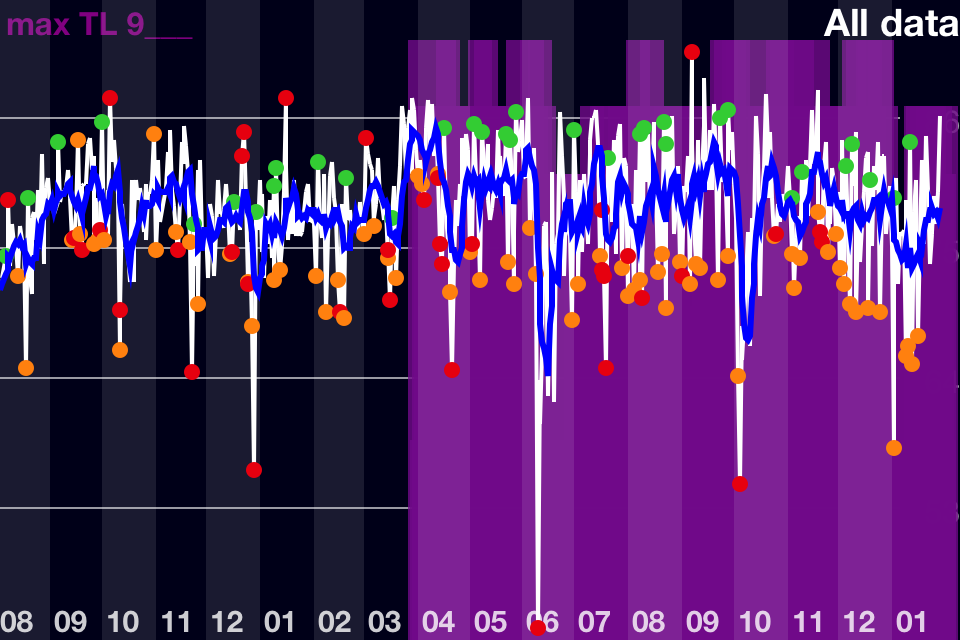
From personal experience, I see much higher scores when I incorporate more aerobic or intermittent conditioning work. In reviewing my all time HRV trend, I can clearly see that over the spring and summer (03-09) of 2012 I had considerably more green scores and higher deflections. This is in line with the time that the weather got nicer and I started doing 30-40 minute runs 3-4x/week (March was unusually warm last year). I got really sick for 2 weeks in June as I discussed here, otherwise I would expect  my trend to be even higher. Once Sept. rolled around I started working full-time again and reduced my aerobic work to 2x/week for about 2o minutes and at a lower intensity at which point baseline declines back to pre-spring/summer levels.

trendalltimejan28

Implications for S/P Athletes

The application of HRV for S/P athletes is obviously different than for elderly or diseased populations. RT is incorporated in training as a means to increase performance, not to increase vagal tone. Therefore, the utility of HRV for this population revolves around its potential ability to:

(Any research I discuss in this section has been cited previously and will not be cited again today, see my older posts for references.)

  • Predict training outcomes

–       Higher HRV at baseline results in improvements in aerobic performance (see here). Would higher baseline HRV result in better S/P improvements? If so, would purposeful manipulation of ANS prior to intensive RT periods via “aerobic” (read “work capacity”) training be of benefit? We already know the importance of GPP but is this relationship mirrored in HRV? If so, HRV may be worth monitoring during these periods.

–       Better basketball and ice hockey performance as well as endurance performance has been correlated with HRV (specifically parasympathetic tone) as I’ve discussed in previous posts. I’m not sure this relationship exists with S/P athletes but it would still be worth testing. Anecdotally, I’ve experience reduced strength performance when HRV is low due to physical fatigue. However, I haven’t really seen strength affected when HRV is low caused by other factors (sleep, other stressors, etc.) Therefore, establishing this relationship must involve careful consideration of these variables.

  • Reflect Recovery Status/Training Load, Overreaching/Non-Functional Overreaching

–       Does overreaching in S/P athletes result in a concomitant decrease in performance and HRV?  Elite female wrestlers were considered non-functionally overreached when performance decreased and HRV was significantly above or below baseline for greater than 2 weeks. Elite tennis players saw significant decreases in HRV but improved performance. Generally in endurance athletes, overreaching will result in decreased performance and a significant increase or decrease in HRV (from baseline).

–       I feel that in S/P athletes, performance probably won’t decrease concurrently with HRV assuming it is a gradual decline as a result progressively increasing training loads. Rather, HRV will probably change first indicating an accumulation of fatigue and performance will fall at some point after if loading persists. Monitoring HRV may be useful to prevent excessive fatigue/overreaching if that isn’t the goal. Perhaps it is also useful in detecting transitions from functional to non-functional overreaching (the point at which HRV changes from overly sympathetic to highly parasympathetic).

–       Does the return to baseline HRV (after overreaching) happen concurrently with return or increase in S/P performance? This was the for case elite swimmers as peak performance occurred concurrently with peak HF values (parasympathetic tone). If so HRV would be a good tool for guiding tapers and establishing best protocols for meet/competition preparation.

–       HRV is an effective tool for guiding aerobic training. Does this apply to S/P athletes? Given that HRV reflects recovery status in S/P athletes (both in the research and anecdotally) and that HRV is sensitive to pretty much all forms of stress, it would seem logical to at least consider HRV in determining daily training. HRV may serve as a guide for determining training frequency and intensity/volume based on individual recovery. More on this topic here. It would be interesting to see HRV guided vs. Pre-planned RT compared in S/P athletes.

  • Guide Periodization

–       HRV will decrease in response to an intense workout. When you perform that workout again and again, your body adapts. The workout is no longer as stressful (decrease in soreness, lack of HRV response, quick recovery, etc. What benefits can HRV offer for adjusting volumes, intensities, exercise selections, frequencies etc. in effort to continually stimulate progress? Is HRV response after a workout any indication of how effective that workout is? Of course there are other factors to consider, not just the amount of stress/fatigue a workout causes. I have repeated workouts with high perceived exertion that have had little effect on HRV. Does that indicate that a change is needed in programming?

It goes without saying that several other factors and variables should be considered when analyzing HRV. HRV is only one variable and is sensitive to a variety of factors that  can influence a result (non-training related stressors, pre-competition anxiety, etc.).

Announcement

This March I will be relocating to Alabama to work in the Human Performance Lab at Auburn University (Montgomery campus) with Dr. Mike Esco. I met Dr. Esco at the NSCA National Conference in RI last summer. Dr. Esco has been researching HRV for several years now. We have several projects tentatively planned and doing an HRV and RT study is one that we’ve been considering. Hopefully we can make it happen.

References

Camillo, C.A. et al. (2011) Improvements of heart rate variability after exercise training and its predictors in COPD. Respiratory Medicine, 105(7): 1054-1062

Cook, W.H., & Carter, J.R. (2005) Strength training does not effect vagal-cardiac control or cardiovascular baroreflex sensitivity in young healthy subjects. European Journal of Applied Physiology, 93: 719-725

Forte, R. et al. (2003) Effects of dynamic resistance training on heart rate variability in healthy older women. European Journal of Applied Physiology, 89: 85-89

Heffernan, K.S. et al. (2007) Heart rate recovery and complexity following resistance exercise training and detraining in young men. American Journal of Physiology – Heart & Circulation Physiology, 293: H3180-H3186

Kaltsatou, A. et al. (2011) The use of pupillometry in the assessment of cardiac autonomic function in elite different type trained athletes. European Journal of Applied Physiology, 111: 2079-2087

Kingsley, J.D., et al (2010). The effects of 12 weeks of resistance exercise training on disease severity and autonomic modulation at rest and after acute leg resistance exercise in women with fibromyalgia. Archives of Physical Medicine & Rehabilitation, 91: 1551-1557

Madden, K.M. et al. (2006) Exercise training and heart rate variability in older adult female subjects. Clinical & Investigative Medicine, 29: 1 – ProQuest

Melo, R.C. et al. (2008) High Eccentric strength training reduces heart rate variability in healthy older men. British Journal of Sports Medicine, 42: 59-63

Sloan, R. P., Shapiro, P.A., DeMeersman, R.E., Bagiella, E., Brondolo, E., McKinley, P.S., Slavov, I., Fang, Y., & Myers, M.M. (2009). The effect of aerobic training and cardiac autonomie regulation in young adults. American Journal of Public Health, 99(5), 921-928

A collection of thoughts on HRV and Sports Training

I’ve been having a lot of different thoughts running through my mind recently on various topics surrounding HRV and sports training. A lot of what I say today is based on a lot of the research I’ve been reading and comparing it to my personal experience with my own training and that of my athletes. I’ll try and organize it as best I can but it will be pretty random for the most part. Below are several topics that really deserve entire posts on their own however today I will just provide some quick thoughts on each one.


HRV as a predictor of Performance and or Adaptation

–          HRV appears to predict performance in aerobic athletes. I’ve discussed and cited this research in previous posts. However, in a new study by Chalencon et al. (2012) swim performance in elite athletes was related to parasympathetic activity.

 “the delay needed to return to the initial performance level was highly correlated to the delay required to return to the initial HF power level (p<0.01). The delay required to reach peak performance was highly correlated to the delay required to reach the maximal level of HF power (p = 0.02). Building the ANS/performance identity of a subject, including the time to peak HF, may help predict the maximal performance that could be obtained at a given time.”

See the full text here.

–          Prior to the initiation of intensive training, HRV values appear to predict training outcomes, again, mostly in aerobic athletes. Higher HRV values prior to training lead to better improvements in aerobic performance.  See here for more on this.

–          Higher HRV values on game day are correlated to better performance in amateur Basketball players (Di Fronso et al. 2012).

–          There are several factors that affect an athlete’s performance on any given day. By no means am I suggesting that one is doomed to poor performance if HRV isn’t high. I like the saying “psychology trumps physiology every time”. I think it was Alwyn Cosgrove who said that? Regardless, it’s very true. Furthermore pre-game anxiety can provide a skewed HRV result. More research on this needs to be done.

–           At the moment I do not believe that strength/power can be predicted by HRV on a day to day basis based on my experience. It likely play’s a factor but is certainly not determinant.

HRV as a reflection of recovery status

–          I believe this is one of HRV’s greatest attributes. Your level of fatigue after an intense workout or competition will be reflected in your HRV score. This is valuable for planning the weekly training so as not to load the athlete too soon after competition or too much before competition. In my experience this will usually correlate to perceived recovery. You can typically feel this. However, we cannot feel what our athletes are feeling. See Edmonds et al. (2012) for a study on elite youth rugby players for data on this subject.

–          Chen et al. (2011) showed that after an intense strength workout in elite weightlifters strength and HRV dropped. Strength did not return to baseline (or even above) levels until HRV returned to at or above baseline. This is one of the few studies that used HRV in strength athletes. Most coaches/trainee’s should already be aware that 1RM strength will be reduced for the net 24-48 hours after an intense workout but is cool to see that HRV may reflect the actual time period.

HRV as an early warning sign

–          Fatigue is ok, extreme fatigue is not. HRV is probably one of the first warning signs of fatigue. How much fatigue is okay? I think that first HRV will reflect that physical stress is accumulating. However, until performance changes, we likely needn’t change anything. If training is set up appropriately there should be enough rest/recovery for HRV to approach baseline at the end of each week. This will allow for a slower, more steady decline in the trend as opposed to a more rapid and steep decline which indicates excessive fatigue and overload. Planned overreaching should include the monitoring of several training status markers. HRV will respond early.

–          Researchers found that 3 elite tennis players saw significant reductions in HRV values over pre-season training however performance improved (Thiel et al. 2012). HRV alone does not indicate functional or non-functional overreaching. HRV did not correlate to performance markers but did correlate to other training status markers.

Limitations of Weekly or Monthly HRV Monitoring as opposed to higher frequency monitoring

–          Many studies I’ve read pertaining to athletes have measured HRV periodically (weekly, monthly, pre-post training phase, etc). This is much more practical for coaches as daily HRV measurements can be tedious and compliance can be hard to get from athletes. However, day to day measurements are more valuable as they allow the coach to make training adjustments before excessive fatigue builds up. However, if a coach could only use weekly HRV measurements with athletes I think these measurements would best be done the morning after a recovery day. HRV score at rest will provide the most meaningful information about training load/fatigue.

HRV in Elite vs. Non Elite Athletes

–          I have a lot of thoughts on this but will reserve comment until I do some more research on this. In short, I think there is a difference in how HRV data should be interpreted among these groups.

HRV in competitive athletes vs. Recreation lifters/athletes

–          HRV guided training (planning higher loads when HRV is at or above baseline and reducing them when HRV is below baseline) is likely safer and possibly more effective over longer term training. However, I don’t see how this method will work with athletes during shorter term training periods. Overload is required followed by a taper. Conversely, if your training results are not limited by requiring optimal performance at a certain date, HRV guided training will likely reduce risk of injury, illness, nagging join/soft tissue problems, etc. Recreational lifters would certainly benefit from this style of training.

Final thoughts for today

To be clear, the above are all simply thoughts/hunches I’ve been having. These are all incomplete at the moment and require further elaboration. Moreover, my stance on many of these topics are subject to change. My thoughts are limited by my experience and the research I’ve read. There is still a lot of work that needs to be done on HRV to uncover its potential as a monitoring tool in athletes.

References:

Chalencon S, Busso T, Lacour J-R, Garet M, Pichot V, et al. (2012) A Model for the Training Effects in Swimming Demonstrates a Strong Relationship between Parasympathetic Activity, Performance and Index of Fatigue. PLoS ONE 7(12): e52636. doi:10.1371/journal.pone.0052636

Chen, J., Yeh, D.,  Lee, J., Chen, C.,  Huang, C.,  Lee, S., Chen, C.,  Kuo, T., Kao, C., & Kuo, C. (2011) Parasympathetic nervous activity mirrors recovery status in weightlifting performance after training. Journal of Strength and Conditioning Research, 25(6):  1546-1552

Di Fronso, S. et al. (2012) Relationship between performance and heart rate variability in amateur basketball players during playoffs. Journal for Sports Sciences & Health, 8 (Suppl 1):S1–S70 45

Edmonds, RC., Sinclair, WH., and Leicht, AS. (2012) The effect of weekly training and a game on heart rate variability in elite youth Rugby League players. Proceedings of the 5th Exercise & Sports Science Australia Conference and 7th Sports Dietitians Australia Update. Research to Practice , 19-21 April 2012, Gold Coast, QLD, Australia , p. 183.

Oliveira, RS. et al. (2012a) Seasonal changes in physical performance and HRV in high level futsal players. International Journal of Sports Medicine. DOI: 10.1055/s-0032-1323720

Thiel, C. et al. (2012) Functional overreaching in preparation training of elite tennis professionals. Journal of Human Kinetics, DOI: 10.2478/v10078-011-0025-x

HRV Values: Indications of Training Readiness

In my recent articles on HRV in Team Sports, I discussed the idea of having our athletes report to pre-season camp with favorable autonomic profiles prior to the initiation of intensive training. The goal of this being to enhance adaptation and reduce injury potential. Today I’d like to delve into this topic a little deeper.

First I’d like to review some important research that helped form the basis of this thought process. Other, more intelligent minds thought of this stuff way before I did and have produced what I consider to be, some pretty compelling research.

Research

Vesterinen and colleagues (2011) found that recreational endurance runners who had high baseline HRV levels prior to intensive training improved their performance significantly more than runners who had low baseline HRV levels prior to training.

Oliveira and colleagues (2012) found a strong correlation between parasympathetic indices of HRV (analyzed before training) with the performance improvement in Yo-Yo IR1 in soccer players during pre-season training.

Hedelin and colleagues (2001) set out to investigate relationships between HRV and central and peripheral performance measures in various trained endurance athletes over a 7 month period. The authors reported that; “higher parasympathetic activity, at least in these fit subjects, rather was a cause than an effect of a further increase in aerobic fitness.”

Kiviniemi et al (2007) found that in fit males, training when HRV levels are at baseline or above results in significantly higher improvements in maximum running velocity and greater improvements in vo2 max compared to a group that followed pre-planned training, of which saw insignificant changes in both measures.

In a repeat study Kiviniemi et al (2010) included female groups and found that females take longer to recover from a training session and that fitness can be improved with fewer high intensity training days when guided by HRV compared to the pre-planned training group

Hautala et al (2003) reported that baseline HF Power was the most powerful determinant of future training response in healthy subjects. I strongly urge interested readers to read through this review by Hautala et al (2009) for a thorough discussion on this topic.

I’m certain I’m leaving out some good research but I think you get the idea. There is evidence to suggest that HRV levels can be a good indicator of training response in athletes and fit individuals.

Discussion

A couple issues I’m having with the evidence as it applies to team sport settings;

  1. HRV measurement is different in much of the research. Some is nocturnal, some is morning, etc. Therefore, we can’t say for certain if we can draw similar conclusions based on a morning measurement if the researchers used nocturnal HRV measurements. Having said that, I do feel that morning measurements are sufficient, if not optimal.
  2. The research mostly pertains to aerobic athletes and aerobic training. However, given that most team sports require a sufficient level of aerobic capacity I still think the discussed research offers valuable information. Even in a sport like American Football, many of the drills are serial and repetitive in nature and thus places a greater dependence on energy production from aerobic metabolism. Further, repeated sprint ability is related to oxygen uptake during rest periods (Dupont et al. 2010).

It appears that having a high level of resting parasympathetic tone prior to intensive training results in more favorable responses and performance improvements in athletes. The research suggests that HRV levels appear to reflect adaptive potential. It should be of high priority to the coaching staff that players remain healthy throughout training. Keeping tabs on HRV levels throughout training, taken with other measures of training status, may reveal maladaptation and therefore a necessitation for intervention.

I’d personally like to see HRV levels monitored in Collegiate American Football players throughout pre-season training camp. It’s conceivable that injury risk is heightened in athletes showing consistent decrements in HRV. It surprises me that there is very little research on HRV and injury (risk, recovery, return to play, etc) in comparison to HRV and performance enhancement/monitoring.

Whether or not we can apply this to strength/power athletes is not clear as there is very little research on this. It’s been a personal goal of mine to investigate this issue and I hope to do this at some point in the future.

Provided that athletes are engaging in training throughout the off-season having a high level of parasympathetic tone at rest shouldn’t be an issue. Team sport athletes will generally have low resting heart rates and a high work capacity. The concern would be with athletes that are either not preparing themselves for intense training, or with those that may be over doing it.

Apart from aiming to have high HRV levels prior to training we may also want to use HRV as an indicator of recovery status day to day. During intense training periods, recovery and restoration modalities can aid in parasympathetic re-activation and therefore more rapid recovery. Paying closer attention to nutritional strategies, active recovery, cold water immersion (a controversial topic at the moment it seems) sleep quality and duration, etc. may help us in maintaining favorable ANS activity; perhaps a topic for another day.

References:

Dupont, G., et al. (2010) Faster oxygen uptake kinetics during recovery is related to better repeated sprint ability. European Journal of Applied Physiology, (110)3: 627-34

Hautala, A.J., et al. (2003) Cardiovascular autonomic function correlates with the response to aerobic training in healthy sedentary subjects. American Journal of Heart & Circulatory Physiology, 285(5): H1747–52.

Hautala AJ, et al. (2009)Individual responses to aerobicexercise: the role of the autonomicnervous system. Neuroscience & Biobehavioral  Reviews, 33(2): 107–115.

Hedelin, R. et al. (2001) Heart Rate Variability in athletes: relationship with central and peripheral performance. Medicine & Science in Sports & Exercise, 33(8), 1394-1398.

Kiviniemi, A.M., Hautala, A., Kinnumen, H., & Tulppo, M. (2007) Endurance training guided by daily heart rate variability measurements. European Journal of Applied Physiology, 101: 743-751.

Kiviniemi, A.M., Hautala A.J., Kinnunen, H., Nissila, J., Virtanen, P., Karjalainen, J., & Tulppo, M.P. (2010) Daily exercise prescription on the basis of HR variability among men and women. Medicine & Science in Sport & Exercise, 42(7): 1355-1363.

Oliveira, RS. et al. (2012b) The correlation between heart rate variability and improvement in soccer player’s physical performance. Brazilian Journal of Kinanthropometry, 14(6)

Vesterinen, V. et al. (2011) Heart rate variability in prediction of individual adaptation to endurance training in recreational endurance athletes. Scandinavian Journal of Medicine & Science in Sports, DOI: 10.1111/j.1600-0838.2011.01365.x

5 New HRV Studies

There’s plenty of great research being done on HRV and its application to sport’s training. I’ll do my best to keep you apprised of the latest findings by periodically compiling abstracts of relevant studies. Unfortunately, I don’t have access to many of these newer studies and therefore will reserve comments until I do. In the meantime, check out the abstracts of some of the most recent research on HRV and athletes.

1.

Leti, T., & Veronique, AB. (2012) Interest of analyses of heart rate variability in the prevention of fatigue states in senior runners. Autonomic Neuroscience: Basic & Clinical, Ahead of print

Background The use of heart rate variability (HRV) in the management of sport training is a practice which tends to spread, especially in order to prevent the occurrence of fatigue states.

Objectives To estimate the HRV parameters obtained using a heart rate recording, according to different exercise impacts, and to make the link with the appearance of subjective fatigue.

Methods Ten senior runners, aged 51 ± 5 years, were each monitored over a period of 12 weeks in different conditions: (i) after a resting period, (ii) after a day with training, (iii) after a day of competition and (iv) after a rest day. They also completed three questionnaires, to assess fatigue (SFMS), profile of mood states (POMS) and quality of sleep.

Results The HRV indices (heart rate, LF (n.u.), HF (n.u.) and LF/HF) were significantly altered with the competitive impact, shifting toward a sympathetic predominance. After rest and recovery nights, the LF (n.u.) increased significantly with the competitive impact (62.1 ± 15.2 and 66.9 ± 11.6 vs. 76.0 ± 10.7; p<0.05 respectively) whereas the HF (n.u.) decreased significantly (37.9 ± 15.2 and 33.1 ± 11.6 vs. 24.0 ± 10.7; p<0.05 respectively). Positive correlations were found between fatigue and frequency domain indices and between fatigue and training impact.

Conclusion Autonomic nervous system modulation-fatigue relationships were significant, suggesting the potential use of HRV in follow-up and control of training. Furthermore, the addition of questionnaires constitutes complementary tool that allow to achieve a greater relevance and accuracy of the athletes’ fitness and results.

2.

Edmonds, RC., Sinclair, WH., and Leicht, AS. (2012) The effect of weekly training and a game on heart rate variability in elite youth Rugby League players. Proceedings of the 5th Exercise & Sports Science Australia Conference and 7th Sports Dietitians Australia Update. 5th Exercise & Sports Science Australia Conference and 7th Sports Dietitians Australia Update Research to Practice , 19-21 April 2012, Gold Coast, QLD, Australia , p. 183.

Introduction: To date, the majority of research related to rugby league has investigated movement patterns, injury mechanisms and the effects of training workload and a game on player fatigue. Interest in monitoring player workloads and recovery has increased recently, with heart rate variability (HRV) proposed as an important monitoring tool in both individual and team sports [1, 2]. Due to the high physical demands associated with rugby league, monitoring alterations in cardiac autonomic control via HRV may lead to improved player management and enhanced performance. The aim of this study was to investigate the influence of weekly training and a competitive game on HRV in elite youth rugby league players, and to identify the importance of HRV as a monitoring tool for Rugby League player preparation.

Methods: Youth rugby league players (n=9) were monitored during supine rest (10 min) at 2 days prior to a game (Pre-2), day of the game (Game Day), and 1 (Post-1), 2 (Post-2) and 4 (Post-4) days following a game. Heart rate (HR) recordings were recorded via a chest strap transmitter with beat-by-beat intervals during the last 5 min of supine rest analysed for time domain, frequency domain (low frequency [LF], high frequency [HF]) and non-linear measures of HRV. Player daily training load was calculated from players’ rating of perceived exertion and session duration as previously described (Foster, 1998). Significant (p<0.05) differences in HRV over the monitoring days were identified via 1-way ANOVA and post-hoc pairwise comparisons with a Bonferroni correction or a Friedman’s test with a Conover post-hoc comparison, where appropriate. Relationships between HRV variables and training loads were identified using Spearman’s rank rho (ρ) correlation coefficients.

Results: All time domain and nonlinear measures of HRV were similar over the 5 monitoring days except for mean HR, which was significantly greater on Game Day and Post-1 compared to Pre-2 (73.0 ± 5.7 and 80.1 ± 8.1 vs. 64.9 ± 8.7 beats per minute). On Game Day, LF and the ratio between LF and HF were significantly increased and remained elevated until Post-2 (Figure 1). In contrast, HF was significantly reduced on Game day and remained low until Post-2 (Figure 1). A strong negative correlation was identified between mean HR and training load on Pre-2 (ρ = -0.783, p < 0.05) with a strong positive correlation identified between HF and training load on Pre-2 (ρ = 0.700, p < 0.05).

Conclusion/Discussion: Prior to a competitive game, elite youth, Rugby League players exhibited a significant reduction in HRV that was sustained for at least 24 hours post-game. This withdrawal of parasympathetic and/or increased sympathetic control of HR possibly may result from pre-match anxiety as well as the physical demands of the game. Strong relationships between HRV and training load at Pre-2 indicate that early monitoring may assist in identifying training workloads for the upcoming week. The current results support HRV as an important monitoring tool for managing training workload.

3.

Plews, DJ., Laursen, PB., Kilding & Buchheit, M. (2012) Heart rate variability in elite triathletes, is variation in variability the key to effective training? A case comparison. European Journal of Applied Physiology, 112(11): 3729-41.

ABSTRACT: Measures of an athlete’s heart rate variability (HRV) have shown potential to be of use in the prescription of training. However, little data exists on elite athletes who are regularly exposed to high training loads. This case study monitored daily HRV in two elite triathletes (one male: 22 year, VO2max 72.5 ml kg min−1; one female: 20 year, VO2max 68.2 ml kg min−1) training 23 ± 2 h per week, over a 77-day period. During this period, one athlete performed poorly in a key triathlon event, was diagnosed as non-functionally over-reached (NFOR) and subsequently reactivated the dormant virus herpes zoster (shingles). The 7-day rolling average of the log-transformed square root of the mean sum of the squared differences between R–R intervals (Ln rMSSD), declined towards the day of triathlon event (slope = −0.17 ms/week; r 2 = −0.88) in the NFOR athlete, remaining stable in the control (slope = 0.01 ms/week; r 2 = 0.12). Furthermore, in the NFOR athlete, coefficient of variation of HRV (CV of Ln rMSSD 7-day rolling average) revealed large linear reductions towards NFOR (i.e., linear regression of HRV variables versus day number towards NFOR: −0.65%/week and r 2 = −0.48), while these variables remained stable for the control athlete (slope = 0.04%/week). These data suggest that trends in both absolute HRV values and day-to-day variations may be useful measurements indicative of the progression towards mal-adaptation or non-functional over-reaching.

4.

Tian, Y., He, ZH., Zhao, JX., Tao, DL., Xu, KY., Earnest, CP. & McNaughton, LR. (2012) Heart rate variability threshold values for early-warning non-functional overreaching in elite women wrestlers. Journal of Strength and Conditioning Research, Ahead of print

ABSTRACT: Functional overreaching (FOR) represents intense training followed by a brief reduction in performance, then a rapid recovery (<2 wk) and performance super-compensation. Non-functional overreaching (NFOR) occurs when the reduced performance continues ≥ 3 wk. Heart rate variability (HRV) is a promising tool for detecting NFOR. In this study, we examined HRV thresholds in 34 elite women wrestlers (mean ± SD: age 23±3 yr; height 165.6±6 cm, weight 63±8 kg) for FOR/NFOR during training before 11 major competitions. Supine HRV was analyzed weekly at the same time of day using time and frequency domain methods. We observed that the time domain index, square root of the mean of the sum of the squares of differences between adjacent RR intervals (rMSSD, ms), denoting parasympathetic tone, showed those responding normally to training (82.76 ms, 95% CI 77.75, 87.78) to be significantly different to those showing a decrease (45.97 ms, 95% CI, 30.79, 61.14) or hyper-responsiveness (160.44 ms, 95% CI, 142.02, 178.85; all, P< 0.001). Similar results were observed for mixed sympathetic and parasympathetic signal standard deviation of the NN intervals (SDNN, ms): Normal (65.39; 95% CI, 62.49, 68.29), decrease (40.07; 95% CI, 29, 51.14), and hyper-response (115.00; 95% CI, 105.46, 124.54; all, P< 0.001) and synonymous frequency domain components. An examination of the 95% CI shows a narrow band surrounding a normal response compared to broader bands accompanying adverse responses. Thus, severe perturbations both above and below normal responses lasting >2 weeks indicated an athlete’s transition to NFOR and, hence, are useful for assessing possible overreaching/training.

5.

Maior, AS., Carvalho, AR., Marques-Nesto, SR., Menezes, P., Soares, PP. & Nascimento, JH. (2012) Cardiac autonomic dysfunction in anabolic steroid users. Scandinavian Journal of Medicine & Science in Sports, Ahead of print

ABSTRACT

This study aimed to evaluate if androgenic-anabolic steroids (AAS) abuse may induce cardiac autonomic dysfunction in recreational trained subjects. Twenty-two men were volunteered for the study. The AAS group (n = 11) utilized AAS at mean dosage of 410 ± 78.6 mg/week. All of them were submitted to submaximal exercise testing using an Astrand-Rhyming protocol. Electrocardiogram (ECG) and respired gas analysis were monitored at rest, during, and post-effort. Mean values of VO(2) , VCO(2) , and V(E) were higher in AAS group only at rest. The heart rate variability variables were calculated from ECG using MATLAB-based algorithms. At rest, AAS group showed lower values of the standard deviation of R-R intervals, the proportion of adjacent R-R intervals differing by more than 50 ms (pNN50), the root mean square of successive differences (RMSSD), and the total, the low-frequency (LF) and the high-frequency (HF) spectral power, as compared to Control group. After submaximal exercise testing, pNN50, RMSSD, and HF were lower, and the LF/HF ratio was higher in AAS group when compared to control group. Thus, the use of supraphysiological doses of AAS seems to induce dysfunction in tonic cardiac autonomic regulation in recreational trained subjects.

If you’re not assessing (the ANS), you’re guessing

“If you’re not assessing, you’re guessing” is a phrase often used by strength and conditioning professionals to explain the importance of movement assessment prior to exercise prescription. Prescribing a program that doesn’t consider the athlete’s movement ability (or lack thereof) can end up causing problems.Essentially, you would be guessing that your exercise prescription is helpful when in fact it could be exacerbating a problem. I wholeheartedly agree with this. However this article has nothing to do with movement assessment. This was just my way of illustrating what my next point is.

I am going to apply the same logic we use for why we assess movement (to influence program design) with monitoring the function of the autonomic nervous system (ANS); if you’re not assessing the ANS, you’re guessing.

If you’re unfamiliar with what the ANS is and why it’s important I suggest you read this. In a nutshell the ANS governs “rest and digest” and “fight or flight” responses in the body. This is done without our conscious control. The two components of the ANS are the parasympathetic branch and sympathetic branch. Sympathetic activity is elevated in response to stress be it physical, or mental. Adrenaline is secreted and catabolic activity (the breakdown of structures) ensues. Parasympathetic activity is elevated in the absence of stress and functions to heal and repair the body.

We can monitor our ANS status non-invasively and inexpensively through heart rate variability (HRV). I explain how you can do this here.

HRV as an indicator of autonomic function can tell you a tremendous amount about your athlete’s responsiveness to training. I shared plenty of research in this post that lends support to HRV as an effective tool for; reflecting recovery status, showing better adaptation to training and even predicting performance. In a separate post I shared my thoughts on HRV as a predictor for injury.

Let me summarize what I shared in my initial research review post;

HRV reflects recovery status in elite Olympic weightlifters (Chen et al 2011), national level rowers (Iellamo et al 2004) and untrained athletes (Pichot et al 2002).

Cipryan et al (2007) showed that hockey players performed better when HRV was high while performance was rated lower when HRV was low.

Endurance athletes who improved vo2 max had consistently high HRV while athletes who did not improve vo2 max had low HRV (Hedelin et al 2001).

Endurance athletes who trained using HRV to determine their training loads had a significantly higher maximum running velocity compared to athletes in a pre planned training group (Kiviniemi et al 2007, Kiviniemi et al 2010).

Female athletes who used HRV to guide their training increased their fitness levels to the same level as females in a pre planned training group but the HRV group had fewer high intensity training days (Kiviniemi et al 2010).

(references for the above articles can be found in my original post here.

I’d now like to show some more research that lends support to the usefulness of HRV in monitoring athletes.

Mourot, L (2004) saw decreased HRV in overtrained aerobic athletes. Uusitalo et al (2000) also saw decreased HRV in overtrained female aerobic athletes.

Huovinen et al (2009) measured HRV and testosterone to cortisol (T-C) ratio in army recruits during their first week of basic training. The training was class room based (not physical) and therefore all stress can be considered mental. The authors found that HRV declined in several soldiers, though not all. This demonstrates that, what can be interpreted as stress is highly variable and dependent on the individual. The authors used the terms “high responders” and “low responders” to describe the differences among soldiers. Immediately I thought about the differences among athletes and how their bodies perceive stress. You can’t assume everyone is responding in kind to a training program. What is stressful for one athlete may not be as stressful to another.

All soldiers that showed decreases in HRV also showed lower T-C ratios. In contrast, soldiers with higher HRV had higher T-C ratio’s. Baseline T-C levels were not recorded so we shouldn’t draw any concrete conclusions however it appears that low HRV (increased sympathetic activity with parasympathetic withdrawl) is associated with a reduced T-C ratio.

Hellard et al. (2011) found that in national level swimmers, as HRV dropped (sympathetic predominance) there was an increased risk of illness. The drops in HRV that lead to illness were preceded by a sudden increase in parasympathetic activity the week prior to illness. The authors speculated that the preceding increase in HRV (parasympathetic/vagal activity) was a reflection of the body experiencing the first incubation period and that an increase in vagal activity was a protective response trying to modulate the magnitude of early immune responses to inflammatory stimuli. The subsequent increase in sympathetic activity and decrease in HRV occurs during the symptomatic phase of the illness.

In humans, increased sympathetic activity is generally associated with inflammatory responses while parasympathetic predominance actually inhibits inflammation. At this point in time I will not elaborate on this for the simple fact that I don’t fully understand it. However, we can speculate that if we’re seeing consistently low HRV scores in ourselves or our athletes there is probably an increase in inflammation occurring. Check out Thayer (2009) for more information regarding HRV and inflammation. Simon from iThlete sent me that paper and I’m still processing it.

When dealing with a team or if we train multiple athletes at the same time we need to be aware of how they are adapting and recovering from training. Work by Hautala et al (2001) shows that athletes will recover from exercise at different rates according to fitness levels (obviously). Basically, fit individuals recover faster and show less HRV fluctuation compared to less fit individuals. In a team setting, some individuals who are highly fit may not be getting a sufficient training stimulus while other athletes who are less fit can be overworked.

Kiviniemi et al (2010) found that females take longer to recover from aerobic training than males. This needs to be considered if you are training a mixed gender group.

Buchheit et al (2009) and Manzi et al (2009) both found HRV to be a predictor of aerobic performance.

I’m well aware that the development of athletes has been taking place without the use of HRV monitoring. There are many great coaches and trainers who have their own systems and methods of monitoring recovery in their athletes that work well.

HRV is a tool to use within your own systems. I have thoughts about how I would implement this in a team setting that I will share another time.

To truly autoregulate the training of ourselves or of athletes, we need as much information about present physiologic status as possible. Based on the research and my own personal experience with HRV, this technology takes much of the guesswork out of load/volume manipulation and training prescription. Training hard when HRV is low can be counterproductive and delay recovery. Training hard when HRV is chronically low can lead to illness, injury, overtraining syndrome and suppressed testosterone. Alternatively, increasing load/volume on days when HRV is high can lead to more favourable adaptation. HRV can tell us how stressful the training was for our athletes based on how long it takes HRV to reach baseline in subsequent days. HRV can indicate how much stress your athlete is experiencing outside of training. There are several indications one can take from a simple HRV measurement. Further research will reveal more correlation between HRV and sports performance.

I believe that to train an athlete optimally, we need to be assessing the state of the autonomic nervous system… otherwise we’re guessing.

References:

Buchheit, M. et al (2009) Monitoring endurance running performance using cardiac parasympathetic function. European Journal of Applied Physiology, DOI 10.1007/s00421-009-1317-x

Hellard, P., et al. (2011) Modeling the Association between HR Variability and Illness in Elite Swimmers. Medicine & Science in Sports & Exercise, 43(6): 1063-1070

Huovinen, J. et al. (2009) Relationship between heart rate variability and the serum testosterone-to-cortisol ratio during military service. European Journal of Sports Science, 9(5): 277-284

Kiviniemi, A.M., Hautala A.J., Kinnunen, H., Nissila, J., Virtanen, P., Karjalainen, J., & Tulppo, M.P. (2010) Daily exercise prescription on the basis of HR variability among men and women. Medicine & Science in Sport & Exercise, 42(7): 1355-1363.

Manzi, V. et al (2009) Dose-response relationship of autonomic nervous system responses to individualized training impulse in marathon runners. American Journal of Physiology, 296(6): 1733-40

Mourot, L. et al (2004) Decrease in heart rate variability with overtraining: assessment by the Poincare plot analysis. Clinical Physiology & Functional Imaging, 24(1):10-8.

Thayer, J. (2009) Vagal tone and the inflammatory reflex. Cleveland Clinic Journal of Medicine, 76(2): 523-526

Uusitalo, A.L.T., et al (2000) Heart rate and blood pressure variability during heavy training and overtraining in the female athlete. International Journal of Sports Medicine, 21(1): 45-53