
HRV response to perceived training load – Observations from 2.5 months of data

About two months ago the new version of iThlete was released with some really cool new features. These new features included;

  • The ability to rate your sleep on a score of 1-5
  • A comment section that allows you to make notes about the previous day’s events, stressors, etc.
  • The ability to input training loads that appear on your HRV trend chart so you can see how your HRV responds to your training
  • The ability to export data to drop box

Here is a video that shows the updated features;

The most significant addition in my opinion is the ability to track your training loads with your HRV trend. This really puts into perspective how stressful your workouts are. There is no specific method or formula that you have to use for your training load data. There are several methods that have been used in research to quantify training load, some of which I’ll describe below.

Training Impulse (TRIMP) – this is calculated using training duration, maximal heart rate, resting heart rate and average heart rate during the session

Session Rating of Perceived Exertion (RPE) for Endurance Athletes – Session RPE score x duration of exercise in minutes (for endurance training)

Session Rating of Perceived Exertion (RPE) for Strength/Power Athletes – Session RPE score x repetitions

*See Borrensen & Lambert (2009) for a more elaborate review and explanation of the above methods.

       Training Volume – Weight Used x Sets x Reps

Other methods exist, but these tend to be the most commonly used. In deciding how I would monitor my training I simply decided to use an RPE of the session, however, not like the method listed above. Instead, I simply rated my workout on a scale of 1-10 based on how hard, or how much effort I put into the session. I would consider volume, strain, RPE of my main sets, how hard I pushed my assistance work and so forth. I realize this isn’t the most valid or reliable measure of training load, but it’s been working well for me.

To give you an idea of how I grade my workouts, see below. This will make interpreting the charts I attach below of my trends much easier.

Session RPE of 10 – 3 or more top sets for my main exercise, RPE of 9-10 for each set, high volume of assistance work (3+ sets to failure), complete exhaustion by workouts end. I have yet to perform a 10 workout and likely never will.

Session RPE of 9 – 2-3 top sets for my main exercise, RPE of 8-10 for each set, moderate volume of assistance work (2-3 sets not to failure), considerable fatigue at end but not exhaustion.

  • I’ll typically perform these workouts when HRV is above baseline

Session RPE of 8 – 1-2 top sets for my main exercise, RPE of 8-9 for each set, low to moderate volume of assistance work (1-3 sets not to failure), moderate fatigue at end

  • I’ll typically perform these workouts when HRV is at the lower end of baseline

Session RPE of 7 – 1 top set for main exercise with an RPE of 8 or less, low volume of assistance work with reduced weight, minimal fatigue at end.

  • I’ll perform this workout when HRV is below baseline with an amber indication (deload)

Session RPE of 5 – No main exercise performed, light weight, moderate volume

  • This is what I’ve been doing on Sunday’s to hit delts and arm’s since I don’t do much work for them during my main sessions on Mon-Wed-Fri

Session RPE of 3 – Active recovery work for 20-40 minutes. This can be in the form of light jogging, sled dragging, circuits, etc.

  • I try and perform these workouts the day after each workout to facilitate recovery and maintain an aerobic base level of conditioning

Session RPE of 1 – Leisurely walk for 30-40 minutes. This can hardly be described as a workout but it’s more than a zero so I will log it when it happens.

  • This happens sometimes instead of an active recovery session.. usually when I’m visiting my folks as we’ll take a lot of walks.

So as you can see there is no sexy formula (I’ve never been a math guy anyway), but I’m pretty consistent and I’ve noticed some fairly common trends in my recovery (based on HRV). Below I have attached a couple screen shots of my HRV Trends with Training Load (Session RPE ala Andrew Flatt). The purple bars reflect training load (9 being the highest you’ll see) while the horizontal trend is my HRV daily fluctuations with the blue line representing my baseline.
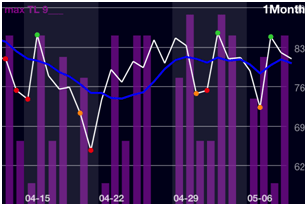
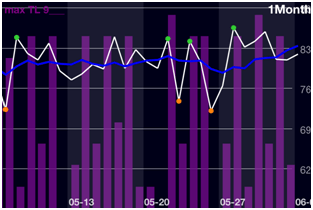
Observations:

  • See here and here for previous posts about observations I’ve made from monitoring my HRV
  • A session rated as 9 is almost always going to cause a pronounced drop in HRV the following day. This is why I don’t typically train on consecutive days.
  • If circumstance causes me to train two days in a row, I’ll use a Session RPE of 8. My HRV will usually drop moderately after the first workout out and drop even more after the second one.
  • During the passed 2.5 months I experienced approximately 16 instances where my HRV dropped enough causing an amber or red indication. The majority of these occurred the day after a session and therefore fell on a recovery day.
  • There were 5 days in which a red or amber indication fell on a training day and therefore out of the 2.5 months, I only deloaded for a total of 5 days. In the past I would typically take a week off after every 3 week cycle however with my new system of training I simply deload on a given day when my HRV is well below baseline.
  • The lowest dip on the graph (around 04/20) I purposefully trained harder than normal on a below baseline day (amber indication) to see how my body would react. The next day my HRV dropped even lower with a red indication. This, as well as other incidences from the past solidifies my stance that training hard when HRV is low delays recovery. You’ll see that it takes several days until my HRV gets back up to previous levels. This negatively effects future training sessions. In my opinion, it’s much better to reduce loads for one day to improve the effect of your following sessions as opposed to just training through a bad day and ruining the next few sessions. This is also what has inspired me to stop deloading at pre-determined times for pre-determined periods. There certainly is value in doing this as the body needs time to recover and adapt to weeks of hard training. However, with HRV monitoring, it seems (atleast to me, for right now) that you can get away with just reducing loads on days when HRV is low.
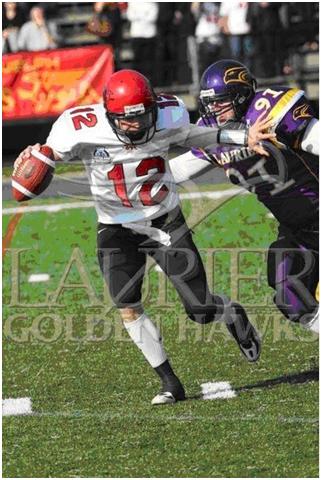
  • I’m presently the leanest I’ve ever been at my current body weight. I’m about 232lbs at 17%. The leanest I’ve ever been is 14.8% at 218 while the heaviest I’ve ever been was nearly 270lbs when I played collegiate football (I’m the ogre in purple below from back in 2006).
  • I’m presently the strongest I’ve ever been at this body weight.
  • I’ve been able to remain injury and illness free since using HRV to guide my training. I no longer experience any tendonitis in my elbows either which used to be a big problem.

Final Thoughts:

I realize that I may appear overly biased towards HRV’s usefulness in my writing. However, I feel that I’ve been training long enough to know when something’s all in my head (placebo) or when it’s actually making a difference. The science supports HRV (see here) and my experience up to and including the present also seems to support it. The whole concept of planning training in advance and sticking to it no matter what is not as effective as manipulating training on a day to day basis according to an objective measure of your body’s current adaptive capacity. This doesn’t mean you can’t have a general plan, it just means that you need to be prepared to make adjustments along the way to ensure the quickest and safest way to reach your training goal. HRV provides, in my opinion, the simplest and most accurate information to allow you to do this. I will continue with this method of monitoring and training since it has been so successful. I’ll be sure to provide another update in a few months.

Thanks for reading.

How to increase HRV: Part 2 – Nutrition

In Part 1 of this series I discussed inflammation and its relationship with HRV. Through monitoring my HRV daily I’ve learned that nutrition plays an important role in improving or reducing your adaptive capacity. Eating foods that promote inflammation in the body creates stress that your body must deal with. In dealing with this stress we reduce our ability to adapt and recover from training. Below is a screen shot of my HRV trend over a week of eating large amounts of foods commonly known to promote inflammation. You can see my scores drop each day and only return once I resumed eating better foods. This experience inspired this article series. To discuss the details of nutrition and inflammation I’ve recruited the help of my friend and PhD candidate Marc Morris.

Hi

My name is Marc Morris and I am a PhD student in Nutrition at the University of Saskatchewan. First, I’d like to thank Andrew for the invitation to participate in the discussion surrounding the use of heart rate variability and strength training. The utility of HRV in strength training is very interesting to me. Being a competitive powerlifter, I am always actively seeking ways to improve my training cycles. Truthfully, I don’t know a great deal about this measurement. What I do understand, however, is the potential that exists in a real-time measurement of the autonomic nervous system. Monitored on a daily basis, HRV may provide a tool from which we can objectively auto-regulate our training.

The goal of a dedicated athlete should be to maximize his or her adaptability to training. This is done in part by minimizing unnecessary stress on the body outside of training. From a nutritional standpoint, what you eat (or don’t) can play a significant role in your recovery and adaptability. This is what drew me to nutrition in the first place. Is it possible to improve my performance and body composition through what I consume? Your lifestyle plays a very big role in your training status and may very well be the difference in the transition from mediocre to elite.

We’ve always been told what you eat can effect performance (I’ve also learned that it’s a good idea to learn why you’ve always been told something on your own terms – usually these beliefs fall into the class of dogma). But, outside of eating complete junk and feeling like garbage, this is a tough concept to see and feel. It may not noticeably affect your body composition, it may not affect your energy, but it may be hindering your recovery. Chronic inflammation is not easy to “feel”. At least not until you’ve over done it.

My job today, and hopefully in future occasions, is to discuss how nutrition may influence inflammation, and what you can do to position yourself to be more adaptable in a training cycle. Andrew noticed a decreasing trend in his HRV over a week of entirely uncharacteristic eating (discussed here). This included plenty of processed foods, trans fats, refined carbohydrates and so on. These foods are common culprits of inflammation in the gut. Andrew felt well rested and rated his overall stress levels as low however his diet that week was creating an apparent stress that he couldn’t feel.

In Part 1, Andrew did a great job distinguishing what we know as acute inflammation, our body’s immediate response to injury and infection, and chronic systemic inflammation. As of late, “inflammation” has been a buzzword in most health circles. It has fallen victim to the black and white, all is bad classification. Chronic inflammation is a lingering, low-grade condition that has been linked to just about every health condition in the modern world, from heart disease to cancer. Managing this type of inflammation will help you not only avoid chronic disease in the latter half of your life, but could improve your performance now.

Health professionals may use biomarkers such as C-Reactive Protein (CRP, an acute inflammatory protein) and interleukin-6 (IL-6, a cytokine involved in the inflammatory response) to assess chronic inflammation (despite having a half life of 19-hours, CRP seems to correspond to the chronic condition pretty well). This may be suitable for someone that regularly visits the doctor. But, if you’re a healthy individual these tests will be costly and invasive (blood drawn). Additionally, this type of test won’t allow for an ideal frequency.

The most pronounced effect of diet on inflammation involves the essential fatty acids (EFA). Without going into too much of the physiology about this, the omega-3 and omega-6 fatty acids act as substrates in cascades that control inflammatory products (De Caterina and Basta, 2001 [free review]). Neither are bad, per se, however, the typical North American diet contains larger amounts of omega-6 that largely affect the pro-inflammatory pathway. This topic is so vast it deserves an entire blog post itself. The take home message would be: increase omega-3 intake to balance fats by eating fatty fish (or at least supplement with fish oil).

The ingestion of trans-fats have been shown to increase inflammatory markers, such as the aforementioned markers, CRP and IL-6 (Baer et al. 2004). To minimize low-grade chronic inflammation this would be a fatty acid to avoid (Calder et al. 2011). Foods such as pastries, doughnuts, margarine, and other snack foods commonly have high amounts of this unhealthy fat. So, apart from minimizing excess calorie intake, the high trans fat content of “junk” foods and its effect on inflammation is another reason to avoid these.

The last dietary factor I would like to address today would be alcohol. In small doses (1-2 drinks/day), alcohol has consistently shown to have an anti-inflammatory effect. Above this moderate dose, this effect changes to pro-inflammatory. So a glass of red wine every once in a while isn’t such a bad thing. However, going out and having 10 drinks will have some unwanted effects on your recovery (inflammation being only one of many negative effects).

It is important to acknowledge that not everyone is the same. Dietary choices may have a differing inflammatory response in each person. Having said that, below this article there is a chart of foods that are typically anti-inflammatory verses foods that are typically pro-inflammatory.

That’s it for today. In future posts, I’d like to address the macronutrient composition of the diet and the hypothesized mechanisms for dietary related inflammation.

Note: We are reluctant to categorize foods as in many cases it’s effect on the body is conditional. For example, lactose intolerant individuals will have a more adverse reaction to dairy than one who isn’t lactose intolerant. People with gluten sensitivity should obviously avoid gluten. So take this chart with a grain of salt as they are just intended to be generalizations.

Foods That Promote Inflammation

Foods That Reduce Inflammation

Pastries/Doughnuts Ginger
Margarine Tumeric
Dairy Onions
Gluten Garlic
Refined Wheat Products (breads, pastas) Citurs Peel
Peanuts Olive Oil
Hydrogenated Oils Organic, Grass Fed Meats
Vegetable Oil Wild Caught Fish
Grain/Corn Fed Meat and Fish Green Tea
Processed/Deli Meats Green Veggies (Broccoli, Kale)
Sugar Berries

Practical Applications:

  • Try and stick to grass fed meats and wild caught fish
  • Eat plenty of fruits and vegetables
  • Drink tea
  • Use spices and herbs when cooking
  • Use olive oil
  • Try to minimize refined carbohydrate sources

Note: We understand that eating this way isn’t entirely practical for students and busy folks. The key is simply to eat less of the foods you know may be hurting your progress and eat more of the ones you know will help.

References

De Caterina, R., Basta. G. (2001). European Heart Journal Supplements, 3 (Supplement D), D42–D49

Calder, P.C., Ahluwalia, N., Brouns F. et al. (2011). British Journal of Nutrition, 106, S3, 1-78.

Baer, D.J., Judd. J.T., Clevidence, B.A., et al. (2004). American Journal of Clinical Nutrition, 79, 969–973

How to increase HRV – Part 1: Inflammation

Over the next several posts I’d like to share my thoughts on ways that you can increase your HRV to improve your health, fitness and responsiveness to training. I will tie in some research with anecdotal experience and encourage you to keep in mind that some of this may be a bit theoretical at times. These thoughts are based on my current knowledge level and experience with HRV as well as discussions I’ve had with other like minded individuals (many of which are much more experienced than I).

I’ve spent a lot of time lately reading about the relationship between inflammation and HRV and therefore this will be the focus of today’s discussion. I highly recommend checking out this article where Dr. Miller presents and summarizes some of the research pertaining to nervous system regulation of inflammation and HRV. I don’t yet fully grasp this relationship as the physiology of inflammation can get pretty technical to say the least, but I would still like to offer some thoughts. Before I get into further detail about anything I’ll go over some preliminaries.

What is inflammation?

Inflammation is the protective or destructive response of body tissues to irritation or injury in attempt to maintain tissue homeostasis. Inflammation may be acute or chronic. The hallmark signs of inflammation are; redness, heat, swelling, pain and is often accompanied by loss of function. Too much inflammation or too little inflammation can be indicative of, or lead to a variety of diseases.

At the most basic level inflammation is a sympathetic response. This isn’t exactly black and white however as I’ve come across some research that shows how the SNS can actually play a small role in reducing inflammation in certain organs under certain conditions (Straub et al, 2006). However, for the purpose of this discussion I’ll generalize the SNS as being predominantly involved in inflammatory responses.

Parasympathetic activity on the other hand, modulates inflammation by inhibiting the secretions of pro-inflammatory cytokines (Mravec, 2011). Inflammation is not just caused from physical stress (training, injury, etc) but can also be brought on by; ingesting certain foods, excessive alcohol intake, smoking and exposure to pollution and certain chemicals. It appears that even psychological stress can cause inflammation (Steptoe et al, 2001).

It should be obvious that inflammation is pretty important to one’s survival. Inflammation is a major part of the healing process. For example, inflammation is necessary for hypertrophy (muscle growth) as it participates in protein breakdown, removal of damaged muscle fibers and production of prostaglandins (Pedersen & Hoffman-Goetz, 2000).

To effectively adapt from a stress (like training) we need to allow our body to go through the process of healing itself. In doing so, we increase our tolerance to the initial stressor. With adequate adaptation to strength training, we increase our strength (this applies to endurance, hypertrophy or any other quality you train to develop). So this explains why making sure we are sufficiently adaptable is important.

The simplest and most effective measure of your adaptability in my opinion is through heart rate variability (HRV) monitoring. In short, HRV tells you when your body can tolerate stress well (such as training) and when it can’t. It does so by providing the user with information about the balance of the autonomic nervous system. It does this by measuring the variability between your heart beats over a given period of time.

Generally speaking,

High HRV = low inflammation, good recovery, good testosterone-cortisol ratio, high tolerance to stress (good adaptability) → A green light for training.

Low HRV = an increase in inflammation (not always), insufficient recovery, reduced testosterone-cortisol ratio, low tolerance to stress (poor adaptability) → Reduction or cessation of training suggested.

It can get a little more complicated than this but for now this explanation will suffice.

Back to inflammation…

So even though I just explained why inflammation is important I’ll switch gears here and say that we are not doing ourselves any favors by contributing to further inflammation via nutritional, environmental and/or psychological factors.

Some of this is out of our control such as pollution and mental stress. It can be difficult to control what’s in the air we breathe or the chemicals we absorb from different surfaces and products. We also can’t control our car breaking down or other mentally frustrating events. However, we can control things like what we ingest (and what we don’t for that matter), how much we sleep, our fitness levels, and so forth. Maximizing these controllable variables can really enhance your adaptability by reducing or preventing unnecessary inflammation and/or promoting parasympathetic activity.

The forthcoming installments to this series will focus on ways that can potentially help raise your HRV (nutrition, aerobic work, restoration, massage, etc.).

The plan right now is for the next post to be about nutrition. I’ve enlisted the help of a friend who’s completing his PhD in Nutrition at the University of Saskatchewan to explain how certain foods contribute to inflammation and why this is something we generally want to avoid. I feel that much of the information presented in the next post will really illustrate WHY you should be more conscious about what you eat. As a former athlete and current trainer of athletes I’ve seen what it’s like to be on either side. Athletes know that they’re supposed to eat certain foods and avoid others. But they usually don’t understand why. They have a hard time understanding how what they ate on the weekend can affect their ability to get stronger or faster. We’ll discuss not just the importance of reaching appropriate macronutrients (protein, carbs, fats), but touch on which sources are likely better than others. We’ll touch upon alcohol intake as well since that’s obviously a major factor in the life of college (and let’s be honest, high school) athletes.

Thanks

How effective is pre-planned training?

I was about 4 weeks out from Canadian Raw Nationals 2011 (powerlifting). I was on pace to hit personal records in all 3 lifts at a lighter bodyweight. I took a scheduled deload and when I started my last training cycle before the meet, the weights felt like a million pounds. I couldn’t fix whatever the problem was and ended up pulling out of the meet. This was a huge disappointment. I thought to myself that there had to have been a way to prevent this or at least see it coming so I could make adjustments in time to avoid such a disaster. I knew about HRV and considered using it before but held off. It was this meet prep disaster that inspired me to purchase the iThlete to determine how useful it is for strength athletes (see my post here for an explanation of what the iThlete is and how it works). It’s now been 8 months since I’ve been using this device and it has changed my whole outlook on managing the training process.

In this post from a couple of months ago I wrote about my observations with HRV. I also gave a vague explanation of how I was then going to use HRV to guide my training. At this point I’d like to share what I’ve learned from measuring my HRV since then.

  • I have not taken a deload week since late January. Typically I would deload after every 3 week cycle. The purpose of the deload was to allow my joints a break from the heavy loading, allow my CNS to recover from the heavy lifting and allow for optimal recovery so I return at a higher level of strength (supercompensation). I was pretty surprised to see that in nearly 2 months of training I have not felt the need to deload. Instead I have simply chosen to take a deload day only when my HRV score was low. I have squatted heavy every week during this experiment because my HRV was always at baseline or above on Mondays (Squat day). I have had to deload on only 3 occasions. All of these occurred on a Wednesday (Bench Day). I continue to make progress every week and therefore will continue with not taking a planned deload week. On my deload days I simply work up to the heaviest weight I can handle with zero strain or struggle for the same amount of reps I would’ve done anyway.

    For example, on Bench day when I needed to deload I was supposed to work up to 3 sets of 3 with a 4 rep max or RPE of 9. However since my HRV was low and I had to deload I simply worked up to 1 set of 3 with a weight that I felt if I added any more weight too, would cause me to strain. For the assistance and accessory work I simply cut the volume in half. The take home message (atleast so far) is that deloading should occur when your body will not tolerate intense training. HRV provides this information. What’s the point of taking a whole week to deload if your ability to adapt to stress returns to a good level within only a few days?

    I will experiment with planned overreaching in the future where I will purposely train heavy as my HRV declines and follow it up with a planned deload. This is more similar to how athletes are training. My concern with this method is the potential heightened risk of injury from training when HRV is low. See this post for further discussion on HRV and injury.

  • This past week was my spring break. I went to Cincinnati to visit my family. If you know me personally you are aware that I’m pretty strict with my eating. I eat a lot, but I stick to whole foods and avoid processed/junk foods. I also eat fairly low carb. Well, in Cincinnati I allowed myself to eat whatever I wanted all week. I was crushing home-made oatmeal butterscotch cookies, ice cream, nacho’s and guacamole, Cheesecake Factory dinners and desserts, the famous Cincinnati Chilli, pub food, etc. It was a disaster. Apart from the binge eating I felt very well rested, slept well and enjoyed some unseasonably warm weather.

    Cincinnati Chili

    It’s fair to say that the only thing out of the ordinary that would have been stressful to my body was my terrible eating. Well, my HRV declined after the second day and it got worse each day after. It only climbed back up again since I returned and resumed my usual eating habits. You can see in the screen shot below that my HRV steadily decreased the longer I ate poorly and started to climb back up on Saturday (returned to PA on Friday evening). Although we’re all well aware that nutrition plays a vital role in how we recover from training and perform, it was pretty eye opening to see just how important nutrition is. Such a simple way to improve performance and adaptation to training is to just eat well. How much time are we wasting busting our ass in the gym if we go home every day and eat terribly?

  • Lately, whenever my HRV is low I feel weaker. I found it interesting that on many squat workouts in the past 6 or 7 weeks I felt that I was fighting the bar, not finding my groove, etc, yet was still squatting heavy. When my HRV has been low (3 low days on Bench days) the weight would feel much heavier. 315×5 is a walk in the park for me typically. However, on a deload day it was a major grind. I really shouldn’t have gone that heavy on a deload. This leads me to believe that performance will be worse when HRV is low (consistent with research that I discuss here.) Since I’ve been able to squat heavy even when my technique felt shaky when HRV was high, it leads me to believe that performance will likely be better when HRV is high. I’ll be doing some research in the near future on collegiate football players to see if I observe the same thing.

My experience with HRV and the research I’ve read thus far has lead me to believe that pre-planned training for collegiate athletes is not optimal. It is common for strength coaches to program around Christmas holidays, spring break and so on. Keep in mind that holiday’s and breaks are usually planned deloading periods that mark the end of a given cycle/phase and will mark the beginning of a new one upon return. This may work if the athlete’s all lived the exact same lives and had the same genes as one another.

A common example of pre-planned periodization that I found on google images

Allow me to illustrate for you an example of how ineffective this method is not because the theory is incorrect (a debate for another time), but because it fails to account for the behaviour of the athletes. I’m going to provide 4 scenario’s of what many athlete’s on the same team may do over the break that will effect there adaptation to the previous cycle and readiness for the next cycle.

Scenario 1: The athlete heads to Florida for spring break and drinks alcohol every day, all day on the beach, parties all night and eats cheap restaurant food.

Scenario 2: The athlete goes home and although doesn’t drink or party all night, he eats terribly.

Scenario 3: The athlete goes home and rests all week and eats perfectly.

Scenario 4: The athlete goes home and trains at his own gym and therefore doesn’t get much rest.

Many football teams have over 100 players. This creates 100 different scenarios. It’s quite obvious that not every athlete will be prepared for the same training loads. Any strength coach is already aware of this and unfortunately has to do their best with what they’ve got. However, since HRV is sensitive to any stress that our body experiences, we now have a more accurate way to determine who is ready and who is not. This can prevent you from overtraining certain athletes, undertraining other athletes and most importantly reducing the likelihood of injury. If you so desired, you can investigate further into the personal lives of the athletes to determine why they are experiencing so much stress when the training isn’t the cause.

I realize that monitoring the HRV of all your athletes may seem impossible but the new apps that are available make it extremely easy and affordable. The biggest challenge becomes how you will handle providing different workouts on a day to day basis according to everyone’s HRV score. I’ll share my thoughts on potential ways to accommodate this in a future post, but I believe it can be done without too much burden.

Today’s post paints a picture of what my current thought process is based on my experience and the literature. I am really excited to get the research started on the football players. In my next post I will give an update of exactly what I’ll be doing, why, my hypothesis and all that good stuff.

Thanks for reading.

If you’re not assessing (the ANS), you’re guessing

“If you’re not assessing, you’re guessing” is a phrase often used by strength and conditioning professionals to explain the importance of movement assessment prior to exercise prescription. Prescribing a program that doesn’t consider the athlete’s movement ability (or lack thereof) can end up causing problems.Essentially, you would be guessing that your exercise prescription is helpful when in fact it could be exacerbating a problem. I wholeheartedly agree with this. However this article has nothing to do with movement assessment. This was just my way of illustrating what my next point is.

I am going to apply the same logic we use for why we assess movement (to influence program design) with monitoring the function of the autonomic nervous system (ANS); if you’re not assessing the ANS, you’re guessing.

If you’re unfamiliar with what the ANS is and why it’s important I suggest you read this. In a nutshell the ANS governs “rest and digest” and “fight or flight” responses in the body. This is done without our conscious control. The two components of the ANS are the parasympathetic branch and sympathetic branch. Sympathetic activity is elevated in response to stress be it physical, or mental. Adrenaline is secreted and catabolic activity (the breakdown of structures) ensues. Parasympathetic activity is elevated in the absence of stress and functions to heal and repair the body.

We can monitor our ANS status non-invasively and inexpensively through heart rate variability (HRV). I explain how you can do this here.

HRV as an indicator of autonomic function can tell you a tremendous amount about your athlete’s responsiveness to training. I shared plenty of research in this post that lends support to HRV as an effective tool for; reflecting recovery status, showing better adaptation to training and even predicting performance. In a separate post I shared my thoughts on HRV as a predictor for injury.

Let me summarize what I shared in my initial research review post;

HRV reflects recovery status in elite Olympic weightlifters (Chen et al 2011), national level rowers (Iellamo et al 2004) and untrained athletes (Pichot et al 2002).

Cipryan et al (2007) showed that hockey players performed better when HRV was high while performance was rated lower when HRV was low.

Endurance athletes who improved vo2 max had consistently high HRV while athletes who did not improve vo2 max had low HRV (Hedelin et al 2001).

Endurance athletes who trained using HRV to determine their training loads had a significantly higher maximum running velocity compared to athletes in a pre planned training group (Kiviniemi et al 2007, Kiviniemi et al 2010).

Female athletes who used HRV to guide their training increased their fitness levels to the same level as females in a pre planned training group but the HRV group had fewer high intensity training days (Kiviniemi et al 2010).

(references for the above articles can be found in my original post here.

I’d now like to show some more research that lends support to the usefulness of HRV in monitoring athletes.

Mourot, L (2004) saw decreased HRV in overtrained aerobic athletes. Uusitalo et al (2000) also saw decreased HRV in overtrained female aerobic athletes.

Huovinen et al (2009) measured HRV and testosterone to cortisol (T-C) ratio in army recruits during their first week of basic training. The training was class room based (not physical) and therefore all stress can be considered mental. The authors found that HRV declined in several soldiers, though not all. This demonstrates that, what can be interpreted as stress is highly variable and dependent on the individual. The authors used the terms “high responders” and “low responders” to describe the differences among soldiers. Immediately I thought about the differences among athletes and how their bodies perceive stress. You can’t assume everyone is responding in kind to a training program. What is stressful for one athlete may not be as stressful to another.

All soldiers that showed decreases in HRV also showed lower T-C ratios. In contrast, soldiers with higher HRV had higher T-C ratio’s. Baseline T-C levels were not recorded so we shouldn’t draw any concrete conclusions however it appears that low HRV (increased sympathetic activity with parasympathetic withdrawl) is associated with a reduced T-C ratio.

Hellard et al. (2011) found that in national level swimmers, as HRV dropped (sympathetic predominance) there was an increased risk of illness. The drops in HRV that lead to illness were preceded by a sudden increase in parasympathetic activity the week prior to illness. The authors speculated that the preceding increase in HRV (parasympathetic/vagal activity) was a reflection of the body experiencing the first incubation period and that an increase in vagal activity was a protective response trying to modulate the magnitude of early immune responses to inflammatory stimuli. The subsequent increase in sympathetic activity and decrease in HRV occurs during the symptomatic phase of the illness.

In humans, increased sympathetic activity is generally associated with inflammatory responses while parasympathetic predominance actually inhibits inflammation. At this point in time I will not elaborate on this for the simple fact that I don’t fully understand it. However, we can speculate that if we’re seeing consistently low HRV scores in ourselves or our athletes there is probably an increase in inflammation occurring. Check out Thayer (2009) for more information regarding HRV and inflammation. Simon from iThlete sent me that paper and I’m still processing it.

When dealing with a team or if we train multiple athletes at the same time we need to be aware of how they are adapting and recovering from training. Work by Hautala et al (2001) shows that athletes will recover from exercise at different rates according to fitness levels (obviously). Basically, fit individuals recover faster and show less HRV fluctuation compared to less fit individuals. In a team setting, some individuals who are highly fit may not be getting a sufficient training stimulus while other athletes who are less fit can be overworked.

Kiviniemi et al (2010) found that females take longer to recover from aerobic training than males. This needs to be considered if you are training a mixed gender group.

Buchheit et al (2009) and Manzi et al (2009) both found HRV to be a predictor of aerobic performance.

I’m well aware that the development of athletes has been taking place without the use of HRV monitoring. There are many great coaches and trainers who have their own systems and methods of monitoring recovery in their athletes that work well.

HRV is a tool to use within your own systems. I have thoughts about how I would implement this in a team setting that I will share another time.

To truly autoregulate the training of ourselves or of athletes, we need as much information about present physiologic status as possible. Based on the research and my own personal experience with HRV, this technology takes much of the guesswork out of load/volume manipulation and training prescription. Training hard when HRV is low can be counterproductive and delay recovery. Training hard when HRV is chronically low can lead to illness, injury, overtraining syndrome and suppressed testosterone. Alternatively, increasing load/volume on days when HRV is high can lead to more favourable adaptation. HRV can tell us how stressful the training was for our athletes based on how long it takes HRV to reach baseline in subsequent days. HRV can indicate how much stress your athlete is experiencing outside of training. There are several indications one can take from a simple HRV measurement. Further research will reveal more correlation between HRV and sports performance.

I believe that to train an athlete optimally, we need to be assessing the state of the autonomic nervous system… otherwise we’re guessing.

References:

Buchheit, M. et al (2009) Monitoring endurance running performance using cardiac parasympathetic function. European Journal of Applied Physiology, DOI 10.1007/s00421-009-1317-x

Hellard, P., et al. (2011) Modeling the Association between HR Variability and Illness in Elite Swimmers. Medicine & Science in Sports & Exercise, 43(6): 1063-1070

Huovinen, J. et al. (2009) Relationship between heart rate variability and the serum testosterone-to-cortisol ratio during military service. European Journal of Sports Science, 9(5): 277-284

Kiviniemi, A.M., Hautala A.J., Kinnunen, H., Nissila, J., Virtanen, P., Karjalainen, J., & Tulppo, M.P. (2010) Daily exercise prescription on the basis of HR variability among men and women. Medicine & Science in Sport & Exercise, 42(7): 1355-1363.

Manzi, V. et al (2009) Dose-response relationship of autonomic nervous system responses to individualized training impulse in marathon runners. American Journal of Physiology, 296(6): 1733-40

Mourot, L. et al (2004) Decrease in heart rate variability with overtraining: assessment by the Poincare plot analysis. Clinical Physiology & Functional Imaging, 24(1):10-8.

Thayer, J. (2009) Vagal tone and the inflammatory reflex. Cleveland Clinic Journal of Medicine, 76(2): 523-526

Uusitalo, A.L.T., et al (2000) Heart rate and blood pressure variability during heavy training and overtraining in the female athlete. International Journal of Sports Medicine, 21(1): 45-53