HRV Measurement Position Article

Recently an article of mine regarding standing vs. supine HRV measurement was posted here. The article includes;

  • A brief discussion of autonomic control of heart rate during supine rest and in response to orthostasis (standing)
  • A summary of some research pertaining to standing HRV measurements
  • A presentation of data I collected over a 2 week period where I measure and analyze both my standing and supine HRV scores in response to training load.

Check it out here.

5 New HRV Studies

There’s plenty of great research being done on HRV and its application to sport’s training. I’ll do my best to keep you apprised of the latest findings by periodically compiling abstracts of relevant studies. Unfortunately, I don’t have access to many of these newer studies and therefore will reserve comments until I do. In the meantime, check out the abstracts of some of the most recent research on HRV and athletes.

1.

Leti, T., & Veronique, AB. (2012) Interest of analyses of heart rate variability in the prevention of fatigue states in senior runners. Autonomic Neuroscience: Basic & Clinical, Ahead of print

Background The use of heart rate variability (HRV) in the management of sport training is a practice which tends to spread, especially in order to prevent the occurrence of fatigue states.

Objectives To estimate the HRV parameters obtained using a heart rate recording, according to different exercise impacts, and to make the link with the appearance of subjective fatigue.

Methods Ten senior runners, aged 51 ± 5 years, were each monitored over a period of 12 weeks in different conditions: (i) after a resting period, (ii) after a day with training, (iii) after a day of competition and (iv) after a rest day. They also completed three questionnaires, to assess fatigue (SFMS), profile of mood states (POMS) and quality of sleep.

Results The HRV indices (heart rate, LF (n.u.), HF (n.u.) and LF/HF) were significantly altered with the competitive impact, shifting toward a sympathetic predominance. After rest and recovery nights, the LF (n.u.) increased significantly with the competitive impact (62.1 ± 15.2 and 66.9 ± 11.6 vs. 76.0 ± 10.7; p<0.05 respectively) whereas the HF (n.u.) decreased significantly (37.9 ± 15.2 and 33.1 ± 11.6 vs. 24.0 ± 10.7; p<0.05 respectively). Positive correlations were found between fatigue and frequency domain indices and between fatigue and training impact.

Conclusion Autonomic nervous system modulation-fatigue relationships were significant, suggesting the potential use of HRV in follow-up and control of training. Furthermore, the addition of questionnaires constitutes complementary tool that allow to achieve a greater relevance and accuracy of the athletes’ fitness and results.

2.

Edmonds, RC., Sinclair, WH., and Leicht, AS. (2012) The effect of weekly training and a game on heart rate variability in elite youth Rugby League players. Proceedings of the 5th Exercise & Sports Science Australia Conference and 7th Sports Dietitians Australia Update. 5th Exercise & Sports Science Australia Conference and 7th Sports Dietitians Australia Update Research to Practice , 19-21 April 2012, Gold Coast, QLD, Australia , p. 183.

Introduction: To date, the majority of research related to rugby league has investigated movement patterns, injury mechanisms and the effects of training workload and a game on player fatigue. Interest in monitoring player workloads and recovery has increased recently, with heart rate variability (HRV) proposed as an important monitoring tool in both individual and team sports [1, 2]. Due to the high physical demands associated with rugby league, monitoring alterations in cardiac autonomic control via HRV may lead to improved player management and enhanced performance. The aim of this study was to investigate the influence of weekly training and a competitive game on HRV in elite youth rugby league players, and to identify the importance of HRV as a monitoring tool for Rugby League player preparation.

Methods: Youth rugby league players (n=9) were monitored during supine rest (10 min) at 2 days prior to a game (Pre-2), day of the game (Game Day), and 1 (Post-1), 2 (Post-2) and 4 (Post-4) days following a game. Heart rate (HR) recordings were recorded via a chest strap transmitter with beat-by-beat intervals during the last 5 min of supine rest analysed for time domain, frequency domain (low frequency [LF], high frequency [HF]) and non-linear measures of HRV. Player daily training load was calculated from players’ rating of perceived exertion and session duration as previously described (Foster, 1998). Significant (p<0.05) differences in HRV over the monitoring days were identified via 1-way ANOVA and post-hoc pairwise comparisons with a Bonferroni correction or a Friedman’s test with a Conover post-hoc comparison, where appropriate. Relationships between HRV variables and training loads were identified using Spearman’s rank rho (ρ) correlation coefficients.

Results: All time domain and nonlinear measures of HRV were similar over the 5 monitoring days except for mean HR, which was significantly greater on Game Day and Post-1 compared to Pre-2 (73.0 ± 5.7 and 80.1 ± 8.1 vs. 64.9 ± 8.7 beats per minute). On Game Day, LF and the ratio between LF and HF were significantly increased and remained elevated until Post-2 (Figure 1). In contrast, HF was significantly reduced on Game day and remained low until Post-2 (Figure 1). A strong negative correlation was identified between mean HR and training load on Pre-2 (ρ = -0.783, p < 0.05) with a strong positive correlation identified between HF and training load on Pre-2 (ρ = 0.700, p < 0.05).

Conclusion/Discussion: Prior to a competitive game, elite youth, Rugby League players exhibited a significant reduction in HRV that was sustained for at least 24 hours post-game. This withdrawal of parasympathetic and/or increased sympathetic control of HR possibly may result from pre-match anxiety as well as the physical demands of the game. Strong relationships between HRV and training load at Pre-2 indicate that early monitoring may assist in identifying training workloads for the upcoming week. The current results support HRV as an important monitoring tool for managing training workload.

3.

Plews, DJ., Laursen, PB., Kilding & Buchheit, M. (2012) Heart rate variability in elite triathletes, is variation in variability the key to effective training? A case comparison. European Journal of Applied Physiology, 112(11): 3729-41.

ABSTRACT: Measures of an athlete’s heart rate variability (HRV) have shown potential to be of use in the prescription of training. However, little data exists on elite athletes who are regularly exposed to high training loads. This case study monitored daily HRV in two elite triathletes (one male: 22 year, VO2max 72.5 ml kg min−1; one female: 20 year, VO2max 68.2 ml kg min−1) training 23 ± 2 h per week, over a 77-day period. During this period, one athlete performed poorly in a key triathlon event, was diagnosed as non-functionally over-reached (NFOR) and subsequently reactivated the dormant virus herpes zoster (shingles). The 7-day rolling average of the log-transformed square root of the mean sum of the squared differences between R–R intervals (Ln rMSSD), declined towards the day of triathlon event (slope = −0.17 ms/week; r 2 = −0.88) in the NFOR athlete, remaining stable in the control (slope = 0.01 ms/week; r 2 = 0.12). Furthermore, in the NFOR athlete, coefficient of variation of HRV (CV of Ln rMSSD 7-day rolling average) revealed large linear reductions towards NFOR (i.e., linear regression of HRV variables versus day number towards NFOR: −0.65%/week and r 2 = −0.48), while these variables remained stable for the control athlete (slope = 0.04%/week). These data suggest that trends in both absolute HRV values and day-to-day variations may be useful measurements indicative of the progression towards mal-adaptation or non-functional over-reaching.

4.

Tian, Y., He, ZH., Zhao, JX., Tao, DL., Xu, KY., Earnest, CP. & McNaughton, LR. (2012) Heart rate variability threshold values for early-warning non-functional overreaching in elite women wrestlers. Journal of Strength and Conditioning Research, Ahead of print

ABSTRACT: Functional overreaching (FOR) represents intense training followed by a brief reduction in performance, then a rapid recovery (<2 wk) and performance super-compensation. Non-functional overreaching (NFOR) occurs when the reduced performance continues ≥ 3 wk. Heart rate variability (HRV) is a promising tool for detecting NFOR. In this study, we examined HRV thresholds in 34 elite women wrestlers (mean ± SD: age 23±3 yr; height 165.6±6 cm, weight 63±8 kg) for FOR/NFOR during training before 11 major competitions. Supine HRV was analyzed weekly at the same time of day using time and frequency domain methods. We observed that the time domain index, square root of the mean of the sum of the squares of differences between adjacent RR intervals (rMSSD, ms), denoting parasympathetic tone, showed those responding normally to training (82.76 ms, 95% CI 77.75, 87.78) to be significantly different to those showing a decrease (45.97 ms, 95% CI, 30.79, 61.14) or hyper-responsiveness (160.44 ms, 95% CI, 142.02, 178.85; all, P< 0.001). Similar results were observed for mixed sympathetic and parasympathetic signal standard deviation of the NN intervals (SDNN, ms): Normal (65.39; 95% CI, 62.49, 68.29), decrease (40.07; 95% CI, 29, 51.14), and hyper-response (115.00; 95% CI, 105.46, 124.54; all, P< 0.001) and synonymous frequency domain components. An examination of the 95% CI shows a narrow band surrounding a normal response compared to broader bands accompanying adverse responses. Thus, severe perturbations both above and below normal responses lasting >2 weeks indicated an athlete’s transition to NFOR and, hence, are useful for assessing possible overreaching/training.

5.

Maior, AS., Carvalho, AR., Marques-Nesto, SR., Menezes, P., Soares, PP. & Nascimento, JH. (2012) Cardiac autonomic dysfunction in anabolic steroid users. Scandinavian Journal of Medicine & Science in Sports, Ahead of print

ABSTRACT

This study aimed to evaluate if androgenic-anabolic steroids (AAS) abuse may induce cardiac autonomic dysfunction in recreational trained subjects. Twenty-two men were volunteered for the study. The AAS group (n = 11) utilized AAS at mean dosage of 410 ± 78.6 mg/week. All of them were submitted to submaximal exercise testing using an Astrand-Rhyming protocol. Electrocardiogram (ECG) and respired gas analysis were monitored at rest, during, and post-effort. Mean values of VO(2) , VCO(2) , and V(E) were higher in AAS group only at rest. The heart rate variability variables were calculated from ECG using MATLAB-based algorithms. At rest, AAS group showed lower values of the standard deviation of R-R intervals, the proportion of adjacent R-R intervals differing by more than 50 ms (pNN50), the root mean square of successive differences (RMSSD), and the total, the low-frequency (LF) and the high-frequency (HF) spectral power, as compared to Control group. After submaximal exercise testing, pNN50, RMSSD, and HF were lower, and the LF/HF ratio was higher in AAS group when compared to control group. Thus, the use of supraphysiological doses of AAS seems to induce dysfunction in tonic cardiac autonomic regulation in recreational trained subjects.

How to increase HRV Part 3: Aerobic Exercise

As the title implies, this is the third installment to a series I started several months ago that discusses the various factors that can help improve our HRV. The first two posts can be read by clicking on the respective links below.

How to increase HRV Part 1: Inflammation

How to increase HRV Part 2: Nutrition – Featuring contributions from my friend Marc Morris PhD(c)

I will first discuss (very briefly) some research and the key physiological adaptations that occur in response to aerobic exercise as it is these changes that ultimately affect the function of the autonomic nervous system (ANS). I will then provide some thoughts on how to include aerobic work into your training in effort to improve our overall health, recovery and capacity for training. Like always, I will include some anecdotal experience and a bit of theory. This article is primarily directed at strength athletes/individuals.

It’s important to clarify what exactly I’m referring to when I saw “aerobic exercise”. For the purpose of this article “aerobic exercise” is referring to some form of activity that maintains an elevated heart rate above resting conditions. This is a very broad and vague definition but for good reason. Depending on one’s current physical condition, aerobic work may be simply going for a walk, while in very fit individuals aerobic work may include longer distance running, swimming, cycling, etc. It can be tempo runs, circuit training, sled work, mobility drills or dancing if that’s your thing.

Aerobic Exercise as a Means to Increase HRV Among Various Populations  

Children (age 6-11) who initially had low HRV scores saw significant increases in HRV after participating in a 12-month moderate exercise program (Nagai, 2004).

Elderly sedentary folks (men and women between 65-75 years old) saw an increase in HRV and cognitive test scores after 12 weeks of aerobic exercise (1hr/day, 3d/wk) compared to a group who performed only stretching (1hr/day, 3d/wk) of which saw a decrease in cognitive test scores (Albinet et al, 2010).

After 6 months of aerobic exercise training, both older (age 60-82) and younger men (age 24-32) showed an increase in HRV (Levy et al, 2004)

Gamelin et al (2007) put healthy young men (untrained, age 21) through 12 weeks of aerobic training followed by 8 weeks of detraining to determine its effect on HRV. An improvement in HRV was seen after the 12 weeks however HRV scores returned to pre-test levels after only 2 weeks of training cessation. “Twelve weeks of aerobic training are sufficient to achieve substantial changes in Heart Rate Variability; and only two weeks of detraining completely reverse these adaptations.”

I should mention that there are several studies that showed no improvements in HRV following exercise intervention. It appears that there is a threshold of exercise intensity required to augment vagally mediated HRV. Essentially, it’s important for heart rate to remain elevated beyond a certain level for a certain amount of time performed consistently over a certain time period for noticeable HRV changes to be seen. I realize that last sentence didn’t help anyone but I don’t believe this threshold level has been clearly established. My interpretation of the research that I’ve seen is that you simply need to be consistent and put more effort into it than a leisurely walk, although that may be a good start for some. Older people generally require longer exercise interventions as sympathetic activity increases with age.

Anecdotally, I can say that when I incorporate regular active recovery workouts (moderate aerobic intensity) my baseline HRV score is higher and I see quicker and higher spikes in HRV following an active recovery day. Furthermore, I almost always see decreasing baseline HRV trends when I do not include active recovery work. I can definitely see the corresponding relationship between HRV and aerobic work capacity. When my aerobic capacity is high my HRV is typically higher (baseline level). With consistent downward trends in HRV I’m typically detraining (due to illness, high stress, or anything that results in lack of training). Thus, at least in myself, when my aerobic capacity is higher, my HRV is typically higher.

* Note that this does not include acute changes in HRV but rather weekly/monthly trend changes.

Physiological Adaptations

Without trying to sound like an Ex. Phys text book I simply want to touch on some key adaptations that take place in response to aerobic exercise that influence ANS activity and therefore HRV changes. In response to aerobic exercise we will typically see that;

–          Resting heart rate decreases

–          Cardiac output increases

–          Heart volume and size increases (Left Ventricle)

–          Red blood cell size and count increases

–          Capillary density increases

–          Myoglobin increases

–          Breathing rate decreases

–          Blood pressure decreases

–          Baroreflex sensitivity increases

–          Renal-Adrenal function increases

–          Parasympathetic tone increases

–          Sympathetic tone decreases

*I used both the NSCA Essentials of Strength Training and Conditioning text and Primer on the Autonomic Nervous System Text for the above information.

I’m reluctant to say that all of the above directly affect HRV. The primary factors from the above list that impact HRV the most would be the changes in Sympathetic and Parasympathetic tone.

The ANS is responsible for responding to a stimulus/stressor and creating the necessary adaptations to allow us to resist the same stimulus/stressor in future incidences. Therefore, regardless of what type of athlete you are, improving your overall capacity for stress is beneficial. Our performance can be limited by our capacity for work. HRV score is a reflection of how much stress you can handle that day. Therefore we want to do what we can to position ourselves to better tolerate and adapt to our training.

Aerobic Work for Anaerobic Athletes

Let me be clear and state that I’m not advising powerlifters or throwers to go for a 1 hour run 3-4x/wk. However, in the interest of increasing workout volume/density and recovery, some aerobic capacity work can be helpful. Louie Simmons and Dave Tate have been preaching this for years. I recall plenty of articles where they discuss sled dragging, “feeder” workouts, etc. You can call this a “base” or “GPP”, “Anatomic Adaptation” or whatever you want. The bottom line is, we need to increase our body’s ability to handle training stress, recovery from it, then handle progressively more training again.

I understand that resistance training can elevate heart rate and maintain it over resting conditions. However, can you honestly tell me that you can go play a pick- game of basketball and not be completely winded after 5 mins? I used to not perform active recovery/work capacity workouts. If I did anything even somewhat strenuous for over 20 minutes that day my workout would be ruined. I’d purposely avoid physical activity so that I wouldn’t compromise my workout. Now that my work capacity is much higher I no longer have this issue.

Here are some thoughts on how to incorporate some aerobic capacity work into your training without negatively effecting strength progress;

–          If it’s possible, take longer in your warm-ups. Here’s an example of a warm-up I do on Squat and DL days;

  • 6 min aerobic exercise (incline treadmill, bike, skipping, etc), 5 min dynamic stretches, 5 min lower body mobility, 5 min “activation” type work for glutes and core (due to previous low back issues), 5 min upper body mobility (shoulders, t-spine) and external rotation work, some form of box jump or KB swing to finish. By the end of this I’m sweating and my joints feel great.

–          Perform some type of activity on your off days. If you have terrible work capacity start off extremely easy with 10 mins of incline treadmill walking or the stationary bike. Over time work up to 20-30 mins. Generally I don’t exceed 40 minutes of work.

–          Perform mobility circuits and kill two birds with one stone. Improve your mobility and aerobic capacity at the same time. Just keep your HR elevated.

–          Perform low intensity sled work (various drags)

–          Perform circuits of body weight exercise (Blast Strap/TRX stuff, single leg work, etc.)

–          Complexes with BB’s, DB’s or KB’s.

Keep in mind that the goal is to facilitate recovery while at the same time gradually increasing work capacity. Therefore, do not perform 20 sets of hill sprints or maximal effort complexes on day 1 if you plan on moving any kind of decent weight that week. The goal is to;

  • Maintain an elevated heart rate
  • Enhance blood flow to sore muscles

What about intervals?

Yes, interval work can provide much of the benefits that aerobic exercise has to offer. However, intervals are much more stressful and taxing. Interval work can be better tolerated after a sufficient level of work capacity has been established. If you’re not concerned with strength levels than by all means proceed with intervals. However keep in mind that conditioning work with intervals is not necessarily facilitating recovery and will likely result in a lower HRV score the following day. Assess your situation and goals and make an appropriate decision.

If you progress your work capacity properly you shouldn’t see any negative effect on your strength levels. This isn’t about “concurrent” training were we want to build endurance and strength at the same time. It’s more about keeping strength the priority and gradually building work capacity at an intensity low enough that it doesn’t contribute to overall stress but rather facilitates recovery from it. This is how I prefer to do it.

Approaching this with athletes in a team setting is a different animal and I will hopefully share my thoughts on that another time as this article is already longer than I wanted it to be.

Summary:

–          Aerobic exercise will typically increase HRV, better HRV results in more favourable responses to training

–          Aerobic exercise can be anything that maintains an elevated HR

–          Strength athletes can benefit from increased work capacity

–          Progress from very low stress active recovery work to higher levels over time

–          Use these workouts to facilitate recovery, improve mobility, enhance blood flow and maybe do the stuff you need to do that you can’t get to during your main lifts

If you have anything to add, refute, share, etc. I’d love to hear it. Comment below or email me andrew_flatt@hotmail.com.

I joined Twitter recently so we can interact there too @andrew_flatt.

References

Albinet, C. A., Boucard, G., Bouquet, C. A., & Audiffren, M. (2010). Increased heart rate variability and executive performance after aerobic training in the elderly. European Journal of Applied Physiology. 109(4):617-24

Gamelin, et al. (2007) Effect of training and detraining on HRV in healthy young men. International Journal of Sports Medicine, 28(7): 564-70

Levy, WC., et al. (2004) Effect of endurance exercise training on HRV at rest in healthy young and older men. American Journal of Cardiology, 82(10): 1236-41

Nagai, N., et al (2004) Moderate physical exercise increases cardiac autonomic nervous system activity in children with low heart rate variability. Journal of the International Society of Pediatric Neurosurgery, 20(4): 209-14

Psychological Considerations With HRV Monitoring

When I first started recording HRV measurements in August of 2011 I didn’t really know what to expect. I had no strategy for how I was going to interpret the data or put it to use practically. Other than reading Q&A posts from Landon Evans on elitefts, I didn’t know too much about HRV. All I knew was that it sounded interesting, logical and it was something cool to buy. I didn’t even own a compatible device to operate the app on so I bought an iPod touch.

Up until that point I was training religiously. Three weeks on followed by a one week deload. I didn’t miss workouts. I would try to hit my planned numbers at all costs. This method of training worked very well. I got big and strong training like this. Upon purchasing my ithlete device I kept my training structure the same and simply recorded HRV every morning. I decided to analyze the data later and see what I learned. Was I stronger when HRV was high? Was I weaker when HRV was low? What was HRV when I got hurt or sick? Etc. I ended up with 6 months of data of pre-planned training. I discussed my observations in this article.

Basically, I learned that with some simple modifications to my daily training plan, I might be able to see some benefits. I’d say the biggest benefit has been being able to back off the training when my body needs it rather than trying to assume. Pre-planned training failed to account for real life incidences that effect training. HRV monitoring also allowed me to better adjust training in response to illness, allowing me to maintain strength better upon return.

A common topic that arises when discussing the applications of HRV among colleagues is the potential psychological effects. What are they? How does this effect performance?

Here are some example scenarios with some brief thoughts;

  • HRV score is low and therefore you expect to feel weaker

–          In my experience I’m definitely weaker when HRV is well below baseline. But this is often because a well below baseline score happens; after an intense workout day; when I’m ill; when I perform a very different workout than I’m used to. I’ve found that moderately below baseline scores don’t typically affect my strength.  This may be different for you or your athletes. The simple solution would be to keep yourself or athlete blind from the HRV score for an observation period and see what you learn. However, the idea that HRV score can impact how you will perceive training is very real.

  • HRV score is high and therefore you expect to feel stronger

–          I can’t say that I’m stronger than normal when HRV is above baseline. But I’m certainly not weaker. This again should be tested during an observation period where the trainee is uninformed of HRV score. I must admit that upon seeing a good HRV score I immediately get excited. As if I have permission to train hard. Obviously my perceptions are influenced by my HRV score (based on my previous observations). We probably don’t want this happening with athletes. A good test for me might be to do another observation period. With what I know now about HRV I’m no longer impartial. Perhaps in the future I will test HRV blind for a month or two and see what happens.

  • HRV score doesn’t appear to make sense – something’s wrong with me, or the device

–          Something may be wrong with you or the device. Or, something may be wrong or inconsistent with your measuring procedure (position, you didn’t go to the bathroom first, disturbed measurement, etc). Additionally, you must consider all of the other factors that affect HRV. I wrote a post on many of these factors here. In short, you must factor in daily nutrition, training load, familiarity of training session, travel, caffeine intake, mental stress, etc. It isn’t just training load that can impact your HRV score.

–          Trouble shooting ideas: Check your pulse (on wrist) while recording the measurement to make sure the animated heart is in fact in synch with yours. Make sure the valid pulse indicator is green during the measurement. Make sure that you follow the breathing prompts consistently every measurement (This must be the same every time). Take several measurements in a row. If you do this keep in mind that successive measurements will change slightly (a few bpm and a few points on HRV) but they should be in the same ball park. Be careful when interpreting successive measurements. I find that I get a bit impatient/anxious when recording several in a row which will obviously effect HR.

–          If you measure standing (my preferred position) give yourself a minute to stabilize and let your heart rate adjust. Typically upon standing HR will jump up real high to account for the change in blood distribution requirements followed by a marked drop and then an evening out where it comes back up a bit. It may look something like this;

Lying down HR = 51

Standing HR (immediately after standing) = peaks at 102

Standing HR (after several seconds) =drops to 54

Standing HR (once stabilized) = 60

*These figures were made up based on what I recall from performing these tests

  • HRV score is low and therefore I might get hurt/perform terribly

–          One must keep in mind that come game day, athletes are typically experiencing some form of anxiety. This can be good or bad. Either way it can have a pretty big impact on HRV score that morning which will likely provide a skewed result. Therefore, game day measurements should probably be interpreted with caution. I’d prefer to keep the score from the individual so that it doesn’t mess with their head. Rate performance over time and see how it matches up with HRV. Studies have been done that have looked at this that I’ve discussed in several other posts. See what you find and how it compares. If you do please let me know what you find!

  • HRV score is low and therefore I’m overreaching, overtraining, etc

–          Again, all other factors must be considered when a score is analyzed. Probably the easiest measurement you can do to determine if one is in fact overreaching is to have them perform some performance tests like a vertical jump or grip strength. Additionally, assess their workout cards to see if their numbers are declining. If they are in fact over doing it performance will decrease with HRV.

Closing thoughts:

For the individual trainee: My best advice that I can give individuals who have an HRV device is to put yourself through an observation period. Try and measure your HRV blind and proceed with your normal pre-planned training routine (or whatever you typically do without the guidance of HRV). Try and document important events that may have effects scores in the “comments section” and keep a training log. It’s hard to analyze data based purely on memory. Having background knowledge of HRV before you use is it can be a blessing and a curse. You’ll likely have expectations or may already be impartial.

For monitoring athletes:  In team sport athletes, the less they know about HRV the better (in my opinion). If they can simply take their measurements and forward you the data that is all they need to know and do. If you can somehow manage to have them measure without seeing HRV score then that would probably be best. This will remove the psychological effects that can potentially occur.

In smaller teams and individual sports, this comes down to a judgement call based on your relationship with the athlete and their personalities. By the athlete knowing what their HRV means, how their lifestyle affects it and so forth, you may be able to get more “buy-in” to your program, guidelines, etc. Individual athletes are typically different than team sport athletes. An individual sport athlete typically takes more initiative, holds themselves more accountable, etc. They may respond to it by taking better care of their nutrition, sleep, reducing overall stress, performing active recovery and restoration modalities etc. The alternative would be to keep them vaguely informed and approach them the same way as the team sport athlete.

What’s your take on the psychological issues associated with HRV? What observations have you made? I’d like to hear about them. Let me know in the comments below or via e-mail andrew_flatt@hotmail.com

All about the ithlete HRV device

Today I’d like to provide some more information on the ithlete device. I will be linking back to previous posts to spare myself from re-writing things I’ve already covered. The FAQ section on the ithlete website provides very thorough responses to common questions so I recommend reading through that as well. I encourage anyone with further questions to contact me directly.

What is ithlete?

The ithlete HRV system is a handheld heart rate variability measurement device that operates on most smart phones and tablets. This is significant because prior to the development of devices such as ithlete, acquiring HRV measurements was cost prohibitive due to the expensive equipment and software required to perform the measurement and analyze the data. Many of these devices also required a trained technician. The ithlete allows individuals to easily perform HRV measurements at home for a fraction of the original price.

What equipment is required to use ithlete?

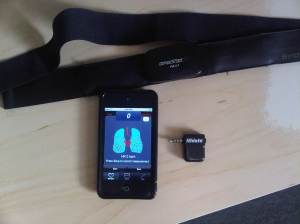
You will need;

– a heart rate strap

– the ithlete ECG receiver

– compatible smart phone/tablet/iPod

– the ithlete HRV app available in the iTunes store and Google Play store for Android.

Link for App in iTunes

Link for App in Google Play Android Store

The heart rate strap and ithlete ECG receiver can be purchased together or separately.

A brand new version of the ithlete receiver has just been released that is compatible with nearly all versions of iPhone, iPod Touch and iPad. It also operates on nearly all Android phones and tablets.

What is heart rate variability (HRV)?

I provide an explanation of HRV in this article.

Essentially, we are getting a non-invasive look at the function of our autonomic nervous system. An HRV score will tell you when your body is better able to handle greater stress (higher training loads) and when it can’t. This is ideal for appropriately applying hard training on the right days and reducing training when needed. This will allow for better adaptation and reduce our risk of overtraining.

How does the app work and what functions does it have?

An HRV measurement with ithlete consists of the following steps (screen shots below);

1. Put on heart rate monitor strap with conduction pads moistened and plug ithlete reciever into device.

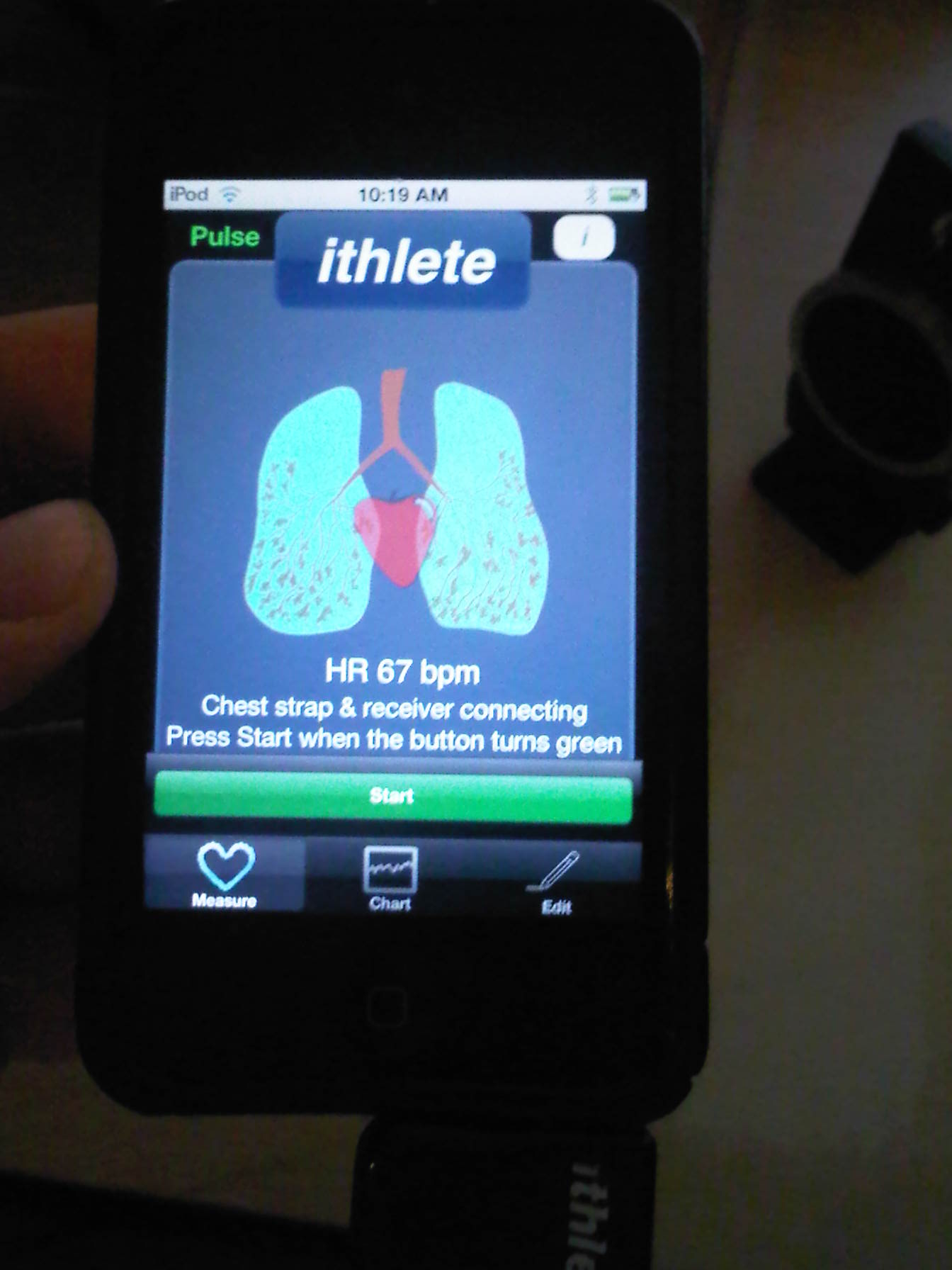
2. Initiate app and wait for “start” button to turn green as it waits for your heart rate to stabilize.

3. Hit “start” and follow the breathing cadence that the app displays.

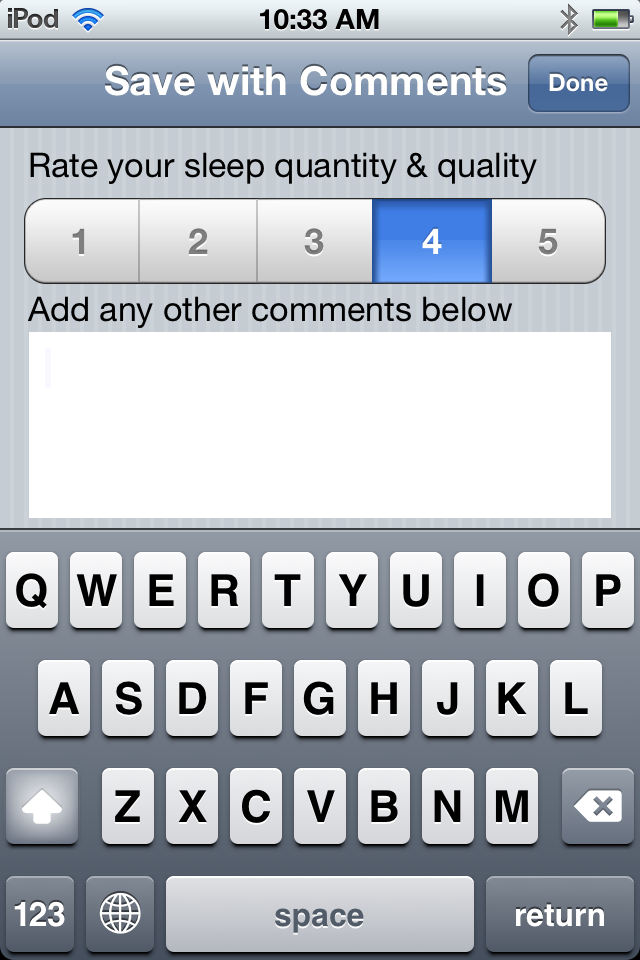
4. “Save” your score, enter comments if desired.

5. At this point you are complete. You can review your trend, input training load, analyze your data or  whatever you need to do.

Image of app ready for measurement

The duration of the measurement is 55 seconds.

When the measurement is complete your screen will look like this;

If you are satisfied with your measurement you will have the option to “Save” the measurement “with comments” or without. I prefer to use the comments option to document notes about training, stress, sleep etc. If for some reason the measurement was disturbed you can simply hit “Don’t Save” and redo the measurement.

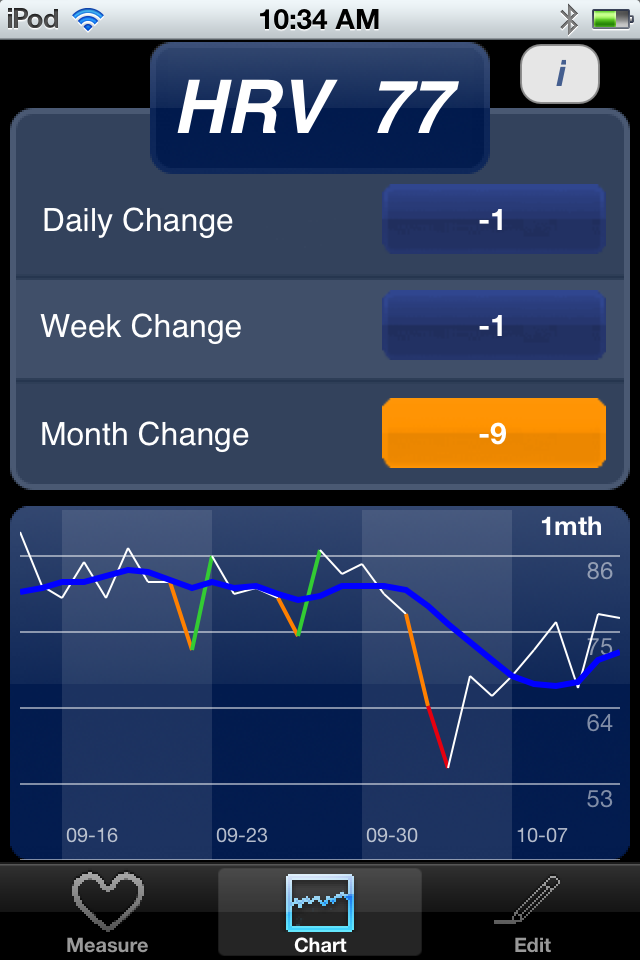
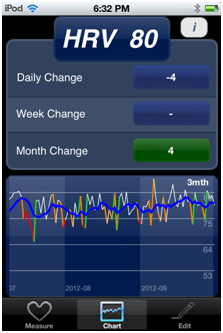
Once you have finished with your comments the app will take you to the “Chart” page. Here you will see your HRV Score with color indication, weekly change and monthly change. Your data will be charted across the bottom of the screen so you can clearly see your day to day variations. HRV trends can be viewed in 1 week, 1 month, 3 months, or all time displays.

The color indications inform you of what type of training is recommended based on your HRV score.

Green = Higher training loads

White = Moderate to high training loads

Amber = Reduce loads

Red = Rest

*77 was my actual HRV Score this morning, the image from above with a score of 70 was from a measurement I did just now to get the screen shots for this post.

In the trend displayed above the Blue horizontal line represents baseline HRV. The white and colored deflections are your day to day changes in HRV. When you first get ithlete it will take a few days to establish a baseline HRV score. Once baseline is established you will be able to judge your recovery status based on if your score is above or below baseline.

Generally, an abundance of any form of stress or a combination thereof (mental, physical, poor nutrition) can result in a below baseline HRV day. Quality eating, sleeping and regular exercise will result in better scores. The HRV trend is very informative as you can learn how your body reacts to various workouts, eating habits, travel, etc.

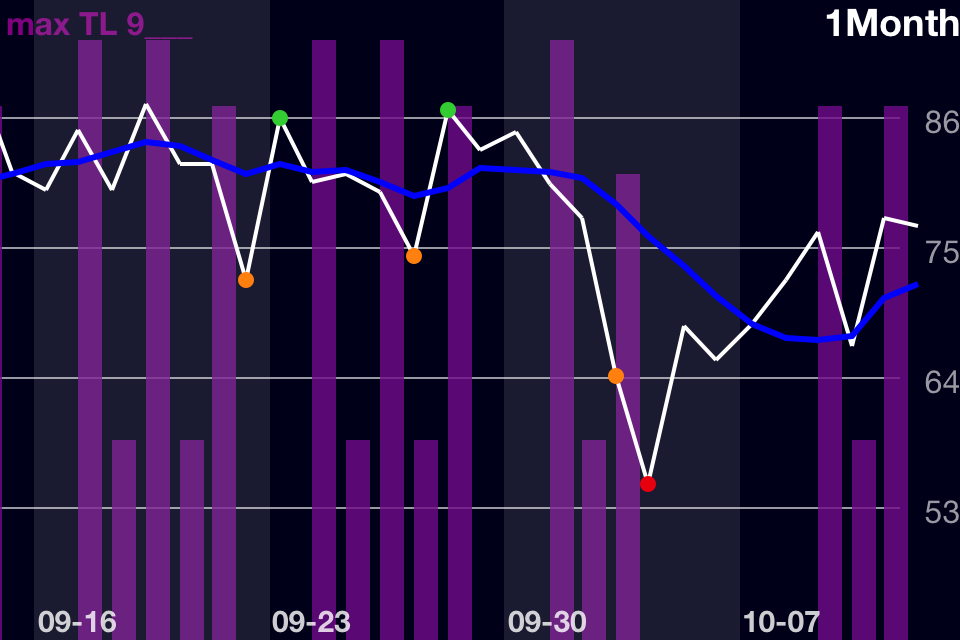
If you rotate your device sideways your trend will appear with training load values as depicted below. You can see a clear disturbance in my trend as I traveled to the US and generally had a highly stressful week. The vertical purple bars represent my training load. More info on interpreting your data will be presented further below.

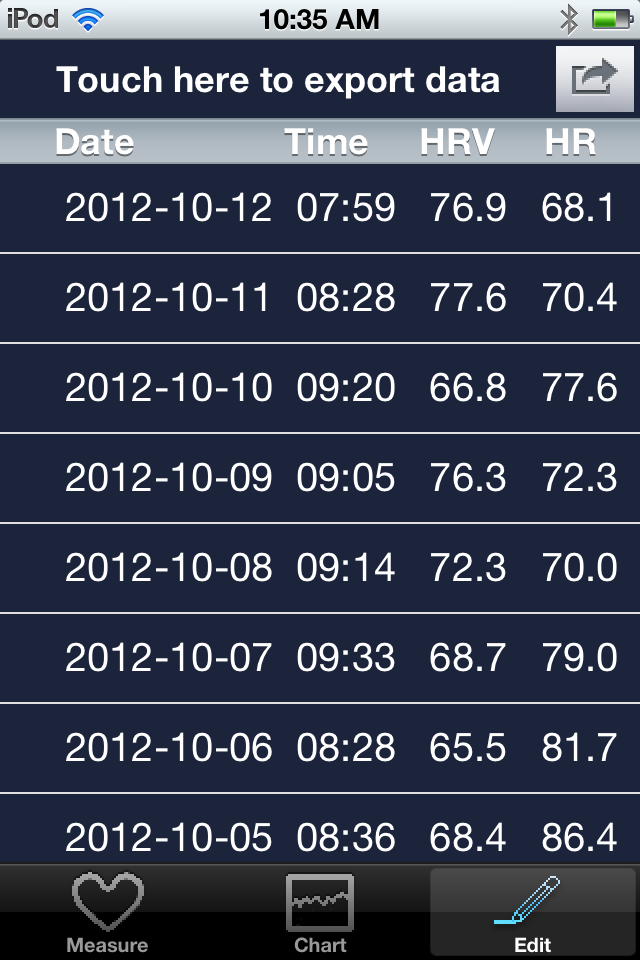
By selecting the “Edit” option from the menu along the bottom of the screen you will be taken to the screen shown below. This is a collection of all of your data ever recorded.

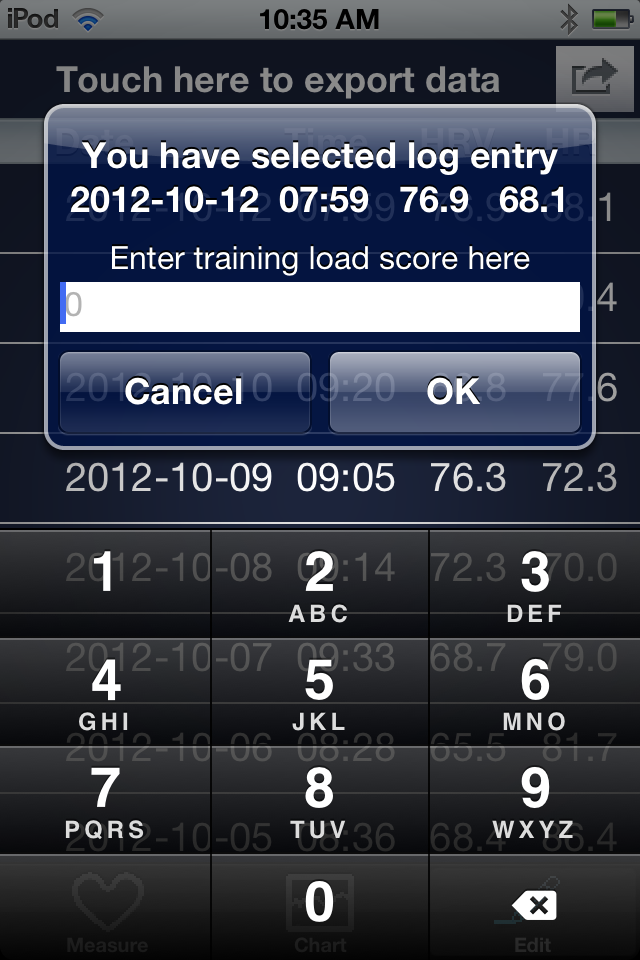
In this section you can input your training load for the day you select as shown below. Typically I input my training load from the previous day each morning. Once you enter the training load score it will appear on your chart in the expanded view. This screen also gives you the ability to e-mail your data or export it to drop box. This is handy for coaches and trainers who want to see their athletes data.

How should I measure HRV?

Perform your HRV measurement after you wake up and go to the bathroom. Do not perform any tasks that will create unnecessary stress or alter heart rate significantly. I prefer measuring with ithlete in the standing position and I provide a very thorough explanation of why here. The key is to be 100% consistent with your measuring procedure to have the most meaningful data.

How do I know what training load to input?

This will depend on what type of athlete you are and what type of training you do. See this post for ideas on how to do this. I personally use Session Rating of Perceived Exertion (sRPE).

How do I interpret my HRV Trend?

See this post for my thoughts on HRV trend interpretation.

How do I use HRV to guide my training?

See this post for my thoughts on HRV guided training and periodization.

Is HRV only for Athletes?

Anyone can benefit from monitoring their HRV. See this post if you are a non-athlete or recreational lifter.

What evidence exists to support HRV training?

For plenty of research that lends support to the efficacy of HRV training please see this post.

For more relevant information browse the following posts:

HRV, Adaptation, Progression, Training Adjustments

Illness, recovery time, travel stress, monitoring, etc.

HRV in a team setting

HRV and Nutrition

HRV and Inflammation

How effective is pre-planned training?

If you have any questions that were not addressed in this post or the ithlete Q&A please send me an e-mail. The purpose of this post was  to show everyone how the ithlete HRV app functions and to provide information about why HRV monitoring can enhance your training and lifestyle.


HRV Guided Training, Periodization and Training Variables

Here are some things to consider when planning your daily workouts guided by HRV;

  1. What load of work can my body handle today?

    I primarily use HRV to determine this, however lately I’ve been doing some morning tap tests as well to see what I find (Tap Test App for iPod).

    I like to break adaptive capacity rating up into 4 categories

    1. High – Increase loads
    2. Baseline – Proceed with planned load (moderate to high)
    3. Below Baseline – Reduce load
    4. Low – Rest or Active Recovery

      *In this context load refers to a combination of volume and intensity of training

    iThlete provides color indications for each of these days to simplify interpretation;

    1. Green = High
    2. White = Baseline
    3. Amber = Below Baseline
    4. Red = Low

      Here is a “Baseline” HRV Score measured this morning

  2. What is the goal of the current training phase?

    Accumulation of volume? Intensity? Weight gain? Weight loss?

Your training plan will obviously reflect your training goal however I’ve learned that it’s wise to make necessary adjustments to load in response to the present day’s adaptation potential. The following are a list of variables that I like to manipulate on a daily basis according to HRV score within the context of the training phase/goal.

  1. Volume (number of sets and reps performed with the main lift and assistance work)
  2. Intensity (the amount of weight on the bar)
  3. Rating of Perceived Exertion (how close to failure I get with my sets)

Here is an example of how I manipulate these variables based on training phase and HRV score.

Example: Volume Phase in a Block Training system:

I consider total reps in the 15+ rep range (usually no more than 25 total reps) to be high volume. This can be 3×5, 5×3, 4×4, 5×4, 6×4, 7×3, etc.

  • If HRV is high: I will typically take the higher end of the volume scale using higher sets and lower reps. RPE falls between 9-10 (10 only on last set).
  • If HRV is baseline: I will work in the middle set/rep range of the volume scale. RPE stays around 9.
  • If HRV is below baseline: I’ll stick with the lower end of the volume scale (no more than 15 total reps) with RPE staying around 8.
  • If HRV is low: Active Recovery work, no lifting.

With this set up I can still accumulate volume as long as HRV isn’t low. If I take care of my sleep, eating and overall stress levels, low day’s usually only occur the day following a training session. This is why I lift every other day and perform active recovery on “off” days. The idea is to increase the volume when HRV is high with higher intensities (<3 reps, higher RPE). When HRV isn’t quite where we would like it, we still accumulate volume, but with less intensity and a lower RPE.

Another method I’ve used for manipulating loads on a daily basis is to use more of an undulating periodization approach as opposed to a block approach. With this approach volume, intensity and RPE are constantly changing from workout to workout.

Example Undulating Periodization Approach;

  • If HRV is high: Both volume and intensity will be higher (ex: 6×2 with RPE 9-10)
  • If HRV is baseline: Reduce volume OR intensity (ex: 3×3 with RPE 9 or 3×8 RPE 8)
  • If HRV is below baseline: Intensity AND volume is reduced (ex: 2×4 RPE 8)
  • If HRV is low: Deload workout/active recovery

With this system we increase total load when the body is prepared to handle it better and back it off when necessary. Higher HRV days will involve lower rep ranges to allow for a higher %of 1RM whereas lower HRV days will have higher reps to reduce % of 1RM.

Keep in mind these set ups were for the purposes of increasing strength. Through constant experimentation and evaluation I’m improving on my approach to training. These set-ups aren’t perfect but they worked well. I’m presently using the block approach illustrated in my first example in my current training.

In a few weeks I’ll hopefully get a good post up on how the tap test fits into my program design. I’m looking to see how it correlates to strength, HRV, RPE, etc.

HRV, Adaptation, Progression, Training Adjustments

I’ve been reviewing my HRV trends over the last few weeks to analyze how my body is handling my current training set-up. I’ve been noticing smaller drops in HRV the day following a heavy workout (sRPE9). In some instances I’ve seen a small hike in HRV the following day. Today I will provide a few thoughts on what may be happening as well as some thoughts on things to consider when analyzing your data.

It’s been demonstrated in the research quite clearly that HRV reflects recovery status in both weight lifters and aerobic athletes. Therefore, it’s reasonably safe to say that your HRV score the morning after a workout is reflecting how stressful the workout was. However, it’s extremely important to consider other variables that can affect recovery (other stressors). So taking this into consideration, HRV score reflects not so much the stress of the workout, but rather how well your body was able to respond to it since the cessation of yesterday’s training session (assuming the workout was the biggest stressor of the day).

Let’s say you performed an intense workout that you rated a 9 out of 10 on an RPE scale. The following day your HRV score will depend on the following key variables;

Nutrition: Did you provide the resources for your body to recover from the session? Proteins for structural repairs of damaged muscle fibers, fats for overall calorie intake and hormonal support and carbohydrates for glycogen re-synthesis. Was overall calorie intake sufficient? 

Purposeful Rest/Relaxation: Following the workout did you start the recovery process by relaxing, hot shower, etc.? This will allow the parasympathetic nervous system to get the recovery process underway.

Compounding stress: In contrast to the above, did you add further stress to your body? How physically active were you? What stressful events occurred and how bad were they?

Sleep: How restful was your sleep? How many hours? Were there disturbances?

Aerobic Fitness/General Physical Preparedness: The more aerobically fit you are, generally the better your HRV will be. The higher your work capacity, the more stress your body can handle. In my experience, in effort to increase performance in a given quality, it’s important to consider the overall fitness of the individual as this can limit and effect recovery, training frequency, volume, intensity, etc.

Familiarity of the Training Session: What type of workout was it? Have you performed this workout recently with similar loads? In other words, has your body adapted to the workout structure which therefore reduces the stress on the body?

I would like to elaborate on the last point since the above are pretty self-explanatory. When considering HRV response to a training session, it’s important to evaluate if you are introducing a new stress to the body via new workout structure, type and familiarity of work (aerobic, anaerobic, running, rowing, resistance, etc.). It’s been my experience that a new workout structure or unfamiliar training will create a larger drop in HRV. This is obviously because your body is not accustomed to the type of work and must work hard to adapt and recover. For example, the first time I performed a conditioning session this past year my HRV dropped immensely. However, each conditioning session thereafter provoked less and less of an HRV drop. HRV reflected my progressive adaptation to the stress. Even though the workouts may still have been perceived as hard, the body is familiar with the stimulus and homeostasis is quickly restored.

Some follow up questions based on the above discussion;

  1. Is the workout still effective if it does not provoke a marginal stress response (drop in HRV)?
  2. Should we use HRV as a guide to adjust and make changes to training structure to avoid staleness/plateau (periodization)?

In addressing question 1, it’s important to first evaluate training progress. Check your workout log. Are you still getting stronger/faster/running further, etc (whatever your training goal is). If the answer is yes, continue. Other factors and adaptations are obviously taking place.

In response to question 2, we need to carefully examine all of the above factors that affect an HRV score. If your nutrition is on point, you are reducing compounding stress, sleeping well and so forth, we can assume that the following day’s HRV is a reflection of your response to the training session.

If you’re experiencing a plateau it’s time to consider altering training. If you are a strength athlete you have a few options. Adjust volume or intensity. Adjust training sequence/frequency. Make adjustments to the lifts themselves. For example, add a pause to your bench or take it away, rotate assistance lifts, add or remove an exercise. Obviously only one major adjustment is needed. Evaluate progress, keep track of HRV trends and see if that made a difference. It’s also important to consider that training progress in more advanced athletes/lifters is non-linear. Therefore, don’t make drastic changes at the first sign of plateau. It’s okay to repeat workouts. Use your judgement on if a change is needed.

I will continue with my current training structure and set up to see if progress continues or stops and if HRV trends change or stay the same. Once I can evaluate more of my data I’ll write up a report.

Updates, free monitoring spread sheet with questionnaire & an HRV video.

1) I was recently contacted by a researcher based out of Australia and asked to beta test his new HRV app. I’ve had the app and hardware for a few days now and it has some really cool features. In a future post I will give my thoughts and review of the app (with the creator’s permission).

2) Last week T-Nation published the “HRV Roundtable Discussion” article. The roundtable contributors were; Craig Weller, James Heathers, Mike T. Nelson, Patrick Ward, Joel Jamieson, Simon Wegerif, Jonathan Pope, Dave Tenney and myself.

This discussion took place earlier in the year and ended up being over 20 pages in length! Many of the pages were adjusted to 8 or 10 point font to reduce the number of pages. A ton of great thoughts and ideas were shared by some very intelligent people. I learned a lot from being a part of this discussion and am very grateful for having been asked to contribute. Craig organized and edited the entire discussion. I can only imagine how long and arduous of a process that was. You can read the discussion HERE.

3) For any strength coaches who are interested in utilizing HRV analysis with your teams, you’ll be interested to know that iThlete has a team app in production. This app will make monitoring RHR, HRV, training load, etc. of each member of your team very easy. I will see if I can get a post up in the near future with some screen shots and more details. I’m very excited for this!

4) Training has been going extremely well for me since moving back to Canada. I can now deadlift without any pain or discomfort in my lower back. I’m considering finally entering a meet again this winter. If I decide to do this I’d like to document my meet prep programming, HRV trends, RPE’s, etc. both for myself (to see what worked and what didn’t) and for my readers because they are training nerds like me.

5) Download a FREE monitoring survey and excel spreadsheet here. This can be very useful to keep track of of your players throughout the season.

6) I came across a very informative video lecture last month that explains the various HRV analysis methods (Time domain, Frequency domain, Poincare plot). The video provides demonstrations of how to use the free Kubios software to analyze data. If you’re interested in learning more about the more technical aspects of HRV analysis, check it out.

Supine vs. Standing HRV Measurement: Is one better than the other?

After purchasing my HRV device over a year ago I was unsure of whether to take measurements laying down (supine), seated, or standing up. I don’t recall what it was exactly that prompted my decision, but I decided to measure standing. Since day one I’ve recorded my HRV in the exact same position (standing) after waking up for consistency. I often wonder however if this is the best way of measuring HRV for the purpose of monitoring training load, recovery status, etc. I am not an expert on this topic so understand that this article is simply my perspective on the topic based on my experience and research into the matter. Furthermore, I’ve yet to see this discussed in too much depth and therefore decided to investigate the issue myself.

In this discussion I wish to accomplish 3 objectives;

  1. Briefly discuss the role of the ANS in controlling heart rate at rest and in response to orthostasis (standing up)
  2. To briefly review some of the research I have read pertaining to this issue
  3. To present and discuss some data I collected over the last few weeks comparing my morning supine RHR and HRV score vs. my morning standing RHR and HRV score.

Heart Rate Mediated by ANS

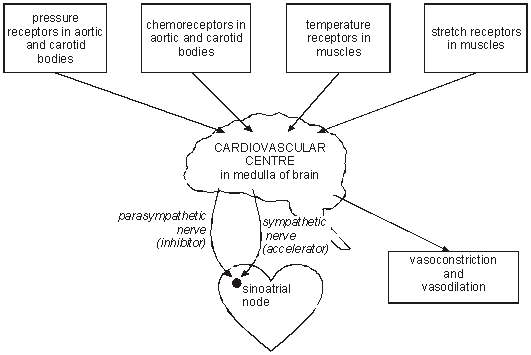
Within the wall of the right atrium of the heart is the sino-atrial node (SA node). The SA node randomly initiates impulses that cause the heart to beat. The cardiovascular center of the autonomic nervous system located in the brainstem governs the SA node via parasympathetic and sympathetic innervation. More specifically, the cardiac accelerating center (sympathetic) and cardiac decelerating centers (parasympathetic) of the medulla are responsible for sending sympathetic and parasympathetic impulses to the heart in response to altered blood distribution and pressure requirements (exercise, stress, standing, laying down, etc.)

Sympathetic impulses increase heart rate by exciting the SA node while parasympathetic impulses reduce heart rate by inhibiting it. Thus, with parasympathetic predominance we can expect heart rate to be less frequent and less consistent (more variability between beats) while sympathetic predominance would result in more beats with less variability. *It’s not that simple but for the sake of this article that will suffice*

At times of rest and relaxation, the parasympathetic branch of the ANS will be more dominant whereas during times of stress (exercise, anxiety, etc) the sympathetic branch of the ANS will increase. This is how monitoring our HRV informs us of the balance of the ANS. Though the two branches of the ANS appear to work in a “yin and yang” relationship, both systems are active simultaneously (however to varying degrees). It is possible to have an elevated heart rate and high HRV and vice versa.

During supine, heart rate and blood pressure are lower as the body rests. From supine (a state of high parasympathetic activity and low sympathetic activity) to standing, there is a shift in sympathovagal balance characterised by a withdrawal of parasympathetic activity and a concomitant increase in sympathetic activity (Montano et al. 1994, Mourot et al. 2004). Naturally, the body needs to accommodate for the shift in position forcing the heart to beat harder and faster to pump blood to the brain; a task much less strenuous in the horizontal position.

Some Pertinent Research

Kiviniemi et al. (2007) provides a very thorough explanation of why HRV might be better measured in a standing position as opposed to seated or supine. Essentially, HRV is susceptible to saturation of the parasympathetic nervous system in subjects with low heart rates. Therefore, in athletic populations, changes in parasympathetic activity (as measured by HF Power) may be harder to detect. The author stated “In the present study, endurance training increased HF power measured at standing position but did not change HF power measured at sitting position. This supports our notions that orthostatic stimulus may be more favorable condition than sitting or supine positions to obtain specific information on the status of cardiac autonomic regulation in exercise intervention settings among relatively high fit subjects.”

Uusitalo et al. (1998) saw an increase in sympathetic activity (measured by LF power) measured in overtrained female aerobic athletes in the supine position.

Mourout et al (2004) saw decreased HRV in overtrained athletes compared to not overtrained athletes in the supine position. Similar results were found when HRV was measured after 60 degree tilt. The non-OT group always had higher HRV in the standing position and saw greater reactivity to the postural change.

Uusitalo et al (1999) saw similar results to the work mentioned above by Mourot. Overtrained athletes saw an increase in LF power in the supine position; lower HRV in the standing position; and decreased reactivity to postural change. Additionally, changes in maximal aerobic power were related to decreased HRV in the standing position.

Chen et al (2011) measured HRV in elite weightlifters before during and after an intense workout. HRV was measured in the seated position. The authors found that HRV reflected recovery status as strength levels returned once HRV reached or exceeded baseline in the days following the workout.

Gilder and Ramsbottom (2008) wanted to test whether volume of training load resulted in changes in HRV in response to orthostasis. The authors findings in their words; Women reporting higher volumes of physical activity had significantly higher levels of parasympathetic HRV than less active women while supine, but also demonstrated a much greater change in parasympathetic HRV in response to standing. It is of interest to note that short-term vagal measures of HRV for HV while standing are similar to those for LV while supine.” *LV=Low Volume HV=High Volume

Grant et al. (2009) found that standing HRV indicators showed significantly more correlations with cardiopulmonary fitness indicators compared to supine measurements. The authors urge practitioners to use caution when attempting to measure fitness via HRV indicating that this is not yet a reliable process.

Hedelin et al. (2001) found that during a 70 degree head up tilt, LF power correlated to measures of strength and aerobic capacity. A greater shift toward LF power in the tilted position correlated to reduced performance. Changes in LF were linearly related to changes in performance suggesting a reflection of adaptation to training.

Hellard et al. (2011) measured HRV in swimmers to model a relationship between HRV and illness. The main results of this study were the following:

“1) In winter, national-level swimmers showed a greater risk of pathology than international-level swimmers. 2) The weeks that preceded the appearance of URTI and pulmonary infection but also MA were characterized by an increase in autonomic parasympathetic activity in supine position. Conversely, in orthostatic position and in winter, the weeks that preceded the appearance of AP were characterized by a drop in parasympathetic activity. 3) During weeks characterized by URTI and pulmonary infection, a shift was noted in the autonomic balance toward sympathetic predominance in supine position and a drop in parasympathetic drive in orthostatic position. And 4) in winter and in orthostatic position, a drop in parasympathetic drive associated with an increase in sympathetic drive was linked to an increased risk of MA.” MA= Muscular Injury, AP=All type pathologies

Huovinen et al. (2009) measured HRV and Testosterone-Cortsiol ratios in army recruits during a week of basic training (class room based). The authors stated; In the present study, the correlation between the testosterone-to-cortisol ratio and changes in heart rate, SDNN, and high-frequency power expressing an association between circulating ‘‘stress’’ hormones and cardiac vagal activity was apparent in the standing condition only. Thus, based on the results of the present study, measures of heart rate variability should be done not only at rest but also during a controlled sympathetic stimulation (e.g. during an orthostatic challenge).”


Hynynen et al. (2011) looked to compare perceived stress levels with HRV scores during night sleep, supine and after standing. Lower HRV in supine and standing correlated with high stress levels while HRV during sleeping did not.

Iellamo et al. (2004) monitored HRV in elite rowers during overload training and recovery. Measurements were performed in the supine position. HRV decreased with overload and rebounded during a recovery period.

I summarize my thoughts and conclusions on the research at the end of this article.

My Experiment: HRV Supine vs. Standing

I conducted a small experiment over the last few weeks to see how my HRV responded to supine vs. standing positions. The table below presents the collected data.

Date

Supine HR/HRV

Standing HR/HRV

HRV Difference

sRPE

08/10

08/11

08/12

08/13

08/14

08/15

08/16

08/17

08/18

08/19

08/20

08/21

08/22

08/23

08/24

52 / 87

51 / 89.5

48.5 / 94.5

49.5 / 88

50 / 88

49 / 90

48 / 92

53 / 92

51 / 101

50 / 85.5

49.5 / 81.5

47 / 90

52 / 90

50 / 83

49.5 / 87

56 / 85

65 / 80.5

67 / 84.5

66 / 78.5

67 / 79

61 / 86

71 / 79

69.5 / 80

78 / 73

63 / 79

60.5 / 74.5

58 / 86

75 / 70

65.5 / 84

60.5 / 85.5

2

9.5

10

9.5

9

4

13

12

28

6.5

7

4

20

1

1.5

8

1

5

7

3

8

3

8

3

0

0

8

3

8

8

In interpreting the above data, the majority of the scores appear to give similar data. When reviewing my overall trends (not just these two weeks) usually HR goes up and HRV decreases in response to a high loading day (sRPE 8+). Likewise, HR will decrease and HRV will increase in response to a lower loading day. I’ve found this to be subject to change based on sleep quality and other lifestyle factors that can promote a change in HRV.

I have highlighted three instances that showed conflicting scores. In all three occasions supine HRV is high while standing HRV is low. Each of these conflicting scores occurred on days following a higher intensity workout. Based on my trends and perception of stress I find that the standing scores to be a more accurate reflection of my training load. Generally after an intense workout I’m sore the next morning and fatigued from the workout.

Having said all this, I’m not that smart and can be overlooking something completely obvious. Additionally, these scores (and everyone elses who use a smart phone app HRV device) are subject to the accuracy of the devices (EKG Reciever, Heart Rate strap, etc.) Not to say that they aren’t accurate but it is a potential limitation. Lastly, non-training related stressors are not documented. This is a huge limitation since any form of stress can affect HRV.

Thoughts and Wrap Up (for those still reading)

First and foremost, consistent measurements are more important than position. This is because each of the three positions appear to provide important data regarding training status however, each position provides different data. Therefore, pick a position and stick to it 100% of the time for your values to be meaningful. Switching positions from day to day will provide skewed data.

Endurance athletes and athletes with low resting heart rates are probably better off measuring HRV in a standing position.

Nearly every paper I’ve read on HRV stresses that HRV varies a great deal between individuals. This means that you should not be comparing your data to others. This means that in a team setting, it is important to always compare daily values to baseline (of each individual) for meaningful interpretations. A score of 80 may be high for one individual and low for another.

I like the standing test for the simple reason that it provokes a small stress response. This removes the issues of parasympathetic saturation from the supine position. Seeing how your body responds to standing appears to give you a good idea of how your body can/will handle stress that day. If HRV remains high after standing (given time to stabilize) then you are likely in an adaptive state. If HRV is low after standing (given time to stabilize) you are likely less adaptive (currently under higher stress).

HRV test length may influence positional preference. Measuring HRV for 3+ minutes may be more comfortable in a supine or seated position. My device (iThlete) is a 1 minute test and therefore I don’t find the standing position to be a nuisance. However, I did prefer the supine measurements simply because I only needed to focus on breathing and nothing else.

It may be optimal to measure HRV in both supine and standing positions for more complete data. I’ve seen several papers that measure supine-standing-supine HRV (orthoclinostatic measurements). Though this is less convenient and less practical, it may provide more accurate information.

Lastly and most importantly, the research is conflicting and more needs to be done. Formulate your own opinion based on the research and apply it to yourself. Consider experimenting by recording data in various positions, compare it to perceived stress (training, mental, chemical, etc) and determine what you like best. If you do perform this experiment be sure to only save the data on the app for your preferred testing position to keep meaningful trends and daily color indications.

References:

Chen, J. et al. (2011) Parasympathetic nervous activity mirrors recovery status in weightlifting performance after training. Journal of Strength and Conditioning Research, 25(6):  1546-1552

Gilder, M., & Ramsbottom, R. (2008) Change in heart rate variability following orthostasis relates to volume of exercise in healthy women. Autonomic Neuroscience: Basic & Clinical, 143(1-2): 73-76

Grant, C. et al. (2009) Relationship between exercise capacity and heart rate variability: supine and in response to an orthostatic stressor. Autonomic Neuroscience: Basic & Clinical, 151(2): 186-188

Hedelin, R., et al. (2001) Heart Rate Variability in athletes: relationship with central and peripheral performance. Medicine & Science in Sports & Exercise, 33(8), 1394-1398.

Hellard, P., et al. (2011) Modeling the Association between HR Variability and Illness in Elite Swimmers. Medicine & Science in Sports & Exercise, 43(6): 1063-1070

Huovinen, J. et al. (2009) Relationship between heart rate variability and the serum testosterone-to-cortisol ratio during military service. European Journal of Sports Science,9(5): 277-284

Hynynen, E. et al. (2011) The incidence of stress symptoms and heart rate variability during sleep and orthostatic test. European Journal of Applied Physiology, 111(5): 733-41

Iellamo, F. et al. (2004) T-wave and heart rate variability changes to assess training in world class athletes. Medicine & Science in Sports and Exercise, 36(8): 1342-1346.

Montano, N. et al. (1994) Power spectrum analysis of heart rate variability to assess the changes in sympathovagal balance during graded orthostatic tilt. Circulation, 90: 1826-1831 Free Full Text

Mourot, L. et al (2004) Decrease in heart rate variability with overtraining: assessment by the Poincare plot analysis. Clinical Physiology & Functional Imaging, 24(1):10-18.

Uusitalo et al. (1998) Endurance training, overtraining and baroreflex sensitivity in female athletes. Clinical Physiology, 18(6): 510-20

Uusitalo et al. (1999) Heart rate and blood pressure variability during heavy training and overtraining in the female athlete. International Journal of Sports Medicine, 20: 45-53

Illness, recovery time, travel stress, monitoring, etc.

I think many would agree that the biggest obstacle in making continued training progress is experiencing illness or injury. This assumes of course that the programming is appropriate and progressive in nature for the individual. Therefore, monitoring training status is essential to appropriately manipulate training loads in effort to; a) maximize progress and b) avoid set backs. This gives you much more control over the process of training and in many cases can potentially allow you to avoid illness, injury, overtraining etc.

Unfortunately sometimes, illness or injury happens despite careful monitoring. However, it’s how you handle these unfortunate situations with proper training loads that can make a huge difference in continuing where you left off before the incident, or seeing massive performance decrements that take much longer to recover from. I have experienced both situations. I’ve fallen ill and seen my strength plummet for quite some time after the illness. This was most likely from insufficient recovery from before I resumed intense training again, lifting too heavy, too soon. More recently however, I handled illness much more appropriately and have been able to continue from where I left off without suffering significant performance decrements.

ILLNESS

My nephew Kevin and I at the park


When I was visiting some family in Cincinnati this spring I was very excited to see my twin nephews. I hadn’t seen them in over a year since they were born. A few days before they arrived in Cincinnati (coming from New Hampshire) they contracted hand, foot and mouth disease. My sister warned us that it was contagious for anyone who has never had it before. I wasn’t too concerend and we all wanted to see the twins even if it meant getting a little sick. Well, long story short I picked up the virus and it destroyed me. If you’ve ever had this as an adult you know how awful this can be.

My nephew Ethan and I on the back porch

In my chart below you can see a distinct disruption in my HRV trend occuring when I experienced the first symptoms of the illness. On June 9th I woke up with a resting heart rate of 108bpm and an HRV score of 42.9! I had a terrible sleep that night and had a high fever that morning. The fever persisted for about 72 hours at which point I assumed the worst was over. I saw my HRV start to climb back up a bit, however at this point some new symptoms appeared and my HRV again dropped. As you can see in the chart, I didn’t train (the vertical purple bars represent training load). Once all of my symptoms subsided and HRV returned to previous baseline levels I resumed training at very moderate loads (session RPE of 7).

You’ll notice that these moderate loads were apparently very stressful on my body reflected by large HRV fluctuations. Typically a workout rated as a 7 is a deload workout for me. Being able to see my body’s responsiveness to these moderate loads showed me that although my symptoms were gone, my body was still trying to overcome the illness. In the past I likely would’ve resumed intense training once symptoms subsided, however by monitoring HRV, I was able to hold off on more intense loading until my body was capable of handling it sufficiently. You can see that it was nearly 3 weeks until I performed a more intense workout (sRPE 8). I can happily say that althought there was some minor strength loss (bound to happen after nearly 3 weeks of 0-moderate training loads), I was able to gain it all back very quickly unlike previous instances.

Purple Vertical Bars = Training Load
Horizontal Blue Wavy Line = HRV Baseline
Horizontal White Line = Day to Day HRV Fluctuations

Travel/Moving Stress

In the image above on the right hand side of the chart, you will see about a week’s worth of low HRV scores indicated by red and amber deflections. This was the week that I moved from grad school (I completed my Masters) back to Toronto. Clearly this was a very stressful week settling into a new place and dealing with all of the typical issues associated with a move. After appropriately manipulating my training loads (reducing them) I was able to maintain strength and see a return to baseline once I felt settled in. In the past after my first day of being back I likely would’ve continued with intense training. As you can see, this likely would’ve been detrimental to my progress.

Take Home Messages

First and foremost, have an effective monitoring strategy with yourself/athletes. Without one, it’s nearly impossible to make critical manipulations in training load to avoid running into problems. I’m obviously a proponent of HRV and recommend you track yours. Once you have your monitoring in place, have the discipline to reduce loads when you know you should. Sometimes you may not even perceive yourself as being under significant stress, however this is often how people end up hitting a wall with their training. You can’t necessarily ‘feel’ if your adaptive capacity is high or low. In previous posts I showed what happens when you train hard with low HRV. You simply delay recovery and potentially hurt progress.

Think outside the box a little. Training hard for 3 weeks and deloading on the 4th week is pretty standard and for the most part effective. However, just because your program tells you it’s week 3 and therefore you need to train heavy, doesn’t actually meant you HAVE to. I used to do this and thought that if I missed a workout or didn’t hit my goals that day, that I wouldn’t make progress. I’ve learned that the opposite is actually the case.

Lastly, have a plan in place for when certain events occur such as moving or illness. Have a strategy for how you will deal with it (hopefully in response to your monitoring data). This should help you maintain training progress better by allowing your body the appropriate time to recover while imposing loads that remain within your body’s ability to adapt.