Individual HRV Responses In Professional Soccer Players During A Competitive Season

In a team setting environment, athletes are often exposed to similar training loads during practices, training and competition. Monitoring of only the external training load provides coaches with an incomplete picture of how individual athletes may be responding and adapting to the training schedule. Two athletes can in fact respond entirely differently to the same program. A recently published case study by Bara-Filho et al. (2013) demonstrates how HRV, when measured periodically throughout training, can help distinguish these individual differences in professional soccer players exposed to the same training schedule. The following is a brief summary and review of this case study.

Materials and Methods

Subject 1 was a 26 year old Mid-Fielder with 7 years of professional playing experience. Subject 2 was a 19 year old Right Back with only 1 year of professional playing experience.

Over a 3 week period during a competitive season, both subjects participated in training that consisted of small-sided games, simulated matches, strength training, sprint training, and low-intensity aerobic recovery work. Training took place 1-2 times per day, 5 day’s/week culminating in a competition on the 6th day and rest on the 7th. Both subjects were starters in the 3 matches that occurred over the observation period.

HRV was measured on 5 occasions throughout the 3 week period on each Saturday and Monday morning (excluding the last Monday). This allowed for HRV indices to be evaluated both after the weekly training load was accumulated (Saturday) and after recovery (Monday). This is precisely the protocol that I discussed in a recent post entitled Making HRV More Practical for Athletes: Measurement Frequency.

HRV data was collected in the morning with a Polar RS800 watch while the athletes rested in a supine position.

Results

Total weekly TRIMP values were similar in both athletes. After the first measurement (M1) Subject 1 showed an increasing trend in several HRV values (RMSSD, HF, SDNN, SD1) indicating good adaptation to training and quality recovery from competition. Subject 2 showed a progressively decreasing trend in these same HRV values indicating an accumulation of fatigue and insufficient recovery.

Discussion

The authors suggest that subject 2, who saw a decreasing trend in his HRV values, may have been experiencing stressors unrelated to sport that may have contributed to his insufficient recovery. Though subjective measure (questionnaires) were not included, the physical training coach reported that athlete 2 would inform him that he was experiencing disturbed sleep, fatigue during training, and poor recovery.

A lower level of playing experience in subject 2 was reported as another possible explanation for his descending HRV trend. The psychological stressors and anxiety experienced by this younger athlete may have also contributed.

The authors briefly discuss the limitations of a supine measurement only when using HRV to monitor training load in athletes. Essentially, individuals with low resting heart rates appear to be subject to “parasympathetic saturation” in the supine position, possibly skewing the data. Therefore, including measurement performed in the standing position may serve as a resolution to this issue. I discussed this topic in a previous post entitled Supine vs. Standing HRV Measurement.

Finally, the authors conclude that HRV values were useful in monitoring the effects of a competitive training schedule in athletes as these values appear to be sensitive to individual characteristics as well as stress and recovery. A stable or increasing HRV trend appears to be favorable as it indicates quality recovery and adaptation to training. In contrast, a decreasing trend in HRV indicates higher stress and impaired recovery which may necessitate recovery interventions and reductions in training load.

Reference

Bara-Filho, M.G., et al. (2013) Heart rate variability and soccer training: a case study. Motriz: rev. educ. fis. 19(1): 171-77. Free Full-Text

Reaction Test for Athlete Monitoring: Research and Considerations

Distinguishing functional over-reaching (FOR) from non-function over-reaching (NFOR)can be difficult to do during overload periods; particularly when laboratory measures are inaccessible to the coach or athlete. A common criteria used to determine FOR from NFOR is to assess performance before and after overload training. The fatigue accumulated from the increased training loads will result in expected performance decrements. After an unloading period of 1-2 weeks, performance should return to or exceed pre-overload performance values. An athlete can be considered NFOR if performance remains suppressed after this 2 week period.

Coaches can be proactive in their efforts to avoid NFOR with their athletes by maintaining various monitoring strategies. Keeping tabs on certain variables throughout overload periods allows the coach to detect early warning signs that may indicate excessive fatigue in an athlete(s). Such a metric often discussed is the reaction test. Today I will review some of the available research that investigates the efficacy of the reaction test as a method of potentially determining or indicating NFOR in athletes.

Why The Reaction Test?

The theory behind why the reaction test may serve as a good indicator of overreaching and/or the overtraining syndrome has been postulated by Nederhof et al (2006). Essentially, the overtraining syndrome has several signs and symptoms also seen in chronic fatigue syndrome and major depression. Both chronic fatigue and major depression are associated with slower psychomotor ability. Thus, it is hypothesized that psychomotor speed may be slower in athletes with OTS.

Reaction Test and Overreaching

Nederhof and colleagues (2007) put their theory to the test and evaluated performance, perceived fatigue/mood (RESTQ-sport and POMS) and psychomotor speed (reaction tests) in trained cyclists (n=14) and a control group (n=14). Training load was monitored via sRPE (RPE x session length). Testing was performed at baseline, following a 2 week overload period and once more following a 2 week taper. Of the 14 cyclists, 5 were considered FOR (they fulfilled at least 2 out of the three objective criteria in combination with at least 1 subjective criterion during the second but not during the third exercise test) and 7 were considered well trained (WT) while the remaining 2 were excluded.

Two reaction tests were used. The first described test was the “Finger Pre-Cuing Task” that required the individual to react to a prompt by pressing the correct keys on a computer. The other test was the “Determination Test” that required either manual of pedal reaction in response to visual or auditory stimuli also on a computer. Full descriptions of these tests can be read in the full text here.

The control group and the WT group improved their reaction time at each test. The FOR group however showed increased (slower) reaction time after the overload period but improved reaction time beyond baseline values after the taper. Regarding statistical significance the authors stated; “After high load training the FO group was 20% slower than the control group and 8% slower than theWT group. For comparison, patients with major depression are 20 to 26% slower than healthy controls [21,32] and patients with chronic fatigue syndrome are 15% slower than healthy controls [21]. Thus, although not statistically significant, differences in the present study are meaningful“.

Rietjans et al (2005) aimed to determine if a combination of test parameters could help detect overreaching in 7 well trained male cyclists. Over a 2 week period, training load was doubled while intensity was increased by 15%. Values for the following tests/assessments were collected pre and post training period: Maximal incremental cycle ergometer test with continuous ventilatory measurements and blood lactate values, time trial, basal blood parameter tests, hormones (GH, IGF-1, ACTH, neuro-endocrine stress test, shortened POMS, RPE and a cognitive reaction time test.

The results: “A novel finding was that reaction times increased significantly, indicating that overreaching might adversely affect speed of information processing by the brain, especially for the most difficult conditions. After the intensified training period, neither changes in exercise-induced plasma hormone values, nor SITT values were observed. During the CAPT only cortisol showed a significant decrease after the intensified training period. Hemoglobin showed a significant decrease after the intensified training period whereas hematocrit, red blood cell count (RBC) and MCV tended to decrease. The intensified training had no effect on physical performance (Wmax or time trial), maximal blood lactate, maximal heart rate and white blood cell profile. The most sensitive parameters for detecting overreaching are reaction time performance (indicative for cognitive brain functioning), RPE and to a lesser extend the shortened POMS. This strongly suggests that central fatigue precedes peripheral fatigue. All other systems, including the neuro-endocrine, are more robust and react most likely at a later stage in exhaustive training periods.”

Reaction Test and Perceived Performance 

Nederhof and colleagues (2008) set out to determine if reaction tests are related to perceived performance in rowers. On 5 occasions over the course of a season, reaction tests were performed along with perceived performance measures (“Reduced Sense of Accomplishment” scale from the Athlete Burnout Questionaire) in varsity rowers. The same two reaction tests (Finger Pre-Cueing and the Determination Test) described above were used. The results showed that a significant relationship between the Determination Test and perceived performance. The authors stated; “…rowers who scored higher on the ‘‘Reduced Sense of Accomplishment’’ scale of the Athlete Burnout Questionnaire had longer reaction times on the determination test. For every point the rowers scored higher, their reaction times were 18 ms longer on the action mode and 12 ms on the reaction mode of the determination test. This effect was not found for the finger pre-cueing task.”

Though their hypothesis was supported, the authors affirm that several practical issues require resolution.

My Reaction Test Data Compared to HRV over 4 Different Training Periods

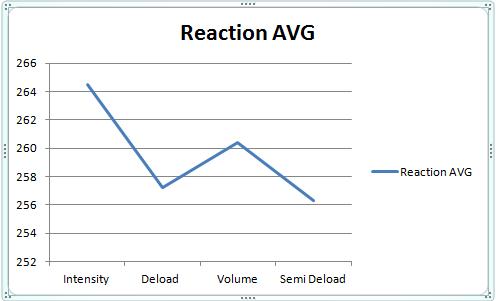
For a much more elaborate discussion on this experiment you can see the original post here. Essentially what I found was that Reaction test average and HRV average mirrored each other at each training period. HRV decreased and Reaction time increased (slower) during High Intensity and again during High Volume training reflecting fatigue. During reduced training loads HRV increased and Reaction time decreased (faster).

Reaction average trend

HRV Avg Trend Reaction Blog

Considerations and Limitations

The reaction test appears to be a test worthy of consideration for coaches looking to incorporate monitoring variables into their training regime. The following is a list of factors to keep in mind regarding this test:

• Caffeine has a well-established effect on reaction time and should therefore be controlled for when implementing reaction testing

• Psychological factors can impact the effectiveness and reliability of the test. Though this is an objective test, the effort put forth by the athlete may not be consistent. Since this test is sensitive to small changes in reaction time, this can obscure data and thus interpretation.

• As with HRV, it is probably best to experiment with a reaction test with a small sample of athletes to determine its usefulness before trying to implement with an entire team.

• Just like any other monitoring variable, reaction time should be considered with other factors when attempting to draw meaningful interpretations from the results.

Reaction time test results appear to respond early to fatigue during overload training. Reaction times (test dependent) may correlate with perceived performance. The simplicity, practicality, affordability and non-invasiveness of a reaction test make it appealing to coaches as a field test.

References

Nederhof, E., et al. (2006) Psychomotor speed: possibly a new marker for overtraining syndrome. Sports Medicine, 36(10): 817-28.

Nederhof, E., Lemmink, K., Zwerver., J. & Mulder, T. (2007) The effect of high load training on psychomotor speed. International Journal of Sports Medicine, 28: 595-601.

Nederhof, E., Visscher, C. & Lemmink, K. (2008) Psychomotor speed is related to perceived performance in rowers. European Journal of Sport Science, 8(5): 259-265

Rietjans, GJ., et al. (2005) Physiological, biochemical and psychological markers of strenuous training induced fatigue. International Journal of Sports Medicine, 26(1): 16-26.

Spring Break Impact on HRV and Performance: Comparing Data From 2 Athletes

Generally, one of two things can happen when an athlete heads off for spring break or vacation:

Scenario 1: He or she parties all week with friends; drinking alcohol excessively each day, eating terribly and sleeping poorly. These athletes return in rough shape, exhausted and dehydrated.

Scenario 2: He or she vacations with family, thus eating and sleeping reasonably well and likely not binge drinking daily. This athlete returns refreshed and recovered.

This can be problematic when working in a team environment as some athletes will be ready (both physically and mentally) to continue with the training program while the others certainly will not be. Oftentimes, a coach or trainer will schedule these vacation breaks as planned unloading periods, marking the transition from one phase to another.

Below is some HRV data from a hockey player I was working with prior to my relocation to Alabama. Preceding his departure for Cuba, his HRV was averaging mid to high 70’s with the odd 80. He then departs for Cuba with some friends for a week or so to enjoy some time off. Upon returning from vacation it becomes quite clear as to what went down (pun intended) during the trip. He did not maintain daily measurements while being away but when he resumes his measurements after returning we can see the consequences of his behavior.

 HRV Data Before and After Vacation in a Hockey Player AEvacadata

AEvacatrend

It is quite clear that his ability to resume his daily routine is compromised. For his first week back from vacation, I reduced the volume and intensity of his workouts and changed his conditioning work from highly anaerobic/interval based to much more moderate and aerobic based.  Even though training loads were reduced, the workouts were still a bit of a struggle to get through for him. We can also see that his perceived sleep quality is also down.

The above data set appears to be in direct contrast with that of a football player who vacationed with family (he is much younger than the hockey player). Unfortunately, this athlete has no data prior to vacation as he didn’t have the ithlete hardware yet. His daily measurements commenced on his first morning back from vacation. Based on his average’s following the vacation it would be safe to assume that his trip was hardly stressful. He was able to resume training without the need for any adjustments in intensity or volume. He essentially picked up right where he left off.

HRV Trend Upon Return From Spring Break in a Football PlayerVLtrendpostvaca

Final Thoughts

HRV appears to reflect the nature of the vacation in these two athletes. One athlete spent his vacation partying, drinking and eating and sleeping poorly. His HRV trend is significantly affected as a result. Performance, work capacity and perceived sleep quality are negatively affected upon his return and resumption of daily routine. A significant reduction in training load was required. The athlete who vacationed with his family and maintained a reasonable eating and sleeping schedule while avoiding excessive daily alcohol consumption saw apparently no effect in his HRV trend. Training and daily routine resumed without effect.

Making HRV More Practical For Athletes: Measurement Frequency?

Perhaps the biggest limitation with HRV monitoring in a team setting is obtaining and maintaining compliance from athletes. Daily HRV measurements can become monotonous, particularly for athletes who may not fully understand the value of the data. One question I’ve had in mind for a while now is; what is the minimal frequency of HRV measurements we can acquire that can still offer meaningful information regarding training status in athletes?

If you’ve read any of the research on HRV and athletes, you’d note that HRV is rarely measured daily. This is likely because having each subject report to the lab everyday to have their HRV measured on an ECG is impractical. However, with the advent of valid and reliable devices such as the Polar RS800, R-R intervals can be collected in the field making more frequent measurements a little more practical in the research setting. However, for the practitioner in the field, an even more practical, economical and user friendly device is desired. Thankfully smart phone app’s such as ithlete were created to accommodate this.

So now we have very affordable, very user friendly smart phone applications that can provide us with HRV data. The trick is getting the athletes to use them often enough so that we can use the data for monitoring purposes. Is it more of a reasonable expectation of our athletes to collect only one or two HRV measurements per week as opposed to every day? Will this provide us with enough information to draw meaningful interpretations from?

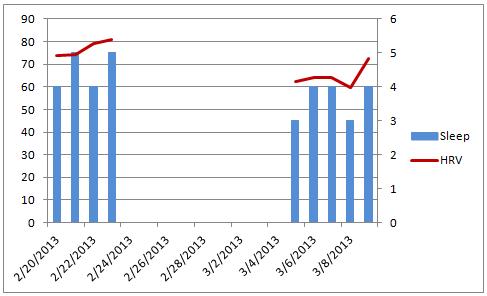
After giving it some thought, I decided to review some data over a 3 month period. With my own HRV data, I recreated trends in excel with; once per week, twice per week and daily measurements. The purpose of this is to see what these varying frequencies of measurement reveal in the trend. I’ve also included sleep score data which is graded 1-5 based on perceived quality and quantity after waking.

Daily Measurement 3 Month Trend

 daily3monthtrend


–          There is a period of time between the 4th week of December to the 2nd week of January that my HRV trend declines and I rarely see scores over 80. During this time (the Christmas Holidays)I was not lifting regularly and experienced some detraining.

–          Daily measurements allow for sRPE to be recorded providing the coach with a good indication of how the athlete is perceiving and responding to the workouts. Conversely, the sRPE allows the coach to see when the athlete is experiencing high stress in the absence of a high load training day.

–          Daily measurements allow the coach to see acute changes in HRV which can be important in planning or manipulating training.

–          It’s worth mentioning that my highest levels of strength were displayed over the last week of February and early March (early March not included). This is expected as I am nearing the end of my training cycle which has transitioned from moderate intensity/high volume to high intensity/low volume. Coincidentally, my HRV is reaching peak heights. I’m not entirely sure what to attribute these high scores to as I have been doing less aerobic work than normal. This may or may not have any meaning. Some vid’s are posted below from this “realization” phase. 


 Once Per Week HRV Measurement 3 Month Trend

 onceweekhrv

–          I chose Monday as the reference day because it is the day of the week furthest from training stress that can influence HRV. My goal was to find a day that gives me the best indication of baseline HRV. Since I train Mon-Fri and rest on weekends this left Sunday or Monday as the best options. I selected Monday over Sunday because Saturday nights can be social, late, etc. and therefore affect Sunday morning results.

–          This trend clearly shows my detraining period over the holidays.

–          Given that I adjust my training when necessary to avoid excessive fatigue accumulation, my baseline HRV is relatively consistent apart from the detraining period. Training is being well tolerated because I’m intentionally adjusting my training for that purpose. However, in a more pre-planned setting such as a collegiate weight room the result/trend would likely differ; particularly in a preparation phase (pre-season, early off-season, etc)

–          Coaches should be cautious when using weekly measurements due to potentially low scores caused by non training related stressors that may obscure interpretation. For example, if an athlete has a rough sleep Sunday night, HRV may be lower than usual Monday morning. This does not mean the athlete is fatigued or should have training loads reduced. Therefore, coaches need to keep tabs on performance and feedback from the comments section.  Clearly, weekly measurements have its limitations however it still may offer some value.

Twice Per Week HRV Measurements 3 Month Trend

twiceweek3monthhrv

–          I chose Monday and Saturday as my reference days because Monday represents HRV at rest while Saturday represents HRV after fatigue has been accumulated all week from training. This may provide some insight as to how stressful the training was based on Mon-Fri change in HRV. I am a bad example for this as I try and allow for HRV to reach baseline at least once during the week using Wednesday as an active recovery day. Data from an athlete involved in training, practices, class, etc. would have a different trend.

–          This trend allows for comparison of Sleep quality pre and post microcycle. In my trend, Mondays sleep scores never fall below 4 while there are 2’s and a 3 from Friday night’s sleep.

– As with the weekly measurement, this trend fails to capture major acute changes (highs and low’s).

Final Thoughts

Weekly measurements performed after a day or two of rest to allow for a true measure of baseline HRV can be useful in determining how an individual is coping with training on a week to week basis. However, I would urge you to be very cautious when interpreting trends as a low score caused by poor sleep or something other than training fatigue can provide a false sense of training response. This is where subjective measures, performance indications and regular communication is important.

Twice per week measurements might be the frequency which provides us with the most meaningful information from the least amount of data and therefore demand from the athlete. Seeing how HRV changes from pre to post training over a one week period likely provides much more meaningful information about training status verses weekly measures. It goes without saying that this needs to be manipulated according to the team’s training/practice/competition schedule. I used myself as the example today but most teams will not have Saturday and Sunday completely off from training.

Perhaps starting with weekly or twice weekly measurements is sufficient for getting athletes started and comfortable with the device. The goal should be to eventually get them to take daily measurements as this will provide more complete information including sRPE, daily sleep score and comments. The comments section is highly underrated and I intend to elaborate more on it’s value in a future post.

HRV and Adaptation: Insights from a hockey player

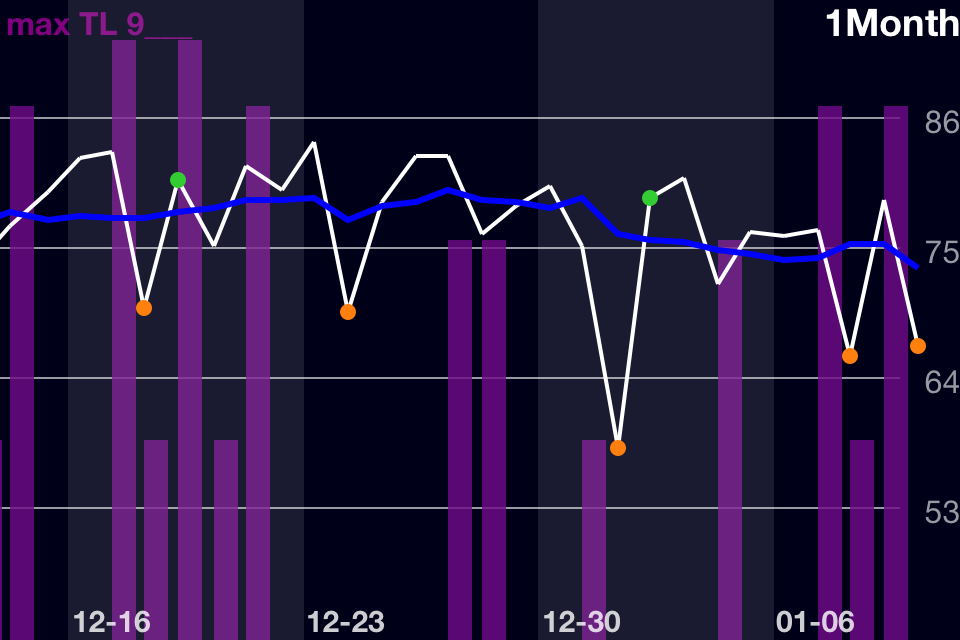
One of the first things I learned from using ithlete was that my HRV trend reflected my progressive adaptation to exercise. After my first conditioning session in two years I saw an immense drop in my HRV. Each session thereafter resulted in smaller fluctuations in my HRV score until eventually my trend was virtually unchanged from it. In the screenshot below you can see that in early October of 2012, I experienced a huge drop in HRV with a red indication. That was the morning after my first conditioning session (stair intervals). These workouts were performed each Wednesday thereafter with a progressive increase in sets and duration however you’ll see that HRV isn’t nearly as effected as it initially was. The next major drop in my HRV occurred in late November but wasn’t the result of a conditioning session.

HRV Chart

I also learned that HRV reflects illness, as well as the time it takes to fully recover from it. In the screen shot below you can see when I get sick and how long it took for my HRV to return to baseline levels (discussed in much more depth here).

073112_1517_Illnessreco3.png

Based on the sRPE levels, you can see that moderate workouts were causing large drops in HRV; a clear indication that my body was still fighting the infection even though I was symptom free.  I was able to adjust my training accordingly and not push it too hard until my body was ready to handle it.

See also a case study by Botek et al (2012) who used HRV to guide an elite athlete back to competition after having infectious mononucleosis.

HRV has also been shown to reflect acclimatization to heat (Dranitsin, 2008; Epstein et al. 2010).

Hockey Player

About 8 weeks ago I posted the HRV trend of a hockey player that I’m working with. Below in his screen shot you can see that the first two weeks of workouts were very taxing. However, we only had a short period of time to train and therefore waiting for optimal recovery wasn’t an option.

A.E.Trend

Keeping tabs on HRV, subjective measures of fatigue and performance markers I would make small changes in his training. For example I would maintain intensity but reduce volume when his HRV was low and he felt fatigued. I’ve found volume to affect HRV much more than intensity.

At this point his HRV baseline has improved 8 points and his HRV is not nearly as affected after intense training sessions. He’s put on about 10lbs of lean body mass and has increased both strength and fitness considerably; clear indications of positive adaptation. I’ve found that with this particular athlete HRV is generally in line with his perceived levels of fatigue. For example, he’ll report some soreness but that he feels great and highly motivated to train. This will typically corresponds with a good HRV score. However, on days where he reports feeling fatigued, unmotivated etc, HRV is almost always below baseline. Sleep duration and quality will also correlate with his HRV and perceived fatigue.

AETrendFeb

In each of the above examples, HRV has been a valuable tool in reflecting adaptation. Acute changes (daily change) in HRV are valuable in that they reflect a transient response to a significant stressor (response to a workout, high emotional stress, awful sleep, extreme deviation in nutrition, etc.). Monitoring the weekly and monthly trends provides insight as to how training and global stress is being tolerated over time (cycle to cycle). At no point did this athletes strength performance drop during our training. Even on days with low HRV he was able to hit or match a PR in strength exercises. However, strength levels weren’t too high to begin with so I wouldn’t read too much into that.

I’ve had some compliance issues with this athlete and taking daily measurements so getting him to fill in the comments section or use the training load function was out of the question. Therefore that data is not posted.

In closing, taken with subjective measures of fatigue, performance and global stress, HRV can potentially reveal meaningful information about adaptation and training response.

References

Botek, M. et al. (2012) Return to play after health complications associated with infection mononucleosis guided on ANS activity in elite athlete: a case  study. Gymnica, 42(2)

Dranitsin, O. (2008) The effect on heart rate variability of acclimatization to a humid, hot environment after a transition across five time zones in elite junior rowers. European Journal of Sport Science, 8(5): 251-258 Abstract

Epstein, Y. et al. (2010) Acclimation to heat interpreted from the analysis of heart rate variability by the Multipole Method. Journal of Basic & Clinical Physiology Pharmacology, 21(4): 315-23 Abstract

HRV Data from a High School Sprinter

Here is some more data and analysis from a nationally ranked high school sprinter (Junior) that I have using ithlete. Please note that the sprinter trains primarily with his sprint coach. I work with him roughly 3 days/week on mobility, restoration, etc.  He was an ideal candidate for monitoring HRV as he is an extremely motivated and dedicated athlete and there was no doubt in my mind that he could handle the daily measurements. The data stops in early January because he somehow broke the HRV receiver I gave him. A new one has been ordered recently I’ve been told. This data collection is primarily for observational purposes since I do not control or manipulate his training as mentioned above.

November

ZWNovTable

ZWNovtrend

  •  After 1 week of using ithlete, I had him start using the comments section and sleep score.
  • His resting heart rate was higher than I expected. I had him perform his measurements standing but in hindsight I should’ve had him do them seated based on his RHR.
  • HRV average is mid 70’s which is what I expect from an anaerobic athlete. Still would expect his HR to be at least in the high 60’s in standing position.
  • Clearly he stays up super late on weekends and sleeps in late. Been on his case about this. 

First Half of December

ZWDec1Table

 ZWDec1Trend1

  • HR/HRV average remains consistent. Coping with training well.
  • Race day on 12/7, hit a PB in his part of the relay. Not a hard race, treated as practice.
  • Reports of back soreness that persisted long enough for him to seek treatment (documented in next table).

Christmas Break – Second Half of December & Early January 

ZWXmasTable

ZWXmasTrend

  •  This last section of data is from his Christmas break. Interestingly his HRV average drops and his RHR increases. I attribute this to the change in routine (off of school), staying up late regularly, etc. I also notice changes in my HRV when my routine is interrupted. The body likes consistency.
  • Things appear to be going well though as he seldom gets below baseline scores (amber).
  • Race day on 1/6 and hits a PB on 60m.

Given that this athlete is still young and taking advantage of “newbie” strength gains, I would expect him to hit PB’s relatively consistently on the track. Based on his trend, fatigue was never really an issue. More training may have been well tolerated.

I’d like to get him to start using the training load feature too now to get a better idea of how hard his workouts are (perceptively).

4 Months of HRV, sRPE, Tap Test and Sleep score: Charts, Tables and Analysis

Since about mid-September of 2012 I started using a CNS Tap Test to see if it provided any indication of training fatigue or if it correlated with my HRV. In addition to tracking my tap test and HRV, I’ve also documented  sRPE and sleep score.

Descriptions

Tap Test – On the tap test app,  perform as many taps as possible in 10 seconds with right index finger and left index finger. I charted these values both separately as Right and Left as well as there total (sum). Tap test was performed immediately following morning HRV test.

HRV – Standard ithlete HRV measurement performed immediately after waking and bladder emptying. The measurements were all performed in the standing position. The ithlete uses the following formula for the HRV value:  20 x Ln (RMSSD). RMSSD is a time domain measure that reflects parasympathetic tone and has been shown to correlate reliably with the high frequency component of frequency domain measures (Sinnreich et al. 1998).

sRPE – Following a workout session I would rate perceived exertion on a scale of 1-10. Generally, active recovery/aerboic work would fall between 1-5 while resistance sessions fell between 6-10.

Sleep Score – I used the ithlete sleep rating score to track sleep quality. On a scale of 1-5 I would rate sleep quality after HRV measurement. Generally, an uninterrupted 7-8 hour sleep was rated as 5. One disturbance/wake was given a 4, etc.

Not Discussed – Today I will not be including discussion on strength performance in relation to HRV or Tap test as I did not really keep track of this. However, in the future I will do this once I determine the best way to quantify this.

Below are the charts with brief comments regarding training/stress for that month.

OCTOBER

Oct_data

– High stress and lack of training in early October due to work related trip over 3-4 days.

NOVEMBER

Nov_data

– Most consistent training month, most sessions completed, most stable HRV, highest HRV Avg, highest Tap Test Avg, highest sleep score. (more on averages and sleep at the end)

DECEMBER

Dec_data

– Highest strength demonstrated in this month out of the 4. Training interruption over the Christmas holiday.

JANUARY

Jan_data

– HRV effected by NYE party but Tap Test appears unaffected (alcohol, late night, etc.). Detrained slightly from lack of training of holidays. Training resumes, transitioning to lifting 4 days/week. Lowest HRV avg, lowest tap sum avg, fewest aerobic sessions.

Comparison of HRV, Sleep, and Tap Test Averages 

Avg_data1

data table avg

– HRV and Tap Test both peak during November which also has the highest average sleep rating. However from the table above you can see that these are by very small percentages.

– In the table and chart below you can see that peak HRV and peak Tap average also occur during the month of most consistent training, most aerobic sessions and most overall training sessions.

– HRV, Tap Test Left, Right and Sum all reach lowest averages in January. January also has the fewest aerobic sessions and comes after a period of detraining (discussed in depth here) in late December.

Comparison of HRV, # of Aerobic Sessions, # of Resistance Sessions & Sum of all sessions

lift_vs_hrv

lift_vs_hrv_table

Main Findings

Highest HRV avg, highest sleep avg, highest tap sum avg, highest left tap avg all occur in November. This corresponds with most total and most aerobic training sessions.

Conversely, lowest HRV avg, lowest tap left, right and sum average occur during January which also corresponds with fewest aerobic sessions but not with lowest sleep avg.

As you can clearly see, there is very little variation in month to month values  and therefore no significant or meaningful conclusions can really be made. However, my HRV data does fall inline with the overwhelming amount of research that shows HRV increases in response to aerobic exercise.

In a future experiment I will track performance ratings in addition to all of the other variables to see if there is any correlation. I will also plan some overload training to see how these markers respond. My training was relatively static during these 4 months.

Correlation between HRV, sRPE and subjective fatigue in athletes

Today I will review the research I’ve read that investigates the relationship between perceived exertion ratings of a workout session (sRPE), subjective levels of fatigue and HRV in effort to examine the usefulness of HRV in reflecting training load in athletic populations. Like all of my articles, this report is based on my interpretation of the research and perspectives from personal experience.

The Research

In a brand new study from the JSCR, Sartor and colleagues (2013) followed elite male gymnasts (n=6, age 16) over 10 weeks of training. HRV was monitored daily every other week while sRPE was collected immediately following each workout. HRV strongly correlated to previous day sRPE in both supine (HF%, HF%/LF%) and supine to seated measurements (mean RR, mean HR, HF%, SD1). Relationships were also seen between HRV, and perceived wellness (foster’s index). HRV correlated with training load (sRPE) and psychophysiological status.

Though sRPE wasn’t used in this next study, KeTien (2012) monitored HRV, blood-urine nitrogen (BUN) and profile of mood states (POMS) in 24 national level rugby players over an 8 week conditioning program. The program progressed from more aerobic based work to more anaerobic/interval based work. Spectral measures of HRV correlated with both POMS and BUN at each time point throughout the training period.

During the 2006 World Cup, Parrado and colleagues (2010) set out to determine if perceived tiredness could predict cardiac autonomic response to overload in elite field hockey players (n=8).  A strong correlation was found between per­ceived tiredness scores and HRV. Higher levels of perceived tiredness (acquired from questionnaire) were related to lower values of parasympathetic tone (RMSSD), pNN50 and higher LF/HF ratio. In order to discern changes in HRV brought on by fatigue from changes in HRV caused by pre-competitive anxiety, the researchers had the athletes complete anxiety questionnaires.

“Results show that cognitive anxiety and self-confidence sub­scales of the CSAI–2 were not related to perceived tiredness nor to heart rate variability. In the absence of a relation between cognitive anxiety and heart rate variability, it can be assumed that the relationship established between heart rate variability indexes and perceived tiredness scores are attributable to the fatigue state.”

Accounting for pre-game anxiety is very important as previous research has shown this to affect HRV (Edmonds et al. 2012, Mateo et al. 2012, Murray et al. 2008), thus making it difficult to distinguish fatigue from acute anxiety on the morning of a competition.

Edmonds et al. (2012) found that HRV (HF) correlated with sRPE in youth rugby players (n=9) during a one week microcycle of practices and a game. However, game day HRV values were lower which was attributed to the aforementioned pre-game anxiety since training loads were reduced before the competition.

Smith and Hopkins (2011) monitored performance, HRV, sRPE and subjective fatigue in elite rowers (n=10) throughout an intense 4 week training period. Interestingly, the most improved athlete and the only overtrained athlete both had statistically similar levels of perceived fatigue and changes in LF/HF ratio. However, after looking closely at the data, RMSSD showed a noticeable decline in the OT athlete compared to the most improved who had a moderate increase in RMSSD. The determining factor however in this case was performance changes.

Thiel at al. (2012) found that in 3 elite male tennis players, HRV, serum urea and psycho-physical state (assessed by EBF-52 questionnaire) each responded to overload training. As training load increased, HRV (RMSSD) decreased, perceived fatigue increased and serum urea increased. However, performance increased (V02 max, Single Leg CMJ, DJ index) and therefore performance metrics should always be considered when trying to discern functional overreaching (FOR) from non-functional overreaching (NFOR). HRV changes act as an early warning sign while performance decrements may represent the initial transition from FOR to NFOR.

Cipryan et al (2007) found that HRV correlated to performance in hockey players (age 17, n=4) but did not correlate to self-reported health status. Therefore, coaches should use caution when using perceived stress to predict ANS status and thus an objective measure (like HRV) is still recommended.

In elite female wrestlers, perceived stress (in the form of; excessive competition schedule, social, education, occupational, economical, travel, nutritional, etc) contributed to NFOR when HRV parameters were significantly increased (Tian et al. 2012). There was no mention of perceived stress/recovery in the NFOR group with significant decreases in HRV parameters. Regardless, subjective measures of stress including non-training related events require consideration when planning training. Monitoring the global stress of an athlete is more meaningful then simply training load.

Plews et al. (2012) monitored HRV and perceived measures of recovery (sleep, soreness, etc.) in two elite triathletes over a 77 day period leading up to competition. One athlete was considered NFOR. Perceived levels of recovery were not associated with HRV. However, the NFOR athlete admitted that she felt deterred from  reporting  low scores as anything below a certain score would be automatically sent to the coach. Therefore, when relying on perceptual measures from athletes, coaches must be prudent in ensuring honest reports. HRV was a better indicator of fatigue in this study.

The last study I’d like to mention only appears to be available in German at the moment. I translated the paper with google, however it was very rough to say the least. Therefore I will simply quote the pertinent information from the abstract:

“6 endurance athletes measured morning heart rate, heart rate variability (HRV) and mood state during a normal training period, a 17 day ultrarace (Deutschlandlauf) and following a recovery period. 4 out of 6 runners could not finish the race due to injury or exhaustion. 3 of them showed diagnostically relevant criteria of overreaching. All runners who quit the race showed increased morning heart rate, decreased HRV and a decreased mood state during competition. The studied parameters showed individually different adaptations but there were early changes that preceded the abortion of the run that gave diagnostically relevant information.” (Bossmann 2012)

Thoughts

Though there appears to be a strong tendency for HRV to reflect perceived training load and subjective fatigue, an objective measure of ANS status should still be considered. Subjective measures from athletes are only meaningful if honestly reported.

I’ve personally seen a strong correlation between morning HRV score and session rating of perceived exertion (sRPE) of the previous day’s workout. However, I’ve learned that this relationship isn’t perfect. I’ve experienced situations where;

–          Perceived exertion may be high but HRV response may be minimal if the workout is familiar (exercise selection, order, intensity, etc.).

–          In direct contrast to the above, perceived exertion may be moderate but HRV response may be significant if the workout is unfamiliar.

–          Non-training related factors affect HRV. Sleep, aerobic fitness, mental stress, nutrition, etc. can all impact ANS activity, possibly obscuring the relationship between training load and HRV.

–          Stress from travel, illness, occupation, etc. may have a larger impact on ANS than is perceived and reported.

–          More on other factors effecting HRV here.

In conclusion, obtaining both objective and subjective measures of fatigue along with performance indicators will provide a more accurate indication of training status. Monitoring of these variables regularly should enable the coach to better manipulate training loads to ensure progression and avoid unintentional overreaching.

References

Bossman, T. (2012) Effects of ultra-long-distance running on selected physiological and psychological parameters as a possible marker of overloading. Swiss Journal of Sports Medicine, 60(1): 21-5. Full Text

Cipryan, L., Stejskal, P., Bartakova, O., Botek, M., Cipryanova, H., Jakubec, A., Petr, M., & Řehova, I. (2007)  Autonomic nervous system observation through the use of spectral analysis of heart rate variability in ice hockey players.  Acta Universitatis Palackianae Olomucensis. Gymnica, 37(4): 17-21. Free Full-Text

Edmonds, RC., Sinclair, WH., and Leicht, AS. (2012) The effect of weekly training and a game on heart rate variability in elite youth Rugby League players. Proceedings of the 5th Exercise & Sports Science Australia Conference and 7th Sports Dietitians Australia Update. Research to Practice  Abstract

Ke-Tien, Y.(2012) Effects of Cardiovascular Endurance Training Periodization on Aerobic performance and Stress Modulation in Rugby Athletes. Life Science Journal, 9(2): 1218-25. Full-Text

Mateo, M. et al. (2012) Heart rate variability and pre-competitive anxiety in BMX discipline. European Journal of Applied Physiology, 112(1): 113-23.

Murray, N. P. et al. (2008) Heart rate variability as an indicator of pre-competitive arousal. International Journal of Sport Psychology, 39: 346-355.

Plews, DJ., Laursen, PB., Kilding & Buchheit, M. (2012) Heart rate variability in elite triathletes, is variation in variability the key to effective training? A case comparison. European Journal of Applied Physiology, 112(11): 3729-41.

Parrado, E.  et al. (2010)Perceived tiredness and HRV in relation to overload during a field hockey world cup. Perceptual and Motor Skills, 110(3): 699-713 Abstract

Sartor, F. et al. (2013) Heart rate variability reflects training load and psychophysiological status in young elite gymnasts. Journal of Strength & Conditioning Research, Published ahead of print.

Smith, T.B., & Hopkins, WG. (2011) Heart rate variability and psychological stress in an elite female rower who developed over-training syndrome. New Zealand Journal of Sports Medicine, 38(1): 18-20.

Thiel, C. et al. (2012) Functional overreaching in preparation training of elite tennis professionals. Journal of Human Kinetics, DOI: 10.2478/v10078-011-0025-x

Tian, Y., He, ZH., Zhao, JX., Tao, DL., Xu, KY., Earnest, CP. & McNaughton, LR. (2012) Heart rate variability threshold values for early-warning non-functional overreaching in elite women wrestlers. Journal of Strength & Conditioning Research, Published ahead of print

 

HRV Reflects Detraining – Trend Analysis

Generally when I see a decline in my HRV trend it is because of illness, high stress or significant accumulation of fatigue. However, over the Christmas break I decided to take 2 weeks off from lifting. This decision was based mostly on the fact that I wouldn’t have access to my training facility until after the break. The last time I remember taking this much time off from lifting was back in 2006 when my appendix ruptured and I didn’t get to a hospital until about a 10 days later. I have a nice 6 inch scar on my lower right abdomen to remind me to go see a doctor sooner than later when I feel really sick. Needless to say I was forced to take some time off.

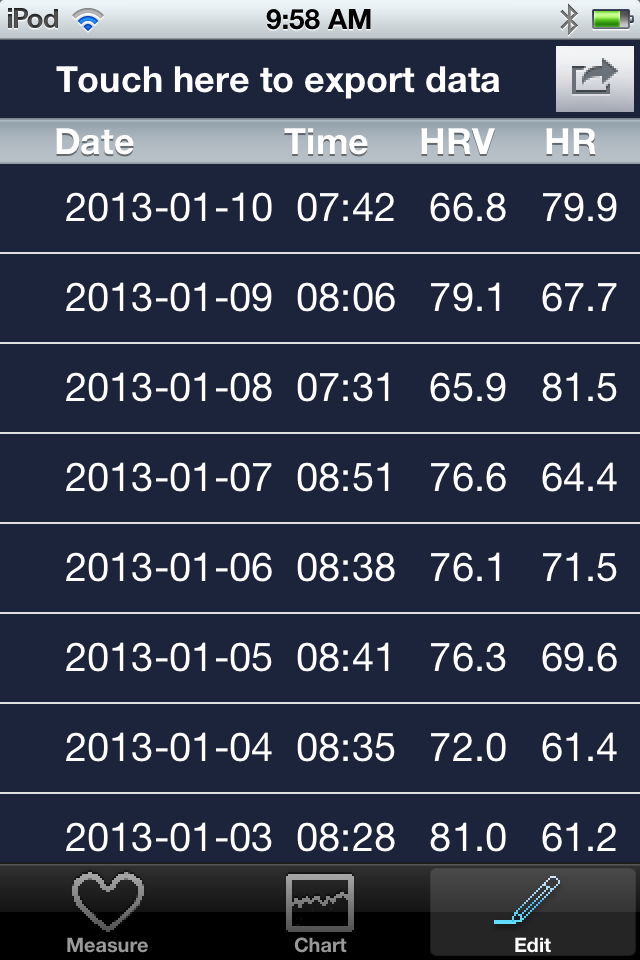
Below are some screen shots of my data that clearly show a steady decline in my HRV trend after approximately one week of training cessation.

RPE Trend Jan 10

–          Above you can see that my last workout before the break was on 12/21 and my first workout back was this Monday (01/07). Between those dates I performed 4 body weight workouts that were largely half-assed. I think my rationale for them was to justify eating all of those high calories meals over the holidays. Without these mini workouts I believe the trend would’ve shown a steeper decline.  HRV baseline dropped from about 80 to about 74 by the end of the detraining period.

–          The steepest dip in the trend came on New Year’s Day as a result of the overeating and drinking from New Year’s Eve. HRV responds poorly to partying.

–          The high point on 01/03 I believe was the result of a day that included a 1 hour massage, hot pools, sauna, steam room, cold tub etc.

–          Training resumed 01/07 and as expected strength levels were noticeably down and a workout that previously could be considered a deload was rated as an 8 and caused a pronounced dip in HRV the following day accompanied with extreme soreness. A clear sign that I’ve detrained. The same happened for Wedneday’s workout (01/09).

Data Jan 10

–          In the image above you can see that my HRV is lower than usual (baseline is typically around 80). 01/04 stands out to me as a HR of 61.4 is usually accompanied with a high 70’s – low 80’s HRV score but instead HRV is at 72.

trend change Jan 10

–          Above you can see my 3 month trend charted and my Daily, Week and Month change. You can clearly see my baseline HRV steadily decline in late December.

I can think of 2 stuides that investigated the effects of detraining on HRV.

In a study by Gamelin et al (2007), healthy young men (untrained, age 21) were put through 12 weeks of aerobic training followed by 8 weeks of detraining to determine its effect on HRV. An improvement in HRV was seen after the 12 weeks however HRV scores returned to pre-test levels after only 2 weeks of training cessation. “Twelve weeks of aerobic training are sufficient to achieve substantial changes in Heart Rate Variability; and only two weeks of detraining completely reverse these adaptations.”

–          My declining trend in HRV was reflecting my fitness levels, not my strength levels even though they also declined. My trend would’ve likely remained relatively unchanged had I maintained aerobic fitness.

In a recent study by Gutin et al. (2012), obese children were put through a 4 month exercise intervention. RMSSD (a time domain measure of parasympathetic tone) increased after the exercise period and decreased during the detraining period. Below are some excerpts from the study I felt were worth sharing;

“The variables that were significantly associated with individual differences in responsivity to the PT were: (1) the pre-PT RMSSD level—higher pre-PT values were associated with lower change scores (r= −0.28, p = 0.018);”

–          I’m curious to know what accounted for higher pre-training RMSSD values in those subjects. Were they more fit? Were stress levels just considerably lower? Is this a genetic thing? How does resting RMSSD pre-training effect training response? In research I discussed here, higher HRV levels pre-training resulted in larger improvements in fitness vs. the subjects with lower HRV levels pre-training in recreational endurance athletes (Vesterinen et al. (2011) and in soccer players (Oliveira et al. 2012).

“the change in vigorous physical activity (r = 0.25, p = 0.040)—those who increased most in vigorous activity increased most in RMSSD.”

“The primary result of this study was that the RMSSD increased during 4-month periods during which the obese children were engaged in PT, and declined in the 4-month period following cessation of PT in Group 1. This demonstration of what occurred as a result of increases and decreases in controlled vigorous activity supports the idea that regular exercise has a favorable influence on PSA in this population. “

–          These results obviously aren’t shocking and we don’t need HRV to tell us we are detrained. However, monitoring the trends allows us to ensure favorable responses to training. This becomes much more important in athletes or individuals engaging in intense physical training.

Wrap up

Only two weeks of training cessation will result in noticeable decrements in performance and a decrease in resting parasympathetic tone. In the future I will likely perform 1-2 maintenance type workouts each week to maintain strength and fitness levels.

References:

Gamelin, et al. (2007) Effect of training and detraining on HRV in healthy young men. International Journal of Sports Medicine, 28(7): 564-70

Gutin, B., et al. (2012) Heart rate variability in obese children: Relations to total body and visceral adiposity and relations to physical training and detraining. Obesity Research, 8(1): 12-19

Oliveira, RS. et al. (2012) The correlation between heart rate variability and improvement in soccer player’s physical performance. Brazilian Journal of Kinanthropometry, 14(6)

Vesterinen, V. et al. (2011) Heart rate variability in prediction of individual adaptation to endurance training in recreational endurance athletes. Scandinavian Journal of Medicine & Science in Sports, DOI: 10.1111/j.1600-0838.2011.01365.x

A collection of thoughts on HRV and Sports Training

I’ve been having a lot of different thoughts running through my mind recently on various topics surrounding HRV and sports training. A lot of what I say today is based on a lot of the research I’ve been reading and comparing it to my personal experience with my own training and that of my athletes. I’ll try and organize it as best I can but it will be pretty random for the most part. Below are several topics that really deserve entire posts on their own however today I will just provide some quick thoughts on each one.


HRV as a predictor of Performance and or Adaptation

–          HRV appears to predict performance in aerobic athletes. I’ve discussed and cited this research in previous posts. However, in a new study by Chalencon et al. (2012) swim performance in elite athletes was related to parasympathetic activity.

 “the delay needed to return to the initial performance level was highly correlated to the delay required to return to the initial HF power level (p<0.01). The delay required to reach peak performance was highly correlated to the delay required to reach the maximal level of HF power (p = 0.02). Building the ANS/performance identity of a subject, including the time to peak HF, may help predict the maximal performance that could be obtained at a given time.”

See the full text here.

–          Prior to the initiation of intensive training, HRV values appear to predict training outcomes, again, mostly in aerobic athletes. Higher HRV values prior to training lead to better improvements in aerobic performance.  See here for more on this.

–          Higher HRV values on game day are correlated to better performance in amateur Basketball players (Di Fronso et al. 2012).

–          There are several factors that affect an athlete’s performance on any given day. By no means am I suggesting that one is doomed to poor performance if HRV isn’t high. I like the saying “psychology trumps physiology every time”. I think it was Alwyn Cosgrove who said that? Regardless, it’s very true. Furthermore pre-game anxiety can provide a skewed HRV result. More research on this needs to be done.

–           At the moment I do not believe that strength/power can be predicted by HRV on a day to day basis based on my experience. It likely play’s a factor but is certainly not determinant.

HRV as a reflection of recovery status

–          I believe this is one of HRV’s greatest attributes. Your level of fatigue after an intense workout or competition will be reflected in your HRV score. This is valuable for planning the weekly training so as not to load the athlete too soon after competition or too much before competition. In my experience this will usually correlate to perceived recovery. You can typically feel this. However, we cannot feel what our athletes are feeling. See Edmonds et al. (2012) for a study on elite youth rugby players for data on this subject.

–          Chen et al. (2011) showed that after an intense strength workout in elite weightlifters strength and HRV dropped. Strength did not return to baseline (or even above) levels until HRV returned to at or above baseline. This is one of the few studies that used HRV in strength athletes. Most coaches/trainee’s should already be aware that 1RM strength will be reduced for the net 24-48 hours after an intense workout but is cool to see that HRV may reflect the actual time period.

HRV as an early warning sign

–          Fatigue is ok, extreme fatigue is not. HRV is probably one of the first warning signs of fatigue. How much fatigue is okay? I think that first HRV will reflect that physical stress is accumulating. However, until performance changes, we likely needn’t change anything. If training is set up appropriately there should be enough rest/recovery for HRV to approach baseline at the end of each week. This will allow for a slower, more steady decline in the trend as opposed to a more rapid and steep decline which indicates excessive fatigue and overload. Planned overreaching should include the monitoring of several training status markers. HRV will respond early.

–          Researchers found that 3 elite tennis players saw significant reductions in HRV values over pre-season training however performance improved (Thiel et al. 2012). HRV alone does not indicate functional or non-functional overreaching. HRV did not correlate to performance markers but did correlate to other training status markers.

Limitations of Weekly or Monthly HRV Monitoring as opposed to higher frequency monitoring

–          Many studies I’ve read pertaining to athletes have measured HRV periodically (weekly, monthly, pre-post training phase, etc). This is much more practical for coaches as daily HRV measurements can be tedious and compliance can be hard to get from athletes. However, day to day measurements are more valuable as they allow the coach to make training adjustments before excessive fatigue builds up. However, if a coach could only use weekly HRV measurements with athletes I think these measurements would best be done the morning after a recovery day. HRV score at rest will provide the most meaningful information about training load/fatigue.

HRV in Elite vs. Non Elite Athletes

–          I have a lot of thoughts on this but will reserve comment until I do some more research on this. In short, I think there is a difference in how HRV data should be interpreted among these groups.

HRV in competitive athletes vs. Recreation lifters/athletes

–          HRV guided training (planning higher loads when HRV is at or above baseline and reducing them when HRV is below baseline) is likely safer and possibly more effective over longer term training. However, I don’t see how this method will work with athletes during shorter term training periods. Overload is required followed by a taper. Conversely, if your training results are not limited by requiring optimal performance at a certain date, HRV guided training will likely reduce risk of injury, illness, nagging join/soft tissue problems, etc. Recreational lifters would certainly benefit from this style of training.

Final thoughts for today

To be clear, the above are all simply thoughts/hunches I’ve been having. These are all incomplete at the moment and require further elaboration. Moreover, my stance on many of these topics are subject to change. My thoughts are limited by my experience and the research I’ve read. There is still a lot of work that needs to be done on HRV to uncover its potential as a monitoring tool in athletes.

References:

Chalencon S, Busso T, Lacour J-R, Garet M, Pichot V, et al. (2012) A Model for the Training Effects in Swimming Demonstrates a Strong Relationship between Parasympathetic Activity, Performance and Index of Fatigue. PLoS ONE 7(12): e52636. doi:10.1371/journal.pone.0052636

Chen, J., Yeh, D.,  Lee, J., Chen, C.,  Huang, C.,  Lee, S., Chen, C.,  Kuo, T., Kao, C., & Kuo, C. (2011) Parasympathetic nervous activity mirrors recovery status in weightlifting performance after training. Journal of Strength and Conditioning Research, 25(6):  1546-1552

Di Fronso, S. et al. (2012) Relationship between performance and heart rate variability in amateur basketball players during playoffs. Journal for Sports Sciences & Health, 8 (Suppl 1):S1–S70 45

Edmonds, RC., Sinclair, WH., and Leicht, AS. (2012) The effect of weekly training and a game on heart rate variability in elite youth Rugby League players. Proceedings of the 5th Exercise & Sports Science Australia Conference and 7th Sports Dietitians Australia Update. Research to Practice , 19-21 April 2012, Gold Coast, QLD, Australia , p. 183.

Oliveira, RS. et al. (2012a) Seasonal changes in physical performance and HRV in high level futsal players. International Journal of Sports Medicine. DOI: 10.1055/s-0032-1323720

Thiel, C. et al. (2012) Functional overreaching in preparation training of elite tennis professionals. Journal of Human Kinetics, DOI: 10.2478/v10078-011-0025-x